5/26/17

Fences a Powerful Drama

-->
FENCES (2016)
Directed by Denzel Washington
Paramount, 139 minutes, PG-13
★★★★

Fences is a powerful drama sparked by two towering performances, those of Denzel Washington as Troy Maxson and Viola Davis as his wife, Rose. It is based on August Wilson’s Pulitzer Prize-winning play of the same name and Mr. Wilson completed the screenplay before his death in 2005. Both the play and film have been hailed for their frank discussions of race, but Fences, if you will, goes well beyond the boundaries of race. It is also about patriarchy, psychological abuse, internalized anger, ageing, fidelity, and fealty. If, like me, you missed it at the theater, rest assured that it works very well on video because it is essentially a filmed play.

Fences is set in 1950s Pittsburgh and centers on Troy Maxson, who is equal parts proud and beaten down. Troy was a baseball star in the Negro Leagues, but was past his prime by the time Jackie Robinson broke major league baseball’s color barrier. Troy, however, sees racism, not age, as the reason he never got a chance to play, a self-deception fueled by the fact that life hasn’t dealt him the best of hands. He fled from an abusive father when he was just 14; has an older musician son, Lyons (Russell Hornsby), from a relationship that ended long ago; is brother to the  harmless but mentally ill Gabriel (Mykelti Williamson); and works as a garbage man. About all he has going for him is his friendship with coworker Jim Bono (Stephen Henderson), and his eighteen-year marriage to Rose, with whom he has another son, Cory (Jovan Adepo).

Troy’s is a life of over-compensation in which he lies to himself so he doesn’t have to face the fact that he is repeating the sins of his own father and adding a few of his own. His relationship with Bono is essentially that of celebrity and yes-man sycophant; he constantly derides Lyons, whom he sees—with some justification—as a no-account freeloader; brags at the local bar; and treats Cory more like a lowly vassal than a son. Through it all, Rose is the better angel who can free his emotions, buried desires, and sense of humor. She’s also the only one who isn’t afraid of him, calls him out, and has the strength to push him aside when he betrays her. 

Deep inside, Troy fears he is as psychologically scarred as his war-damaged brother, but without Gabriel’s sweet nature. Troy holds imaginary wrestling matches with Death and often takes bat to a bolted-through baseball hanging from a backyard tree, a symbol of both his derailed dreams and what he suspects is a path poorly chosen. Yet Troy rides roughshod over Cory’s dream of playing college football—a compensatory fear that if Cory broke the Maxson pattern of futility his own failures would be magnified. Troy steadfastly refuses to see—as Rose constantly reminds him—that times have changed and that both his patriarchal privilege and the model of raising subservient children with scaled-down dreams are outmoded. Troy uses his successful battle to become Pittsburgh’s first black sanitation truck driver as an aspirational triumph, yet rides Cory as if he were a field-hand slave driver, and fails to see the possibilities within the civil rights dramas occurring beyond his unfinished backyard fence. Is that fence taking (or failing to take) shape to keep Troy’s demons in or out?   

This is powerful stuff, even if it is often a mash of Arthur Miller’s Death of a Salesman and Ingmar Bergman’s The Seventh Seal. (Wilson always denied having any secondary inspirations, a claim of which I am dubious.) Washington and Davis are absolutely riveting in their reprisals of roles played on Broadway. Those reprisals raise issues, though. How much should a movie depart from a play in content and in look to be more than a filmed stage performance? I was blown away by the performances, but nothing was added by making Fences into a movie. Aside from a few street scenes, the camerawork is static, the drama is confined to two rooms and a backyard, and play’s acts are faithfully duplicated. This is something of a problem for the final “act,” which telescopes to 1962 as the family gathers for Troy’s funeral. On screen, what we see and hear doesn’t make a lot of sense. The differences in media come into sharp focus here. Live theater builds audience emotions in ways that encourage the filling in of narrative blanks, but the extra distancing of the screen generally requires more explanation. As great as the performances are—and they are stupendous—should reprised stage roles filmed qualify for film acting awards? I don’t think so, but I do think you should see Fences if you haven’t already. You will witness actors at the height of their craft and ponder issues deep and dark. And the next time you need to explain the difference between acting and celebrity, or art versus mere entertainment, you’ll have ammunition.

Rob Weir           

5/24/17

Kelley McCrae, Brian Alexander, I am Samson, Amelia Romano, Daniel Dorman

-->
Goes Down Easy

The term "easy listening" is often slapped onto music so innocuous that it's little more than aural wallpaper. In this column I'd like to be more literal: music that's smooth and easy on the ears.

Kelley McRae is often called an Americana artist—perhaps because her music isn't quite folk and isn't quite country, but is too much of each to get called bluegrass. On her latest, The Wayside, you'll hear echoes of Patty Griffin, Gillian Welch, and Lucinda Williams. Many of the songs come from time on the road. McRae is Mississippi born, but lived in Brooklyn for a while, until she and her husband, dobro/guitar artist Matt Castelein, traded their apartment keys for that of a van, their new home for a prolonged stretch. McRae's songs reflect some of the places, emotions, and deep musings that took place along the way. Hers are the small gems that come from fatigue, wonder, and long silences. A personal favorite is "Land of the Noonday Sun" in which she sings, "Time goes by like a dream/No matter how hard you run/Some things are better left unsaid/Some things are better left undone." Similar sentiments emerge in the title track—a road song that hints of being about something deeper: "And when my time comes to say goodbye/When the long day turn to night/I hope I've held close to the love that abides/And left the rest for/For the wayside." The album is filled with little insights such as this, another emerging in "If You Need Me" with its sleepy feel and the line "Anything worth holding onto is worth letting go." There is outstanding dobro, guitar, and harmony work by Castelein throughout, and Jon Andersen contributes tasteful, often understated, pedal steel. All eleven tracks are winners, but others that stayed with me were "Red Dirt Road," which is set in Oklahoma and invokes snippets of Woody Guthrie verse; the return-of-the-prodigal "A Long Time," and "Rare Bird," which seems to be about a person who flew too high when young and is looking toward home to roost.★★★★

 Brian Alexander has a soothing light tenor voice. His EP, Mountain (NoiseTrade), is five songs in the folk and folk rock vein. He grew up in Michigan, and the album's titular peak is a hill outside of his current Nashville home, but you can be excused if you think of him as a Colorado lad, as his songs deal more with the Rockies and points westward. He counts John Denver among his influences and we hear touches of that in his songs. "Telluride," for instance, deals with rogues as well as those who simply love high altitudes, but both are wrapped into a bright song with a refrain that will stay with you. The arrangement is the "western" part of the country formula: some pedal steel, steady percussion, some fiddle, and a cool bass riff. That formula repeats on the title track, with its hopeful message of feeling as strong‑and sometimes as lonely—as a mountain. "Night" is another winner—one that starts as if it will be a fragile acoustic offering, evolves into a bigger production with electric guitar and a hooky melody. Alexander is another promising new talent. Watch for him, but don't confuse him with the pop musician of the same name. ★★★ ½

I am Samson is the brother-sister collaboration between former Seattle (now Washington, DC) residents Josh and Anna Tigges. They call their new project, Humanity in Earth Tones, "songs for beautiful people," by which they mean the late 60s/early 70s version of beautiful—those holding human- and earth-centered values. They note that Samson means "bright sun" in Hebrew and that they are dedicated to "bringing truth and light to the world." It is an album in two parts, the first looking at what it means to be human and the second thinking of the "sounds and symbols" all humans encounter in the world. The album has a wholesome and hopeful vibe and the duo mesh well together. "Sorry Not Sorry" begins with Josh's call and Anna's response, transitions to a duet, and then ups the energy. "Are You Love" spotlights Anna's fragile vocals and emotional piano; "Sunflower" came from a dream of a woman with blooms sprouting from her head. A little New Age-like? Perhaps in sentiment, though the music is more consoling. One downside—though both have pleasant voices, neither has a clear one, so it's often hard to make out lyrics. Maybe a little less atmosphere and more articulation is in order. ★★★

Who can resist a striking woman in a blue dress and a blue concert harp? Amelia Romano takes that blue harp to intriguing places on New Perspectives. We seldom associate the harp with jazz, which is Romano's forte—mostly of the Latin variety, with some gypsy, experimental, and world music influences tossed in. She also likes to bring her personal experiences to the table. "Crazy Day" comes from her time in South Africa, here she lived in both the Townships and in Cape Town—studies in contrast if ever there were any. She uses jangly higher notes to suggest shaky stability and then anchors the piece with sturdy bass notes. The very next piece is about climate change, but is rendered in ways evocative of Tin Pan Alley, with her harp almost piano-like. There are also more conventional pieces—a harp turn on "Besame Mucho," a bolero penned by the late concert pianist/lyricist Consuelo Velázquez; "Baroque Flamenco," which despites its title, is of recent vintage; and a for-real vintage "I'd Rather Go Blind," a song popularized and co-written by Etta James. It's one of five pieces on which Romano also sings. She does a credible job, as long as you push James out of your mind, and she wisely gives it a different feel. Romano, a Bay Area native, enhances Latin tracks with the percussion of John Mellinger and Jackie Rago. On the title cut, though, she veers onto new turf by exploring ways in which the electric harp can move between melody and percussion. That works, as does just about everything else on the album. I will leave it to aficionados to judge whether Romano has a jazz voice, but I give thumbs-up to the harping. ★★★ ½ 

Live from Sean's Room is about as homespun as you can get. This debut EP from Toronto-based Daniel Dorman was done with a single mic, a single track, and a single take. The songs have that slightly hollow feel you get from recording in an actual room rather than a soundproof studio. Dorman plays spirited guitar and has a mid-range tenor voice that's strong and can reach to falsetto. His songs are personal and reflect his undergraduate studies in theology and English. "ABetter Man" is wistful—as it should be for a man regretting his numerous sins. Ironically, "A Sad Song" is brighter in tone, if not theme, and "New Orleans," though in no way Cajun, has jauntier feel. As we hear in "She is Goodness," though, Dorman is a young artist prone to being over earnest. The guitar tempos are quite similar on all five tracks. This is music naked to the bone—raw and spare. ★★ ½      
Keyy

5/22/17

Light Between Oceans Shines but with Subdued Illumination

THE LIGHT BETWEEN OCEANS (2016)
Directed by Derek Cianfrance
Touchstone Pictures, 133 minutes, PG-13 (brief nudity)
★★★

The Light Between Oceans is based on M. L. Stedman’s 2012 debut novel, a much beloved book about a lighthouse keeper at what could be considered the ends of the earth: a vest-pocket outcrop where the Indian and Pacific Oceans meet. The good news is that the movie is probably as good an adaptation of the novel that could be made. The bad news is that it’s still not a patch on the book.

First, more good news. The acting is superb and the film’s exteriors—shot in New Zealand, Tasmania, and Australia—are gorgeous to behold. The script, which is faithful to Steadman’s novel, casts Michael Fassbender as lighthouse keeper Tom Sherbourne. The year is 1921—just after the World War I armistice and a time in which grisly reminders of the conflict are highly visible: ex-soldiers lacking limbs, those with suppurating wounds, and men hideously deformed from gas attacks. What can’t be seen are those suffering from psychological wounds—the kind we’d today label PTSD but were then simply called “shell shock.” The latter was so poorly understood that when Tom applies for the lighthouse job, both officials and locals from the West Australian port from which he will sail think he’s simply a man of few words. In truth, Tom is a tormented soul who has seen more death than any man should, and is happy to remove himself from society to see if hard work and isolation can heal his soul. Where better to do that than Janus Rock Lighthouse, a place so remote it’s only provisioned every six months.

Tom’s self-imposed exile might have worked were it not for occasional mainland shore leave, where he catches the eye of Isabel Graymark (Alicia Vikander). She shares Tom’s desires to live life on the margins, though in most other ways she is buttoned-up Tom’s opposite: vivacious, impulsive, talkative, and defiant of social conventions. Against his better judgment, Tom marries Isabel and takes her to Janus Rock, which she takes to like a seal in a fish-filled cove. Their idyllic world is marred by just one thing: Isabel’s miscarriages. Tom stoically and lovingly helps Isabel through the one thing that he most wants to avoid-—more death—but Isabel desperately wants a child. Then, one day after Isabel’s most recent miscarriage, a dinghy washes up containing a dead man and a living baby girl.

From here, the story veers from inner struggles to external questions of duty, situational ethics, and how one chooses whose pain matters most. In essence, does Tom report the wreck, per the charge of his commission, or should he and Isabel raise “Lucy” (as they infant is dubbed) as their own?

This film had just moderate box office success, returning $24 million on a $20 million outlay. Again, it’s beautifully filmed and the acting is superb. In addition to strong performances from Fassbender and Vikander, we are also treated to fine turns from Rachel Weisz, Thomas Ungar, and Emily Potts. It was a special treat to see Bryan Brown on the screen once again, an actor most of us haven’t seen since either The Thorn Birds (1983) or Gorillas in the Mist (1988).

As noted, this is probably the best film one could make from Ms. Stedman’s novel. This, however, raises the question of whether there should have been a filmed version in the first place. It’s always a daunting challenge to make movies about quiet characters. Stedman’s novel conveyed what is difficult to show in moving images: thoughts, turmoil, and moral dilemmas that are internalized rather than expressed. Fassbender’s plasticity gets us part of the way, but not even he can bring it all the way home. Director Cianfrance (Blue Valentine) ultimately relies upon cinematic mood-enhancing tricks such as color-soaked sunsets, gray cemeteries, howling winds, light shining across the water, and other such ilk that skirt the border between expressiveness and cliché. He also had to pare a 416-page novel, an act requiring elision. Even then the film clocks in at 2:13 and it seems longer given its need to show Tom as an emotionally closed man wrestling with sorrow and conflicting duties.

The bottom line is that this is a good film, but not a great one. Those who’ve not read the novel have an advantage on those of us who have: they won’t know what they’re missing.

Rob Weir


5/19/17

John Fea Asks, Is American Supposed to be a Christian America?

-->
WAS AMERICA FOUNDED AS A CHRISTIAN NATION?  (Revised Edition, 2016)
By John Fea
Westminster John Knox Press, 324 pages
★★★★

This review first posted at: https://nepca.blog/2017/05/05/was-america-founded-as-a-christian-nation-book-review/  

For tens of millions of Americans, there’s no need to pose the question raised in the title of John Fea's monograph. Most self-identified evangelicals adamantly insist that it was, and humanists and political progressives vigorously assert that the Founding Fathers intended that a “wall” be erected between church and state. You might expect Fea to side with evangelicals, given that he’s a believer and a professor at a Christian school, Messiah College. He doesn’t. Nor does he cast his lot with those who take the opposing view. As a historian, Fea sees nuances, not nostrums. His is a take that, depending upon the openness of the reader, will be seen as a rare middle view within a polarized nation, or will induce outrage.

He begins this edition—the first appeared in 2011—with a recounting of recent reactions to his work. Predictably, he has been attacked by both born-again believers and committed secularists. Neither is satisfied with his insistence that how one answers the central question depends upon several subordinate questions. These are not political questions, though the debate is often discursively framed that way. For example, during his values-centered 2016 presidential campaign Mike Huckabee insisted that “most” of the signers of the Declaration of Independence were ministers. In truth, just one was a man of the cloth: New Jersey’s John Witherspoon. Fea, however, suggests it really wouldn’t matter if all had been ministers; hard-right conservatives such as Huckabee, Glenn Beck, and David Barton fail to define their terms. Was America founded as a Christian nation? It depends upon what one means by “Christian, “founding,” and “nation.”

In a careful analysis of Founders such as Washington, Adams, Jefferson, and Witherspoon, Fea employs the very important concepts of orthodoxy and orthopraxy, that is, adherence to Christian doctrine and practice of its precepts. Although he agrees with those who deny that Franklin and Washington were Deists and that Jefferson was an atheist, all three flunk the orthodoxy test, and most slaveholders resorted to selective Bible reading to justify the practice and come up short on the orthopraxy standard. Moreover, it takes more to be called a Christian than merely seeing it as admirable or useful for keeping public order. Attempts to make Jefferson into a Christian, therefore, must be seen as sophistry; Jefferson did, after all, slice all references to Jesus’ divinity from his personal Bible.

Then again, when was the United States “founded?” Did it come into being under the Declaration of Independence? If so, the Declaration indeed mentions God and makes appeals to the guidance of Providence. Fea finds this at best anecdotal evidence, as those references do not specify the Christian God and the document’s overall intent was exactly as embedded in its title—to serve as a political treatise justifying rebellion. If “founding” came with the adoption of the Constitution, all ambiguity disintegrates, as it does not contain any mention of a deity.

But what if the nation was founded through the practice of democracy? What is meant by a “nation?” Had 19th century Americans been polled, they would have asserted that the United States was indeed founded as a Christian nation. Christianity was the prevailing belief of nearly every Euro-American of the day, and few would have imagined a "wall" between church and state. Jefferson used that term, but within the context of forbidding the establishment of any official church. The Founders feared the sort of exclusivity that precipitated Europe’s wars of religion or Puritan bigotry, but most would have viewed some variety of Protestantism as necessary for public morality and a healthy body politic. Moreover, until the Civil War settled the question, the republic was often referenced as these, not the United States. The U.S. Constitution did not mention God, but state constitutions uniformly did so and meant the Christian God. Even after the Civil War, there is little in the historical record to challenge evangelical beliefs that America was founded as a Christian nation until the Supreme Court did so beginning in the 1960s.

Fea is willing to concede the evangelicals’ view that this has been a Christian nation, but he also shows how moments in history have forced a broadening of what that means. For example, the post-World War II period has seen the Cold War evangelicalism of Billy Graham, the Americanized Catholicism of John Kennedy, the activist Christianity of Martin Luther King, Jr. and the political born-again movements that have coalesced around conservative Republicanism. Consider how markedly the materialism of the last of these departs from the Social Gospel movement of the early 20th century or the Jesus Freaks movement of the 1960s and 1970s.

Frances FitzGerald’s new book, The Evangelicals, argues that modern evangelicals have essentially merged Christianity with capitalism as if Adam Smith had become an honorary member of the Trinity. I wish Fea had tackled this. Because he avoids siding with anyone, the bulk of his post-Civil War analysis centers on evangelical belief rather than orthopraxy.  FitzGerald shows the deep roots of evangelical materialism, leading me to wonder how Fea would explain Christian Donald Trump voters, given that Trump doesn’t pass muster as either an orthodox believer or as a Christian practitioner. I also wanted to hear from liberal Christians like Jim Wallis or Randal Balmer. Lea sometimes falls into the trap of saying that a thing is true if enough loudmouths say so. Not so if orthopraxy is the ultimate Christian sniff test.

Rob Weir


5/17/17

Musical Potpourri for Spring

-->

Sometimes it just doesn't make sense to look for common ground in the midst of rich musical turf. Here's a grab bag for various tastes.

The Waifs make you grateful that these days genre lines blur. Ironbark (Compass) is a double CD of 25 delights. This Aussie quintet—anchored by vocals from Josh Cunningham and sisters Vikki Thorn and Donna Simpson—is often labeled folk rock, but that doesn't begin to get it.  What's your musical taste? Need a reminder that you shouldn't ignore the beauty all around you? Try "Take it In," in which the lead vocal and gorgeous harmonies bounce off Cunningham's robust acoustic scaffolding. How about something moody? "Higher Ground" would be at home on Emmylou Harris' Wrecking Ball. Get your honky-tonk fix from "Sugar Mama," and indulge in string/swing blues that sounds like they came from the 1940s in "Done and Busted." Want a country weepy? "Grand Plan" will bring you down. Curious about yodeling? "Goodnight Lil' Cowboy" is an outback lullaby that would be home on the American range. "Not the Lonely" updates the retro girl group vibe but keeps the kernel intact. Catchy little melodies get a workout in "Important Things," whose tune and upbeat message are the kind of earworms you want, and "Dirty Little Bird," has passages evocative of Japanese folk songs.  Then there's the dark and political, "Syria" that's as good a song I've heard about this tragedy. Simpson's voice positively oozes the pain. If you're itching for something just plain beautiful, man, do you have choices: the plea for enduring love in "Standing Strong," the close harmonies of "I Won't Go Down" and "The Coast," the praiseful "Amazing Everything," the Appalachian feel of "Something's Coming," and "The Lion and the Gazelle," in which Thorn sounds a bit like Emmylou. What a record! And I haven't even mentioned the poetic lyrics.  ★★★★★

K Phillips' Dirty Wonder (Rock Ridge Music) has everything you want in outlaw country: weeping pedal street, honky-tonk piano, slap-slap drums, twangy vocals, fuzzed out guitar, rolling organ, and grit. Here's a memorable line from the title track: I used to grow a beard to cover up the devil's face/But a wretch is still a wretch in satin or lace. Here's another one from "Coal Burner:" No one looks at the rust and sees the rain/No one blames the tracks, they blame the train. Maybe it's destiny. The K stands for Kris and his DJ mother named him for another West Texan: Kris Kristofferson. Like Kristofferson, Phillips writes about good times and bad, but mostly bad. In "Rom Com" a promising romance falls apart when "he caught the wrong ticket and she took the wrong flight." And there's the delicious line I know for a fact you didn't call to see how I was from "Don't Wish Me Well," the story of a dead relationship yearning to be laid to rest. There's also the humorous but palpably dangerous song about a man on the rebound with his mind on "18 Year Old Girls:" You should not be wearing my shirt/I should not have my mind in the dirt. Hey, did you expect outlaw country to be wholesome? ★★★★

Canadian pop/folk singer and Juno Award winner Ron Sexsmith admits he's a musical sponge. He counts among his inspirations the 1960s British Invasion (Ray Davies in particular) and the broad spectrum of Canadian folk music—from Leonard Cohen to Gordon Lightfoot. He's shared stages with everyone from Arie to R.E.M. and his admirers include Elvis Costello, Elton John, Paul McCartney, and k.d. lang. Dylan has performed a few of his songs. He's often compared to Martin Sexton for his penchant for writing introspective songs and for his ventures into falsetto territory (though Sexsmith's voice is more quavery). You'll hear slices of all this on The Last Rider (Compass). Selections such as "Worried Song" and "Upward Dog" would be at home on a Beatles album, and the latter lifts a snippet of the opening melody line of "Ticket to Ride." Yet "Radio," inspired by childhood remembrances, is more Billy Joel-like, "Only Trouble Is" has a killer hook and a memorable melody line, and "Shoreline" has Caribbean whiffs. "West Gwillimbury" was inspired by a town name in Ontario that Sexsmith saw many times on a tour without actually going through it. Sexsmith used that non-experience as a metaphor for heaven. For uplift, it's hard to be "Dreams are Bigger," with its instant classic line: If your dreams are bigger than your worries/You'll never have to worry about your dreams. Some listeners may find the songwriting stronger than the vocals. I  liked the stripped down offerings better than those layered with studio production, some of which drenched the vocals, and a lot of which seemed similar, but with 15 tracks, there's plenty for every taste.  ★★★ ½

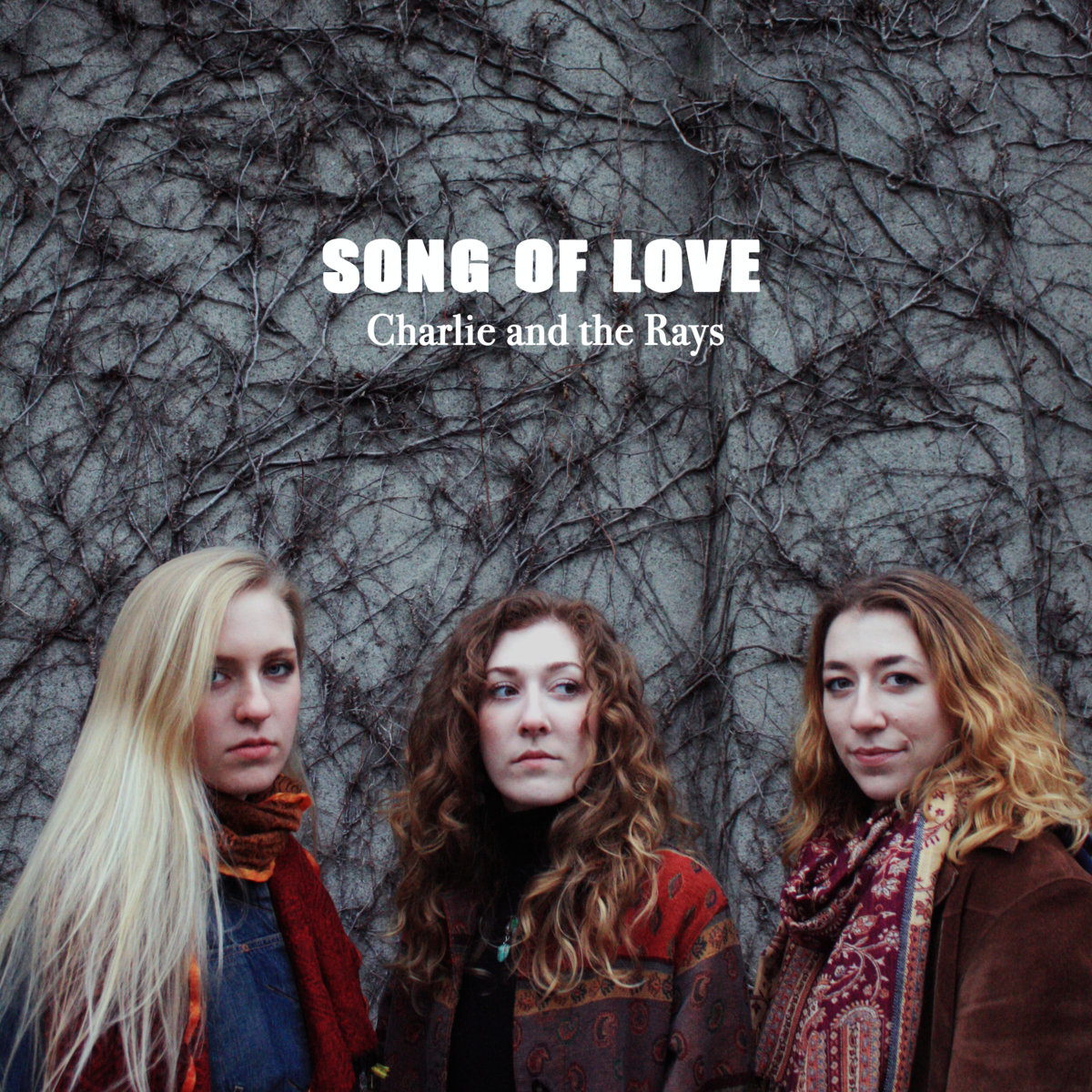
Charlie and the Rays have a new EP Song of Love, which is also the name of the second track, an homage to a child. That's appropriate as the "Charlie" part of the band's name is a tribute to a seven-year-old who used to hang out with them. The Rays are sisters Jordan and Rebecca Stobbe, Gracia Bridges and sidemen Jack Brady and Sam Kastner. Like other Rays' projects, this one centers on lovely three-part harmonies that draw comparisons to a slicked-down version of the Dixie Chicks. Instrumentation is kept understated so it doesn't compete with those voices. Wise. We hear this decision in full glory on a cover of The Beatles' "Dig a Pony," which is paced slower and missing John Lennon's hard edges, but is bolstered by Bridges' prominent bass riff. I like everything about this group and it makes me jealous they used to busk at Seattle's Pike Place. My town has many talented people, but our buskers—not so much! The Rays' folk/R & B mix is easy on the ears and long on talent.
★★★ ½

Guthrie Brown is sometimes compared to Tom Petty, though I find his indie sound more geared toward the 21st century club scene. His EP, Natural, often evokes images of packed bodies waving their arms above the heads in time with the groove. This is especially the case with the title track, with its soulful R & B melody with hints of funk. In like fashion, his "Wild Child" isn't the amped uninhibited electric madness of Hendrix, rather a polished ditty aimed at getting the feet moving. In fact, if the Montana-raised Guthrie had twang in his voice, it's the sort of song that country musicians use as a bright change of pace. The indie part? Guthrie is hard to pigeonhole. "Day to Day" is decidedly folk in temperament, "Lightening" has Paul Simon-like vocal cadences, but "Stay Gold" has a central hook that flirts with discordance and a melody and lyrics suggestive of early rock and roll. Cool stuff.  ★★★ ½

Okay, this gets confusing. There are at least three performers with the name Jess Ray and two of them sing Christian music. The best of them is based in Raleigh, NC and has several albums on her résumé, including Pull the Stars from the Sky, 10 songs whose content is praiseful, not preachy. Ray recorded them in an old mill in a single day with just guitar, mic, and guitar. Ray's voice has sometimes been compared with that of Brandi Carlile, but on the new album it's more like Buffy Ste. Marie with controlled vibrato—not in tone, but in the way Ray uses the reverberant room and spare guitar to create drama with her big voice. Songs like "After," "Water/Wind/Fire," "Set Me Right," and "Come to My Senses" are as spare as can be, but they sound huge. Whatever your personal convictions, you can believe in Jess Ray's talent. ★★★ ½   

Rob Weir


5/15/17

Elle a Misogynist Film

-->
ELLE (2016)
Directed by Paul Verhoeven
SBS Productions, 130 minutes, R (nudity, violence, disturbing scenes)
1/2

Let's get straight to the point: Elle is a violent misogynist film dressed up as a psychological drama. It was the French entry for the Oscars' Best Foreign Picture award and Isabelle Huppert was nominated for Best Actress consideration, but all that shows is how male-dominated the film industry remains. I will grant that Ms. Huppert's performance was riveting and courageous, but I wonder what the hell she was doing in such a film in the first place.

Huppert plays Michèle Leblanc, a woman haunted by a horror that befell her when she was ten: her wealthy father, seemingly without any reason, went on a mass murder rampage. A journalist snapped a photo of the child Michèle staring blankly into space, her face covered in soot from a backyard burning of papers. Since then, both she and her mother have been objects of hatred by those assuming they too are sociopaths. Unfair? Well… mother Irène is a plastic surgery queen who takes up with younger men á la Zsa Zsa Gabor, a behavior that disgusts Michèle, though one wonders why when she's doing the same thing minus the surgery. She is divorced, estranged from her son, Vincent, flirts with younger work colleagues, and sleeps around like a nymphomaniac. She even has office sex with the paramour of her best friend and business partner. Her justification? "I just wanted to get laid."

Michèle's job also arouses suspicion. She and her friend Anna (Anne Consigny) are the founders and creative heads of a video game company currently at work on a sex-, rape-, violence-, and gore-filled version of Lovecraft's Cthulhu. Ratchet the drama when a masked man in black forces his way into Michèle's apartment in broad daylight, throws her to the floor, bloodies her face, and rapes her. Does she report it? No; in fact, it's days later before she tells her colleagues what happened, an event she casually dismisses as unworthy of pursuing further. Besides, she doesn't trust cops. She doesn't even go to the cops when her company's server is hacked and Cthulhu's female victim—and why is it always a female victim?—has Michèle's face?  

Is the above distressing enough for you? Wait, there's more. SPOILER ALERT:  Michèle seeks to find out the rapist's identity so she can understand his dark motives. When she finds out, does she go to the police? Nope. She has beat-down sex with him a few more times. Guess she just wanted to get laid.

OK—I get the idea that both the attacker and Michèle are damaged goods prone to living on the dark side. I get also that both try move beyond those impulses by wearing disinterested masks. I guess Verhoeven wants to make the point that Michèle's attacker is the logical extension of the fantasies she sells. Or do both she and her rapist suffer from a toxic mix of Piaget-level anxiety, anomie, and existential angst?  Maybe Verhoeven is just a creep? He has, after all, given us peep show dreck such as Diary of a Hooker, Turkish Delight, Katie Tippel, Showgirls and Basic Instinct (Tag Line: You'll believe Sharon Stone has a vagina!)  

I am at a loss to understand why Elle captivated critics. It is, as I said upfront, a misogynistic film—one glommed onto some very silly and unnecessary side stories—Iréne's antics, scenes with Vincent's total Gorgon of a girlfriend, obvious red herrings—to get us to a finale that raises the ghoul bar another notch. Yes, Huppert is excellent. Has she ever been bad? But one wonders why this film needed to be made. Maybe there are self-loathing people like Michèle running around. If you know any, for God's sake make sure they get therapy.

Rob Weir

-->

5/12/17

Bernie Bashing and More Really Bad Ideas

-->


-->

The top of my latest really bad ideas roundup goes to Democrats looking for a scapegoat. I've had it with the constant carping that Senator Sanders cost Hillary Clinton the election. The brain-dead Democratic Establishment has managed to brainwash loyalists into treating Sanders like he was a sexist third-party spoiler. What nonsense! He ran against Clinton as a Democrat in the primaries and supported her in the general election.  I wonder why Clintonians think we have primaries in the first place. The nomination wasn't Clinton's by birthright, for heaven's sake. Odd that those Clinton loyalists didn't accuse her of racism for contesting the 2004 primaries won by Barack Obama.

Enough with Democratic alternative facts!  Here are some real ones based on polling data:

·      8% of Democratic voters switched to Trump
·      8% of Republican voters went for Clinton
·      Just 1.1% voted for Jill Stein and the Green Party
·      3.3% voted Libertarian, most of whom were likely disaffected Republicans
·      43% of Democratic voters thought Clinton to be "untrustworthy"
·      35% of registered Democrats stayed home, but so did 32% of those registered with the GOP and 33% of independents
·      Independents now make up 43% of the electorate and vastly outnumber those registered as Democrats (29%) or Republican (26%)
·      Clinton lost the independent vote by a devastating 11%
·      Clinton won the overall women's vote, but 52% of women never attending college went for Trump
·      Clinton won the college-educated vote by 9% but…
·      Just one-third of Americans have a college degree

The data is clear: As Forbes observed, non-voters decided the election. In the critical state of Wisconsin, for example, Trump polled no more votes than Romney four years earlier, but Clinton polled 230,000 fewer votes than Obama. Add to this the fact that Democrats have indeed become a party of elites; they poll very badly with independents, non-professionals, and those with lower educational attainment.

Clinton lost. She was a poor candidate. Turn the page. All the carping, whining, and scapegoating serves only to make Democrats look like the party of acrimony, delusion, atrophy, and the past. Unless that perception changes, Democrats are doomed to be the Federalists of the 21st century—a regional party confined to the Northeast and West Coast. 

*************************************************
It really irks me when high-tech complicates simple things. The Chinese firm Shoulian Zhineng has taken this to hitherto unknown lows. It seems that some businesses are plagued by restroom-users stealing toilet paper. The solution? Dispensers using facial recognition software. Inconvenience meets creepiness. A machine reads faces and then dispenses a single two-foot-long stream of toilet tissue. Don't even try for more. Not surprisingly, some of these $700 machines have been sabotaged—and rightly so. Yes, you read that right–$700 to prevent people from lifting a 70-cent roll of toilet paper. As bad ideas go, this one stinks to high heaven. If toilet paper theft  has really reached  epidemic proportions in China, isn't the real solution to improve economic conditions so that people don't have to debase themselves this way?

*************************************************

Flying simply isn't much fun these days. Name a beloved American airline. Yeah—I give up as well. That said, it's a really, really bad idea to fly on either Frontier or Spirit. Normally I don't get excited about Internet customer reviews; they are the forums of either the disgruntled or shills, and a larger sample size is needed for them to be remotely scientific. Still, it's hard to ignore reviews when no one has anything good to say about these two carriers. Each reinterprets the word "discount" as "you don't count." No-frills doesn't even begin to get it. Water will cost you $4 a pop on Frontier, which also offers you a whopping 24 inches of seat space with a 4 inch clearance from the passenger in front of you—assuming that patron doesn't recline. Check a bag and it's more than $60. Want to arrive on time? Hah, hah—that's a good one! A Boston Globe reporter wanted to try Frontier to see if it was as bad as billed. His verdict was that it was worse! Moreover, he "saved" just $60 after paying for several "frills." I recall an old slogan about the Yugo, considered by many to be the worst car ever sold: "If you can only afford a Yugo, you can't afford to drive." You see where I'm going with this?

*************************************************

Pizza Hut hired an Israeli ad agency and posted its handiwork: an imprisoned Palestinian hunger striker secretly snacking on—you guessed it!—a slice of P-Hut 'za. Wow! That is soooo funny. Are you freaking kidding me? Pizza Hut apologized. Oh swell. That's what idiots do these days when their idiocy goes public. Who thought this was amusing? Fire them. Fire also the head of the ad agency that either green-lighted the ad or was asleep at the wheel. Now let's turn to Pizza Hut. It boggles the mind that anyone associated with the company could have allowed this to go forward—even in an age in which it seems to be okay to insult the weak. Sounds like the Democratic Party isn't the only entity that needs a top-to-bottom makeover. How about a new ad: "Pizza Hut: Awful food for Awful People."