Showing posts with label Pop. Show all posts

10/1/24

September 2024 Music: Lisa Bastoni Kylie Fox Moira Smiley Surrender Hill Yosef Gutman


Time for more this and that music. In other words, yours truly has fallen behind again!
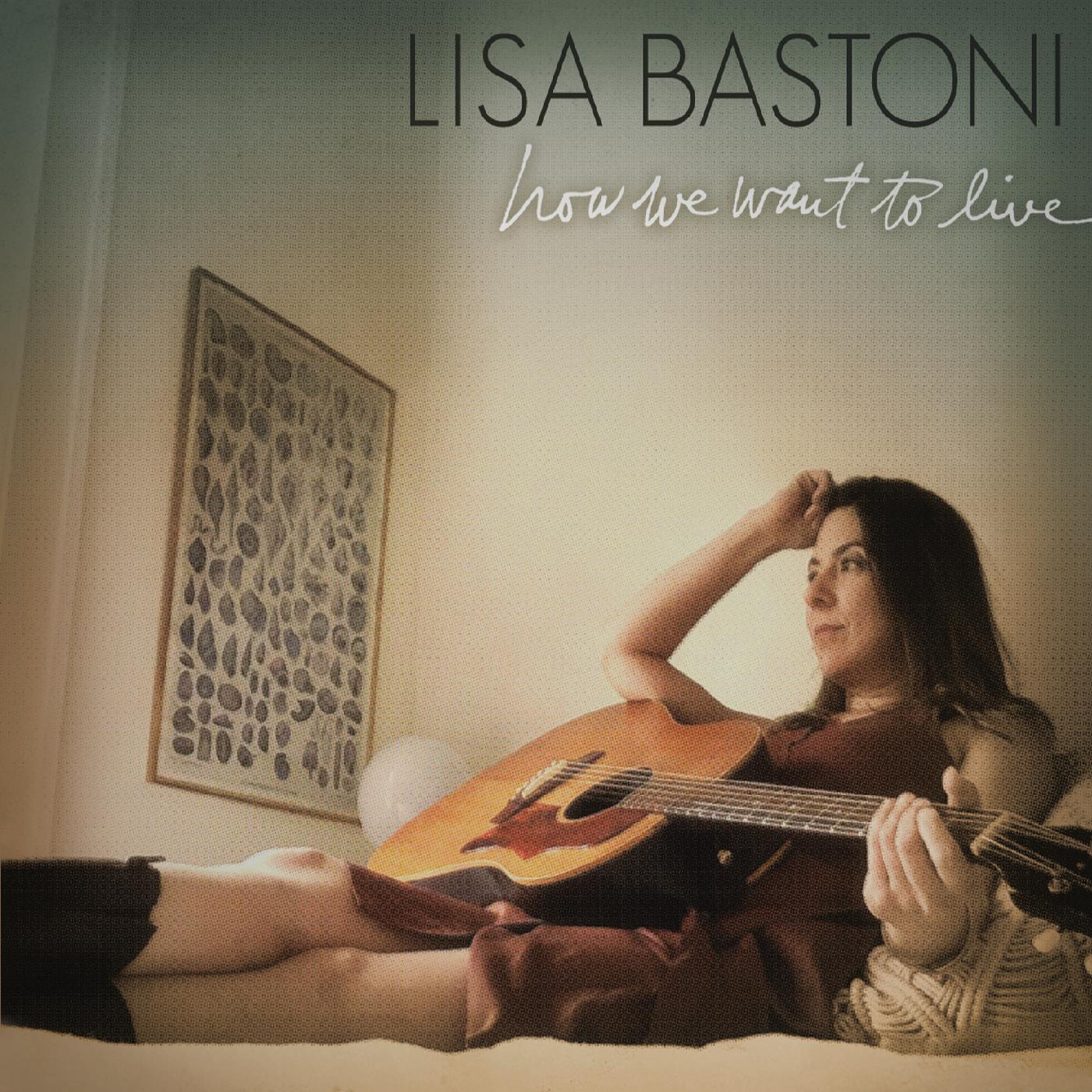


If, like me, you often crave soothing music from an earnest songwriter who doesn’t do fake drama, check out Lisa Bastoni. I picked up two of her albums, her most recent On the Water and 2019’s How We Want to Live. Each is as soothing as a warm shower–even when she’s singing about painful things. On the Water includes a cover of Dylan’s “Workingman’s Blues” but her own “Pockets Full of Sighs” has a similar languid, phlegmatic vibe in that it’s personal yet sounds detached. Mainly it’s just a good song. Also try the upbeat good earworm “Walk a Little Closer.” That’s the versatile Sean Staples with her and the man is lethal with a mandolin in his mitts! How We Want to Live is practically self-defining. “Right Side of the River” covers topics of self-discovery and it’s a backdoor tribute to where she now lives (says her fellow Northamptonite). “Let’s Look at Houses” is a little bit of country and a cheeky sneak attack on property values. Ironically, though this album is often amusing, she wrote it as her marriage was dissolving. Many of the compositions were inspired by her grandmother’s wisdom–not to mention that she inherited “Nora’s Guitar,” a poignant and lovely song on the album.


Moira Smiley has an Irish name, but is a Vermonter by birth. She does some sean​-​n​ó​s (old style) Irish singing, and has performed with Irish musicians, but she’s also grounded in shape-note, jazz, classical, and Eastern European music, plays numerous instruments, and has a penchant for medieval music. For all that, she’s a folkie at heart, if you accept that any album named The Rhizome Project Album will veer into unexpected places. It’s actually the handle of the string quartet that accompanies her, but also descriptive of melodies that sheer in both lateral and horizontal directions. Smiley sings well known trads such as “Go Dig MyGrave, “Now is the Cool of the Day,” and “John o’ Dreams,” the first suitably haunting and sober, the last introed by a poem (that reappears), and makes us wonder about the significance of a vid featuring a beach and a woman in angel wings. The vocal of “Cool of the Day” is as minimalist as “Dig My Grave” is lush. “My Son David” (with Taylor Ashton) is a dark Child ballad that is somehow warm, yet invites eschatological contemplation. I’m assuming there aren’t many Welsh speakers out there, so listen to “Ar lan y mor” to appreciate Smiley’s considerable vocal chops. Pick any track on the album and you’ll discover that old ballads have more present-day relevance than you might imagine.


Kylie Fox specializes in Canadiana music, which like the Americana handle, is a kitchen sink of folk, folk rock, country, and jazz-pop fusion. On Sequoia Fox celebrates things we take for granted. That song pays tribute to firefighters who battled to save a giant tree from perishing, which she connects to other things her life that are rare. It might be a bit of a forced analogy, but many of the strands of Canadiana appear in it. “Brandi Baby” reveals that Fox leans harder toward the pop side of the mélange. It won’t surprise readers that I much prefer straightforward folk such as “Alberta,” which more clearly reveals the colors of Fox’s voice–its power, control, and high-to-low range. It’s inevitable that when musicians opt for a broad repertoire that some explorations will enthrall more than others, but in all honesty I liked Fox’s earlier repertoire better. To my ear it was less cluttered.


Seems only fair to turn to a “Americana record. River of Tears is the seventh studio release from the married duo of Robin Dean and Afton (Seekins) Salmon who perform as Surrender Hill. As noted, Americana is also a catchall category, though the dominant strain isn’t hard to find. For Surrender Hill it’s the rock-influenced modern country music. Nonetheless, it’s been a twisted road to get there; Robin Dean was born in South Africa and once played heavy rock, and Afton is a native Alaskan from a folk background. As songwriters, hers are often the more emotional contributions. On Valentine’s Day she wrote “Holding Me, ”a straight up love song. whose title says it all despite tinges of hopefulness. His contribution was "River of Tears," a love song for sure, but more in the vein of classic country. “Cry Baby” is basically a rock n’ roll song with vocal twang, but “Get Out of Your Own Way” has a Western flavour, right down to the spaces in the musical phrasing. If you like old-style country, “Angel, The Devil and Me” says it all.


Yosef Gutman Levitt is an observant Jew from Jerusalem, but the man plays a mean standup bass, including a five-string model that he had a hand in developing. Gutman’s music emanates from a spiritual place, but he is also interested in what he calls a “light, bouncy” effect created when classical music and jazz improv are made as accessible as folk music. His new release, The World and Its People, is on his own new label, Soul Song Records, a perfect handle for his intentions. He is joined by guitarist Tal Yahalom, cellist Yoed Nir, and pianist Omri Mor. The quartet might not always make music that you’d normally gravitate toward, but as odd as it might sound, many of the compositions have jam band-like explorations. Try the two tracks “My Soul Thirsts” and “Shifting Sky.” Note how the first has an understated yearning and the second what seems a loosely structured meandering that embodies its title. 


Rob Weir

7/3/24

The Magic of Motown Lacks Versimilitude


The Magic of Motown

Academy of Music 

June 22, 2024  


Back when we both did freelance work at a local arts paper a friend and I had a friendly debate over how to judge a performance. He was always more charitable, so I accepted his assertion that it wasn't fair to hold novices to the same standards as seasoned pros. In essence, you shouldn't review a community theater production the same way you would a Broadway cast doing the same show. 


Back then we had an A/B slant on things, but I wonder if maybe we sliced that too neatly. Is there anything between an amateur and a professional? This thought occurred when I saw a stage show titled The Magic of Motown. It had some wonderful highs but also several lows. 


It's a great idea to honor Motown. In 1959 Berry Gordy opened a studio in Detroit soon dubbed Hitsville U.S.A. If you didn't live through the 1960s it's almost impossible to explain how much Motown and rivals like Stax meant to young people. At a tense moment in time, Motown bridged the gap between black and white kids better than any demonstration, manifesto, or politician. Gordy had a genius for spotting and cultivating talent.   


At the beginning of the 60s the early promise of rock had stalled. There was always great music to be found in city subcultures, but if the radio was your doorway to the world the airwaves didn't sizzle, they recycled–crooners, teenybopper death ballads, doo wop, over-the-top fading celebrities, and an endless parade of “girl groups.” (That was actually the term!) Were it not for Dylan, The Beatles, and Motown I don't know how we would have made it to acid rock and the Summer of Love. 


Motown wasn't good; it was spectacular! Gordy recorded one sensation after another: The Supremes, Aretha Franklin, The Temptations, The Four Tops, Martha and the Vandellas, Gladys Knight and the Pips, Stevie Wonder, Smokey Robinson, and many others. 


As for The Magic of Motown, pros or amateurs? Aye, there's the rub. What is it if a show costs half as much as what you'd pay to see a 1A  act? How do we classify a cast that is somewhere between cosplay and a tribute band? The Magic of Motown show was also running on the cheap. There was supposed to be a six-piece band but, depending on tells it, illness forced it to cancel or there was a dispute in the ranks. There were supposed to be 18 singers, but only half that many were in attendance. Nonetheless, some of the ticket prices hit three figures. 


 Most of the performances–despite occasional technical glitches–were fine, but the overall effect was that of a group of impersonators trying to make us think they were channeling the past. That's pretty difficult to do with pictures on the Real Deals projected on a massive screen behind them. I'd listen to any one of the show performers sing, but don't ask me to believe that the beefy woman with bad white eye shadow is comparable to Aretha. (Who could be?) And for heaven's sake don't try to pass off a boa-wearing giggling granddaughter as Diana Ross or ask me to imagine that the same singers were Stevie Wonder, David Ruffin, Marvin Gaye, and Al Green. Ironically, a highlight was when the same granddaughter did a dead-on impersonation of Michael Jackson from his “ABC” days with The Jackson 5. That choreography was crisp and energetic . 


As the night wore on, I got the sense that the cast was valiantly donning one costume after another and soldering on, but knew they were treading water. The audience was polite and several were wildly enthusiastic, but the latter fell short of what I'm accustomed to seeing at the venue. I wonder if everyone would have felt better had they paid half as much. I worked the show and paid nothing, but my brightest spot was playing some old Motown at home.


If Magic of Motown has a reboot, a good starting point would be to keep the biggest icons on their pedestals. To paraphrase an old Motown hit, there ain't no mountain high enough to inhabit the talents of Diana Ross, Aretha, Smokey Robinson, or The Temptations. We’re talking diva, the Queen of Soul, the premier male group of the era, and a singer whose voice was like being massaged with velvet. It’s fine to call the show an “interpretation,” a “remembrance,” or a “cover,” but don’t try to step into the skins of giants.


Rob Weir


6/29/22

June Music: Ike Reilly, Hadley Kennary, Marisa Monte, J.P. Gertler, FlamenGrass


Ike Reilly
has appeared on this blog before. He’s back with Because the Angels, a blue-collar album about blue-collar folks in the vein of Billy Bragg and Bruce Springsteen. His is a combination of raspy protest folk, country rock, blues, and attitude. The album title comes from a song titled “Little Messiahs” and it would be safe to say that Reilly has no time for the hollow promises of politicians. He asks: Who will sing these working blues/for the working poor/whose souls are oozing/solvent as each day it passes on?” When he sings: Because the angels are in the chamber/They’re casting ballots/with made up names/And all the dead men/they’ll vote again friend/And the angels/they’ll take the blame, he’s not talking about Trumpian paranoia or Fox News lies. His sympathies are solidly with those who struggle hard and fail (“Trick of the Light”) and those who try to drown their despair of a closed factory in drink (“The Failure of St. Michael”). And don’t get him started on hope testing negative/false prophets and positives dispatching all those lies (“Healing Side of the Night"” or cops who shot a man in front of his children in the back self-proclaimed Christians who proclaim the shooter a martyr or a saint (“Someday Tonight”). In some form or another, Reilly spends most of the album calling out BS and hypocrites. If you wonder where protest music has gotten to, look no further. What a relief to hear someone call a spade a spade.


If you need something catchy to bring you up from the (needed) medicine Reilly gives you to drink, try a dose of the pop-laced offerings of Hadley Kennary. Crooked Roots is more than balloons and sugar. Think of it as pop-like in places, but not the stuff dipped from the radio play slop bucket. The title song  makes a few things obvious. First, Kennary (rhymes with canary) can really sing. She knows when to let the melody drift and when to open the dam. Second, she makes sure to enunciate the lyrics. About those, they are decidedly a cut above the usual in that they are personal and confessional in ways associated more with folk music than pop: My roots are shallow but they’re many/Hallowed strong and steady, and I know I’ll be fine/With these crooked roots of mine.  I rather wondered why her material is labeled “pop,” and suspect it’s because “folk” doesn’t market well these days. (More’s the pity!) The studio version of “"Orbit” has pop hooks and sheen, but they’d lose little if the latter was stripped away. By the way, I love the little catch in her voice and the off-kilter cadences in the chorus.  She’s been called part pop starlet and part troubadour. Let’s go with the latter, shall we?


I like bold artists who aren’t afraid to put themselves out there no matter what anyone thinks. That fits Marisa Monte like a glove. But I guess it helps one’s self-confidence to be acknowledged as one of Brazil’s greatest vocalists and the recipient of four Latin Grammys. Her latest, Portas, is another rose in the hair of a 30+ year career. The title track video captures her various personae: elegant, sophisticated, quirky, Gothic, sexy. Her repertoire is a combination of pop, Latin soul, and salsa. “Calma” shows that mix  as well as the effortlessness that marks truly great vocalists who save their sweat by not forcing the voice to go outside its range, though Monte’s is considerable. Check out the breath control and exquisite timing in the pop-meets-cool jazz “Medo do Perigo.” Or her smooth-as-silk duet with Seu Jorge e Flor on “Pra Melhoar.”  I get it that some might find her too mainstream for their taste, but watch some of the clips to see a legend in the making.


Jonathan Paull Gertler
is currently based in the Boston area. He’s one of those artists who gets slapped with labels such as folk rock, folk, or Americana. No Fear won’t resolve this, so pick one. “Grasp the Moon” is a sweet song with some nice tumbling guitar runs, but I guess it can’t be pure folk because there’s no pain in it!  It’s about a stable relationship and calls upon him and his main squeeze to Grasp the moon/Shoot the stars, a metaphor for being open to serendipity. He ups the tempo and adds catchy melody lines in “I Wish I Knew”  but its theme is similar. “Just Another Day” has a touch of shuffle, but like most on the album it has an upbeat message of getting up when life tries to slap you down. “Low Lying Sun” has a folk rock vibe, but also a little dash of Spanish-style guitar work. ’m not wild about Gertler’s voice, but his message of perseverance is a needed antidote for our times.    


Thomas Friedman proclaimed that earth is flat. If you doubt him, listen to the Barcelona-based quarter FlamenGrass. Their new recording Alegria (“Joy”) is North Amercian styled bluegrass with a lot of other stuff thrown in. That album-defining song has a grassy feel with hints of Roma and klezmer. As you’ll see right away, the band is anchored by Lluís Gómez on banjo and vocalist/fiddler Carol Durán. (Maribel Rivero is on double bass and Javi Vaquero on acoustic guitar.) As you will see on “Station to YourHeart,” Durán is the sparkplug and Gómez is the quiet virtuoso. But everybody gets do his or her thing on “RumbaGrass,” with its take-your-turn breakout solos. FlamenGrass is fun to hear and watch because their music is at once familiar but not too familiar.


1/24/22

January 2022 Music Roundup: Dwight and Nicole, Aigua, Elgin, and…


Dwight + Nicole

Further


Dwight Richter and Nicole Nelson
have been nominated for fistfuls of music awards in Boston and throughout New England. Deservedly so. Theirs is a delightful throwback to the age of straight-ahead soul, blues, and R & B of the sort that can actually be played on stage and doesn’t resort to gimmicky attempts at rapping. They have recently dropped a new EP, Further, that pays homage to musical inspirations such as the Staples Singers, Roberta Flack, and Etta James but without being derivative of them. Nelson, who also plays bass and violin, isn’t merely a talented vocalist; she knows how to sing, if you catch my distinction. The reason this is noteworthy is that she’s a natural soprano within genres that have traditionally favored mezzos and altos, so she resorts to her full bag of skills to roam on the range. Richter is also an adept singer, though his Flying-V Gibson is the first thing you’ll notice. They’ve added Erza Oklan, a steady drummer, to the mix and everything is oh-so-fine. Check out “The Next Go Round,” which croons, swoons, and busts out its lo-fi wrapper to soar. Richter takes the mic for the title track and gives it a quasi-Aaron Neville treatment. "Wait" is another muscular treat–and it has a message. Keep your eyes peeled for these folks.   ★★★★


Aigua

Noninó


First let’s get this straight. There are two groups called Aigua, one of which is a jazz ensemble. This review is of the folk duo of Lies Hendrix and Joan Pieiró Aznar, he from Belgium (and now living in Sweden) and she from the Valencia region of Spain. Not that nationality matters very much, as most of the vocals are in Spanish from the Belgian-born Hendrix who plays a lot flamenco-style guitar, while Aznar accompanies on melodeon, a diatonic button accordion invented in Germany. Does it work? It sure does; listen to the album’s first single “Décime de la mare terra” and hear it for yourself. Is it a multicultural world or what? Aigua is Catalan for water and that’s a good metaphor for music that flows, cleanses, and takes us on journeys and lets us dance a bit as we go. You might feel like traipsing along the water’s edge to “Bruidsmazurka,” or breaking out the castanets for “Fandango D’Aiora.” Perhaps you’d rather queue up the Nonino and feel a bit melancholic. It’s based on a tango that Astor Piazzolla dedicated to his father, whose nickname was “grandfather, the meaning of noninó. It’s an apt way of thinking of the entire project, which has echoes of Piazzolla and the manouche jazz of Django Reinhardt throughout. ★★★★


Elgin

Weightless Still


The Irish band Elgin used to be called The Young Folk and there comes a time when that’s the kind of handle you want to lose. It’s really a duo of Anthony Furey and Paul Butler, with a programmer usually sitting in as well. I have mixed feelings about the latter. Weightless Still is what you might get if you blended Clannad, The Low Anthem, and an electronics-heavy indie band. Furey and Butler have soothing voices and when you see them in performance, those voices make for a pleasing effect. You can witness this to good effect on “Cherry Picked,” the first single released from Weightless Still. There is a nice balance between the voices, acoustic guitar, keyboards, and a small dose of computer-generated backing. Matters shift a bit when we hear studio recordings and the electronic portions get bigger. Watch the video of “"Stone’s Throw,” which could be summed as a girl, a swirl, and a whorl. Perhaps there’s a bit too much of the last of these, as the light voices are easily subsumed when too much is going on. Another in this vein is “Sloe,” which uses programmed drum loops. The album is actually terrific as background music, as it’s melody-heavy and unobtrusive. The question is whether this is the vibe they aimed to create. ★★★  


Hmmmm…


Ro Myra

Nowhere Nebraska


Ro Myra makes no bones about needing to break away from her rural Nebraska roots and sew her own wild oats. She has met a lot of the right people to help her along her musical path, but she might wish to consider really busting out. Although she’s now in Nashville, Nowhere Nebraska feels too subdued and introspective for a town that’s crawling with hungry talent. I watched the video of “She's Not the Road” one of her singles, and immediately thought “folk circuit.” Another song is titled “More Than Just Okay,” but her repertoire needs to establish more distance from that low-bar standard. There’s promise here, but my Spidey-Sense tells me that her songs, arrangements, and presence need to marinate. ★★


Errin Peet Lukes
is from California but she too is now in Nashville. Her EP titled EPL shows that Lukes has a nice voice, but it’s not a clear one and you’ll need a lyrics sheet to unravel them. I wouldn’t bother; there’s not much poetry to them. Her music is informed by a bit of bluegrass, her youthful devotion to Britney Spears, and a lot of indie pop and rock. The melodies are strong, as one would expect from Nashville sessions musicians. Frankly, though, they threaten to overwhelm her. Lukes may have a bright future, but EPL doesn’t establish a unique identity. Try “Catalyst” or “Country Music Breaks My Heart.” If they don’t grab you, she won’t. ★★


Esbe
apparently has a following in London where she’s a composer, producer, and singer. Her LP Under Cover is, at the title suggests, ten covers of everything from The Beatles (“Yesterday,” “Eleanor Rigby”) and Simon and Garfunkel (“Bridge Over Troubled Water’) to Cole Porter (“Night and Day”) and a Christmas song (“Silent Night”). There’s a reason why great performers parsimoniously parcel out covers. After all, you didn’t come to a show to hear someone else. Esbe’s covers are piano-based and so deliberate that somnambulant would not be too strong a word to describe her approach. It doesn’t matter how many candelabra you put on the piano or how many strings you fold in, unless you’re breathing new life into old tunes, you’re a cover band and I can hear really good ones in bars near me. Zero stars.  


10/6/21

Eight Days a Week: The Beatles, Hope, and Chaos


 THE BEATLES: EIGHT DAYS A WEEK–THE TOURING YEARS

Directed by Ron Howard

Apple Corporation/Hulu, 97 minutes, PG.

★★★★


Like many people my age, The Beatles rocked my world. I was too young for Elvis and the pop music of the early ‘60s was so naff that I wasn’t sure what my pre-teen self was seeing when The Beatles first appeared on The Ed Sullivan Show. It didn’t take long to fathom that music was undergoing a seismic shift. Whatever one thinks now, it’s hard to exaggerate how profoundly The Beatles altered the musical landscape.


The documentary Eight Days a Week first appeared in 2016. It won a Grammy for Best Music Film and a few Emmy Awards (sound editing, sound mixing), but didn’t have a broad theatrical run in North America due to the decline of independent cinemas and the generic preferences of mall theaters. If you’ve not seen Eight Days a Week, you should. That’s especially the case if you’ve seen either A Hard Day’s Night or Help. Both of those were directed by Richard Lester, who reminds us that though the lads had a blast making the films, it didn’t take a creative genius to imagine the mayhem depicted in them.


Eight Days a Week mostly covers the years 1962-66, when The Beatles were at their peak popularity, dominated the pop charts, and toured constantly. You will notice it’s rated PG. The Beatles were a breath of fresh air in the United States. The arrived in 1964, just 11 weeks after President Kennedy’s assassination. Many elders were horrified, but their mop top haircuts, Edwardian suits, goofy charm, and earworm music exuded innocence and restoration for millions of young people. Director Ron Howard’s film captures this, along with what might be called safety valve hysteria, a combination mob scene and screamfest. Ringo recalls that the 1966 Shea Stadium show was so loud and the sound production so primitive–amps were funneled through the stadium’s PA system—that he couldn’t hear a thing and needed visual cues from his bandmates to figure out the beat.


Luckily for us that Giles Martin–son of The Beatles’ late producer George Martin–remastered the soundtrack. Also lucky for us, Howard worked with Apple. Ever notice how many music documentaries have short bursts of the original songs that are often sung by someone else? That’s because securing rights without paying a king’s ransom in royalties must fall within strict fair use standards. Howard had no such restraints. He also got permission to mine archival material from Paul McCartney, Ringo Starr, plus Yoko Ono and Olivia Harrison, the widows of John Lennon and George Harrison. This makes Howard’s film a musical treat and opens windows for revelations.


He stumbles on the revelations; it’s hard to say anything new about a band so well covered. We know, for instance, that The Beatles didn’t come from “nowhere;” three of them had been playing since they were teens. We know about their Berlin gigs and that Ringo replaced Pete Best as drummer and became a stabilizing force. We’ve also heard them credit Brian Epstein with remaking their image. We even know about the mania that followed the band wherever they went. Seeing it on film, though–carefully curated and edited by Paul Crowder–certainly makes one wonder how the four tolerated the craziness.


The answer is that The Beatles were young. Eight Days a Week is also a boys-to-men film. Being mobbed by teenaged (or not!) groping girls when you’re 21 is one thing; it wears thin when you hit the mid-20s. Howard suggests that The Beatles were loved to death. Their August 29, 1966, Candlestick Park show is often cited as their last concert. That’s not quite true; Howard’s film ends with a coda of their January 29, 1969, rooftop concert atop Apple Corps–literally the last time The Beatles played live. After Candlestick, though, they stopped touring. Paul recalled they were so weary by 1966, that they went into the studio, chose not to be The Beatles, and were reborn as Sgt. Pepper’s Lonely Heart Clubs Band.


Like most documentaries, this one has talking heads. The archival interviews and commentary stand out more, though Whoopi Goldberg speaks very eloquently of how the band represented a giddy moment of color-blind hope that she cherishes to this day. Some of the others–Eddie Izzard, Elvis Costello, touring manager Neil Aspinall–say about what you’d expect, and I’m not sure why gadfly Malcolm Gladwell was interviewed. Mostly, the film moves at a fast clip in keeping with how the ambiguously labeled “Sixties” unfolded. I often used images and clips of the 1962 and 1967 Beatles to drive home to students the speed of social change during the decade. Indeed, it wasn’t just The Beatles who were pushed to the edge by that surging surf. See Eight Days a Week–available on DVD or streaming–and realize what I mean, as you sing along to some of the most infectious songs ever recorded.


Rob Weir

3/17/21

March 2021 Music: Joy Formidable, Rob Williams, Our Girl, Frances Quinlan


If I told you that The Joy Formidable (TJF) sings a really great song titled “Y Golau Mwyaf ywr Cysgod Mwyaf,” where would you reckon they’re from? Wales, of course, a place where Vanna White could have made a fortune selling vowels. Rhiannon Bryan holds down most of the lead vocals, but her voice is often supplemented by the light tenor of bass/acoustic guitar player Rhydian Dafydd, who uses tones that approach falsetto to provide bell-like scaffolding for Bryan. Matthew James Thomas keeps everything steady with all manner of percussion, including tambourine jingles on his shoes. There are lots of wonderful Welsh bands, but the only other place where Welsh is the main language is a small section of Patagonia. Bands with a wider outreach such as TJF also often sing in English. The post-punk “Austere” is one example of this, though I prefer more-controlled songs such as “Silent Treatment,” with its faint echoes of Scandinavian kulning vocals, and their acoustic treatment of the curiously named “My Beerdrunk Soul is Sadder than a Hundred Dead Christmas Trees.” (The album version is loud and obscures the lyrics.) Plus, I love the tone of Dafydd’s Taylor guitar.  But if you prefer big feedback-laden noisy rock, try “Whirring.” If you didn’t pick up before that Bryan is a dynamo, you’ll be clear after this one. And her bandmates can bring it as well. It’s more hype than they need, IMHO, but their mix of soft, hard, and electronica is infectious even when it goes over the top. It’s not the same repertoire by any means, but somehow TJF put me in mind of The Cowboy Junkies minus the covers. In case you’re wondering, the Welsh in the first song translates “The Biggest Light is the Biggest Shadow.”   


Richmond’s Rob (“don’t call me Robbie”) Williams has a recent release, Weathering the Storm, Vol. 1 whose title holds a double meaning. It’s a commentary of the past year of coping with the Covid crisis, as well as a nod to his own recovery from depression. His is music in a country folk/indie rock vein. If you’re not familiar with his music, his song “Nameless” helps explain why: If you wonder what became of me, I’m nothing but happy/Don’t want to be famous, I’m content being nameless. He might not get a choice about the fame part; he’s too good of a songwriter to remain forever in the shadows. He currently works with a tight band that toggles between subdued and loud. “Falling Sky” is one of the latter, courtesy of older sister Leslie’s electric guitar. Like a lot of Rob Williams’ songs, this one opts for depth rather than just being catchy. It’s about a different kind of noise–the litany of media-driven doom and woe–that tries to convince us the sky is falling. Williams is also a fine narrative songwriter. “Ghostwriter” is a wordy semi-love song, though each syllable matters. It’s one of two love-that-burns-but-burns-out stories, this one between characters titled Rosie and Justin. The other is “Long Distance” and its hook line–Sarah does what Simon says–presages what happens. It’s about a bicoastal relationship that eventually dissolves when Sarah decides to stop doing what Simon says. Williams is his own man, but for those fishing for analogies, his acoustic-driven songs evoke Josh Ritter.


Our Girl
is a trio from Brighton, England, fronted by Soph Nathan, who sings and plays electric guitar. The band has been compared to a mix of The Pixies and My Bloody Valentine. I like Nathan and she can shred, but the repertoire needs refinement. “I Really Like It” has some nice pop tinges to balance the grunge, but by the time it’s done, Josh Tyler’s simple but effective bass lines are more memorable than the noise that follows. “Two Life” is like this as well. There’s potential in the band’s blend of charm, energy, and garage guitar, but I heard four songs and they were all very similar.


I heard a bit of Frances Quinlan with the Philadelphia-based indie band Hop Along and enjoyed her. I was, alas, totally underwhelmed by Quinlan’s three-song set at Paste Studios. Several things. First, when you’re 34, don’t sing like you’re 14. Second, hire a guitarist. Listen to “DetroitLake.” If you don’t like it, move on as the other two have the same feel.

10/14/20

Rebecca Loebe, Silversun Pickups. Ellen Starski, Devil Makes Three, Salim Nourallah, Wonder Years


Perhaps you remember Rebecca Loebe from The Voice or caught her opening for someone like Mary Chapin Carpenter, Shawn Colvin, or Ellis Paul. These days she’s been headlining on her own, which is right and proper. As a kickoff to Give Up Your Ghosts, she made material available from her wonderful 2010 debut Mystery Prize. It’s a great way to familiarize yourself with this rising talent who, after a stint at Boston’s Berklee College of Music now lives in Austin­. Loebe has a fondness for love songs–just not the ordinary kind. “Mystery Prize” is an example of that. It’s about a first date that might be the perfect man, though she’s not sure: I got my eye on the mystery prize. After all, love is a blood sport, you lose if you draw/You can only win if no one loses at all. “Marguerita” is a lovely song of two lovers. The catch? They are illegal immigrants who have been caught and separated. “California” is a love song to the Golden State, but one she’s leaving before the alcohol, nicotine, and caffeine drag her down. “Land and Sea” is wonderfully enigmatic. Does she wake up to second thoughts, or was it a very naughty dream? Loebe goes for a country vibe on “Married Man.” Its line You can’t knit socks for a married man/No matter how you tell yourself it’s fine is a dangerous attraction cautionary metaphor. Loebe has traveled and produced a lot since 2010, but she still likes to keep things a bit mysterious.   


Silversun Pickups
engender strong opinions. Their newest record, Widow’s Weed has been called a “gem” and “emotionally satisfying.” It’s also been dismissed as “forgettable” and “mostly boring.” This LA-based rock band draws comparisons to My Bloody Valentine, which means they’re hard to pin down. Silversun has been labeled post-punk, indie, dream pop, and “shoegazing,” the latter of which fits, once you get past the silly handle and know it’s basically acid rock. In truth, their full electric sets can be ragged and there’s not a lot of poetry in their lyrics. Maybe they’re better unplugged; their four-song set at Paste Studios is good stuff. The quartet is stripped down to just Brian Aubert putting his voice and his acoustic guitar through the paces, and Nikki Monninger laying down aggressive bass and adding harmonies. One offering is their 2009 single “Panic Switch,” which seems to be about an anxiety attack, and the rest are from Widow’s Weed. The most enigmatic of is “Freakazoid” lyrics such as, And this freakazoid/Who needs a little relief/Relief, relief… don’t unlock a song about someone trying to believe he’s trying. (To do what?) “Don’t Know Yet” is a can-this-relationship-be-saved song. Perhaps not; and it’s time to reboot the machine. “It Doesn’t Matter Why” won’t win any literary awards either, but Silversun Pickups is about energy in the moment. Count me among the satisfied.


Ellen Starski
has a unique voice that’s husky in a whiskey-steeped way. I adored her debut album, When Peonies Prayed for Rain (2018). And then she moved to Nashville. Sara’s Half-Finished Love Affair is a deeply disappointing sophomore release. I place the blame on the poor judgment of producers Lucas Morton and Max Hoffman. The album is well-written and it’s based on a cool idea. “Sara” is Starski’s composite of women she’s met plus some internal thoughts. She used these to imagine how life and love play out over the years. Alas, Nashville smoothed her edges and turned her into just another doggie in Generica Corral. “Come to Me Lover” cries out for gritty treatment, not echoey processed pop and little girl tones. This is almost as baffling as the faintly Liverpudlian accent we hear on “Have We Forgotten.” “Never Met a Ghost”has a bluesy melody that commands a soulful vocal. Instead, the mix is so thick that Starski could be singing cereal box ingredients. And what’s with the odd spaciness of “The Satellite That Changed Its Tune?” Was Sara in love with ET? The title track is pretty, if one overlooks the dreadful instrumental bridges and the outro with interstellar electronic crickets. Find Your Way” would be a great song if given a Bill Withers treatment and without intrusive percussion. There’s not a song on the album that’s not overproduced.    


Shorts


The Devil Makes Three
hadn’t released a new album since 2013 until Chains are Broken. You can hear a few tracks off that record, including “Castles,” a nice song about a woman who keeps falling for Mr. Wrongs when Mr. Right is right in front of her. TDMT used to rock out more, but these days they are mostly an acoustic country folk trio (or quartet when touring) anchored by dry-toned vocalist Pete Bernhard. “Castles” features crystalline acoustic riffs from Cooper McBean, the go-to guy for leads, with Lucia Turino putting down the bass lines. Try also “Mr.Midnight,” (2014) with its rockabilly feel, and “This Life” (2011), a bit of country breakdown about making the best of what life throws at you.


Maybe it’s the times, but I lost interest in Let’s Be Miserable Together, the first of five planned EPs by Texas songwriter Salim Nourallah. The title track sets the mood with its tag line, If we can’t be happy on our own.. let’s be miserable together. That could be funny, but it comes across as embracing misery. Doses of irony and satire would help, but the EP is mostly a laconic pity party. “Winners” is another example. It could be a devastating take-down of hipsters, but feels more like an outsider’s jealousy. The melodies of two of the tracks, “Assassins” and “A Simple Love,” sound like raw acoustic Beatles tracks before studio enhancements. Wrong album for wrong times.


I can’t help contrast Nourallah to the power punk band The Wonder Years. They’re supposed to be filled with angst, right? They are, but these heroes of the Vans Warped Tour temper thrash and bang with wry commentary and the right touch of sentiment. “Washington Square Park” contains likes such as: The whole world’s full of losers/If you get a chance to win take it. “Hoodie Weather” is a very unflattering gottta-get-outta-here look at South Philadelphia, but there’s also sympathy mixed with the sadness. “We Look Like Lightening” is about being scared on an airplane. Yeah, I can relate. Caution: This is one loud band, so you might want to search for acoustic tracks; rest assured, Dave Campbell’s vocals will still raise the roof. And if you find the Paste Studio session, the tracks are mislabeled.


Rob Weir

8/7/20

August 2020 Music: John Prine, Great Big World, The Dead South, Kevin Krauter, Rose Hotel


Sometimes being a music reviewer sucks. I’d love to tell you that The Tree of Forgiveness is a great album. Alas, it may be the worst album John Prine ever made. Prine–who died of COVID-19 on April 7–is in my list of top five favorite songwriters of all time. Few had his mix of wit, poignancy, and earworm melodies; he was a classic laugh-your-rear-off/cry-your-eyes-out guy who kept things simple on the surface so he could bore into your soul. The last song he ever wrote, “I Remember Everything” grabs onto that. Alas, it’s not on The Tree of Forgiveness. The album starts with promise, but doesn’t sustain it. “Knockin’ On Your ScreenDoor” both honors and mildly lampoons country music: I once had a family/But they up and left me/With nothin’ but an eight track/Another side of George Jones…. He goes for this vibe again on “Egg & Daughter: Nite, Lincoln, Nebraska, 1967,” but it’s more forced and relied upon a lot of backing instrumentation to cover the rasp in his voice. A calypso “I Have Met My Love Today” was not his métier and not even Brandi Carlile’s backup vocals help. “Summer’s End” is a sweet song, but linking metaphors appear to have been chosen because they scan rather than make sense. I liked the dark “Caravan of Fools,” though it’s more like something Townes Van Zandt would have sung. Likewise, you’ll hear echoes of Leonard Cohen’s “That’s No Way to Say Goodbye” with Prine’s words in “No Ordinary Blue.” “God Only Knows” just isn’t a very good song. It’s an expression of Prine’s faith, which I respect, but comes off as a Christian camp singalong that probably would have sounded better around a camp fire. He ends with “When I Give to Heaven,” from which the album title derives, a combination of spoken word and a barrelhouse chorus. Prine’s wry comments bring a smile, but musically it’s run-of-the-mill. I wish Prine had left us with a bang instead of a gravely whisper.     


Epic Records’ A Great Big World is the New York-based duo of Ian Axel (keys) and Chad King (lead vocals, guitar). Many know of them because they recorded two singles with Christina Aguilera, “Say Something” (2013) and “Fall On Me” (2019). They recently visited Paste Studios to sing those two, plus “Darling It’s Over,” which will presumably be on an album scheduled to release soon. Maybe it’s heresy, but I like the first two songs better without Aguilera. “Say Something” is a gorgeous and deeply moving song anchored by Axel’s somber piano and vocals. It’s about letting go for various reasons (dead relationship, depression, impending death). Live, the focus is on the song; in the video version with Aguilera, she’s so busy vamping I thought she was going to make love to herself. The Paste version of “Fall On Me” is another tear-jerker with tight harmonies and a slow build that becomes lush and dramatic almost imperceptibly. It’s a plea to, fall on me with all your might, but tempered with the knowledge that, I want to believe in a world we can’t see. As for “Darling It’s Over,” the title says it all!


Sometimes social media works the way it’s supposed to. Back in 2014, The Dead South vaulted from obscurity to the limelight when its single “In Hell I’ll Be in Good Company” went viral. In case you missed the party and think this black-hatted band pays homage to the Confederacy, members are actually from Saskatchewan and the costumes are affectations for a group they jokingly refer to as the “evil twins of Mumford and Sons.” That’s a great way to describe a style we might call “darkgrass.” You can see them in a short Paste Studios concert. The first song is “Black Lung,” and if you know anything about mining, you know this one will be tinged with tragedy. It’s soulful, bluesy, has hints of gospel, and is paced by Colton Crawford’s banjo. He’s most prominent on the breakdown “Blue Trash” in which Nate Hilts’ baritone vocals are essentially the bridge to instrumental flourishes from Crawford’s banjo, Scott Pringle’s mandolin, and Danny Kenyon’s cello. (Kenyon often plays the cello as if it’s a guitar.) The set rounds off with “Broken Cowboy,” a bluegrass tragedy of a man slowed by age, regret, and the passing of an era. Good stuff from a fine band.


Kevin Krauter began his career as an indie pop performer, but his recent Paste set was an acoustic one with folk flavorings. He’s adroit in either genre, as you can hear in “Surprise,” both live and on the official video of the studio recording. As a solo act, Krauter keeps things simpler and allows his light tenor voice to dance amidst his guitar’s higher tones. This is gives it a fragile feel that fits the song’s themes of self-discovery. (He was raised in a Christian home and was home schooled, but recently came out as gay.) His new CD is called Full Hand, and features a jangly title track. With lines such as It’s time to reveal my full hand, it too plumbs the personal. “Pretty Boy” is a rare song in which the male gaze is toward another male. I really like Krauter’s voice, but it must be said that his set could have used more variety; the four songs were pleasant, but needed contrasting color.


There’s a Biblical parable often paraphrased as don’t hide your light under a basket. I admire the voice of Atlanta’s Jordan Reynolds aka/ Rose Hotel. I’m less enamored with the production on her debut full-length album I Will Only Come When It’s a Yes. There’s way too much going on, and it overwhelms Reynolds’ voice. “10 K” has a retro romantic ballad feel, though the song’s lyrics are about not knowing herself, the future, or what’s right. Reynolds has a big voice, but not big enough to punch through “Write Home,” which has a chanteuse feel but with too many layers. The guitar in “Running Behind” has kick, but again if the mix was punched down, Reynolds wouldn’t have to try so hard to provide mystery and ambience. “Honestly” is what Reynolds could become. We can hear clear vibrato and marvel at how long she sustains notes and how easily she shifts pitch. It’s just she, an acoustic guitar, and a song that sounds as if it was lifted from an old-style crooner such as Connie Smith or Kitty Wells (sans the twang).  


Rob Weir