Showing posts with label Small Towns. Show all posts

6/13/25

Small Towns West and North of Richmond VA


When most travelers think of Virginia, the places that first pop to mind are suburban Washington, DC, the Chesapeake Bay, and Virginia Beach. Devotees might pay visits to  Civil War battlefields,* presidential homes (Monticello and Mt. Vernon top the list),  and specialty whiskey tours in the Appalachians. But how many think of Goochland County? Where you ask? Exactly!


Tuckahoe Plantation Exterior       

Interior

Interior  


Mahala Boyd, enslaved at Tuckahoe

Where the enslaved quarters were located


Recently we visited some friends living near Richmond. Virginia’s capital has the usual sprawl and ring roads, but it’s amazing how quickly the pace slows when you leave it. We stayed at a Vrbo in Tuckahoe on Richmond’s western edge booked by our friends. We were shocked when we drove down a one-mile dirt lane to encounter an elegant white mansion. Tuckahoe Plantation was the childhood home of Thomas Jefferson. It was owned by the Randolph family but when William Randolph III died in 1745- one year after his wife- an agreed upon codicil in Randolph’s will made Peter Jackson the caretaker of his three children. (Easily done, as Peter’s wife was a Randolph.) Young Thomas spent ages 2-9 at Tuckahoe and, according to legend, developed distaste for slavery there. (That might be apocryphal given that TJ did precious little to free enslaved people.) For the record, we didn’t stay in the plantation house; we bedded in a farm house a few hundred yards away, but we got a private tour of the house with the James River running within sight of the back door.


The town of Tuckahoe was six miles away, near the campus of the University of Richmond. The town is prim and neat and its population of 49,000 is twice as large as all of Goochland County. Our friends lived in Manakin-Sabot, which has 4,634 people–if you can find them. Some maps list them as separate villages and our GPS didn’t recognize either until we put in Richmond in the address for our friends’ road. The county seat is Goochland, but GPS has trouble with it as well unless you ask for Goochland Courthouse (pop. 1,301), which is distinct from Goochland or Goochland Maidens! 


You are in horse country in Goochland County and many of the others heading north toward Front Royal and Winchester. We’re talking miles and miles of white fences to contain horses. If you had a lumber monopoly, you’d be able to buy New England and lease it to Canada. As for the livestock, we’re not talking heavy Percherons, Clydesdales, or swaybacked nags. These well-groomed beasties are thoroughbreds, riding horses, and polo ponies.


Our original homeward plan was to keeping going west, perhaps stop in Charlottesville, and then decide whether to follow the Skyline Drive or proceed to I-81N. Rain changed our decision–the Skyline Drive’s views would be limited and 81 is a high-speed curtain of trucks–so we decided to meander on some backroads. As for the towns of Goochland County, there pretty much aren’t any! Just dots of the map with names like Crozier, Gum Spring, Oilville, Fork Union, and Kent’s Store. 


As we drove west and north of Richmond, we witnessed Virginia’s contrasts. Make no mistake, horse country is beautiful and you’ll see lots of Virginia’s signature architecture, large white homes with second-story front-facing verandahs upon which no foot ever trod. You’ll also see rural life many steps down from McMansions. Local businesses tend to be repair shops, farmstands, antique shops, fabricators, and visitor centers to tell you what you can do in the area. Hint: If you’re enjoying the scenery and tranquil pace of life, you’re already doing what you can do there!


Unless you wish to veer east again to Culpepper or forge northward toward Front Royal, there’s not much in the way of a full-services town. Front Royal is generally considered a supply center for the Skyline Drive, the Appalachian Trail, or the Shenandoah Valley, though it’s a fairly sleepy place and many people push northeast to Harpers Ferry, West Virginia. Since those two towns sort of defined the southwestern edge of our childhood explorations we headed north to Winchester, grabbed some food, connected with Route 81, and joined the trucks trekking northward. But I’ll say it again, Virginia horse country is mighty pretty–even in the rain. 


Rob Weir


* Virginia is littered with Civil War sites, so it scarcely matters which part you visit.


5/7/25

Small Towns: Buckland/Shelburne Falls, MA


I’ve long had a soft spot for the small towns of Buckland and Shelburne Falls, Massachusetts. Undoubtedly, one reason is that they seem more like Vermont towns than anything most people associate with the Bay State, which is pretty much true of most of Western Massachusetts. Buckland has 1,816 residents and is more spread out because of its agrarian past. It’s perhaps most famous as the place where Mary Lyon (1797-1849) lived. She was the founder of Mt. Holyoke College in South Hadley, 33 miles southeast of Buckland.


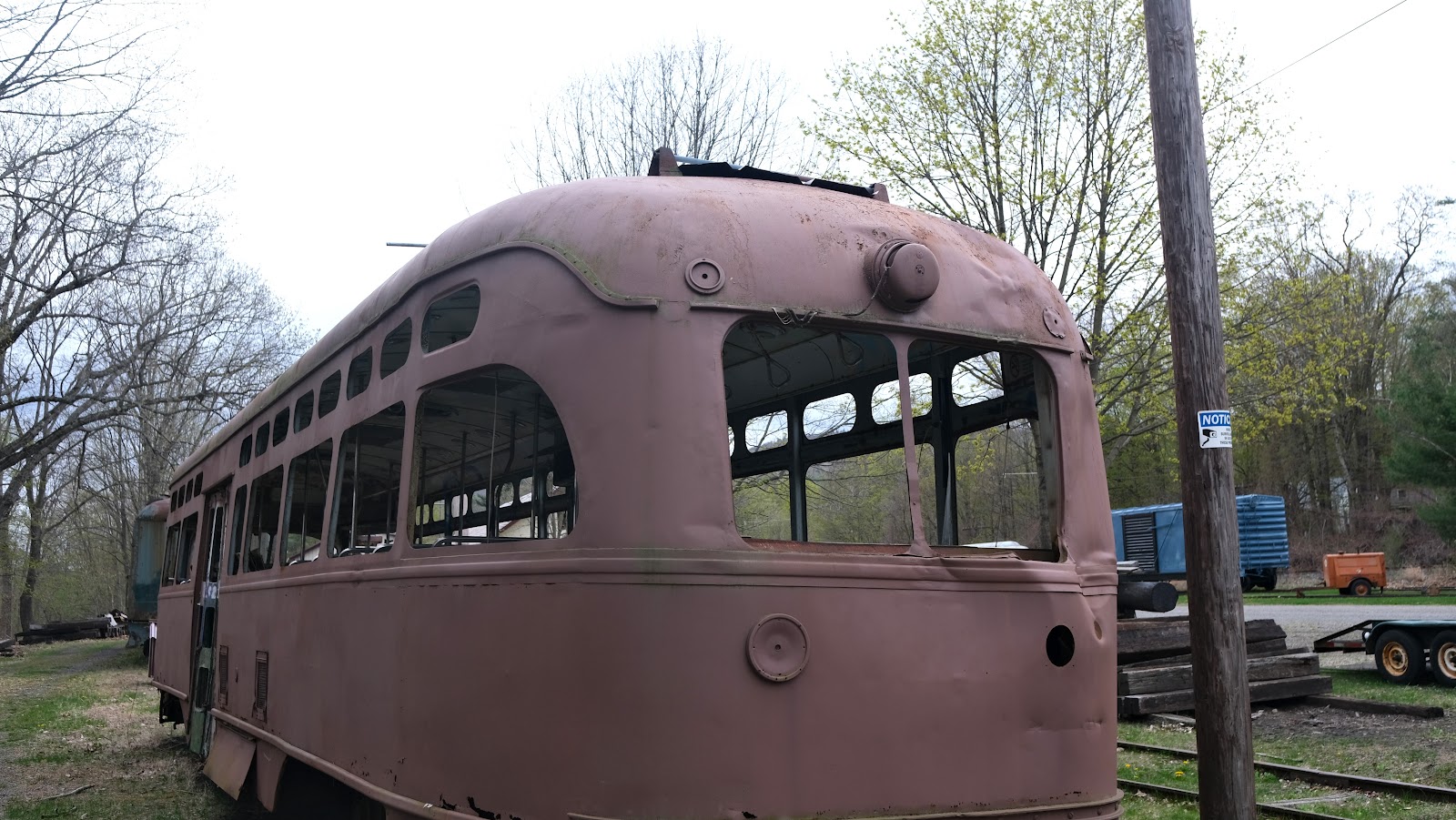
There is still a house in Buckland that calls itself the Mary Lyon House, but it’s one in which she lived, not her birthplace. It’s now a private residence and, needless to say, has been updated considerably since Lyon lived there. Her Congregational Church, though, still exists on Upper Street. That name says it all. Buckland and Shelburne Falls lie in the Berkshires foothills. Buckland has a village center of sorts with a Grange Hall, a post office, and a tiny historical museum, but what most people consider the middle of Buckland isn’t. If you travel from the south on Route 112 you make an odd loops-back-on-itself turn just before you come to Route 2 and drive a short distance with the Deerfield River on your left. At that point, you’re still in Buckland unless you cross the river, at which point you’re in Shelburne Falls. There are shops on the Buckland side with their backs to the river and just before you cross over you’ll see McCusker’s, everything you’d expect a village grocer to be and a point of local pride. If you can, though, travel just beyond the bridge for Buckland’s only real attraction, the Trolley Museum. At present, the museum isn’t open, but you can walk among some of its waiting-for-restoration stock.


Last trolley built in MA (1951)           


The compact village of Shelburne Falls (pop. 1,731) is where most people head. It really feels like small town Vermont. Its one-street main drag has angled-parking, shops, cafes, and art galleries. The auditorium in the village hall is used for community events, concerts, and a summer second-run movie series. Though you might not expect it, the Gypsy Apple has a reputation for being a superb French restaurant. 


Truss bridge in foreground; old trolley bridge behind it 


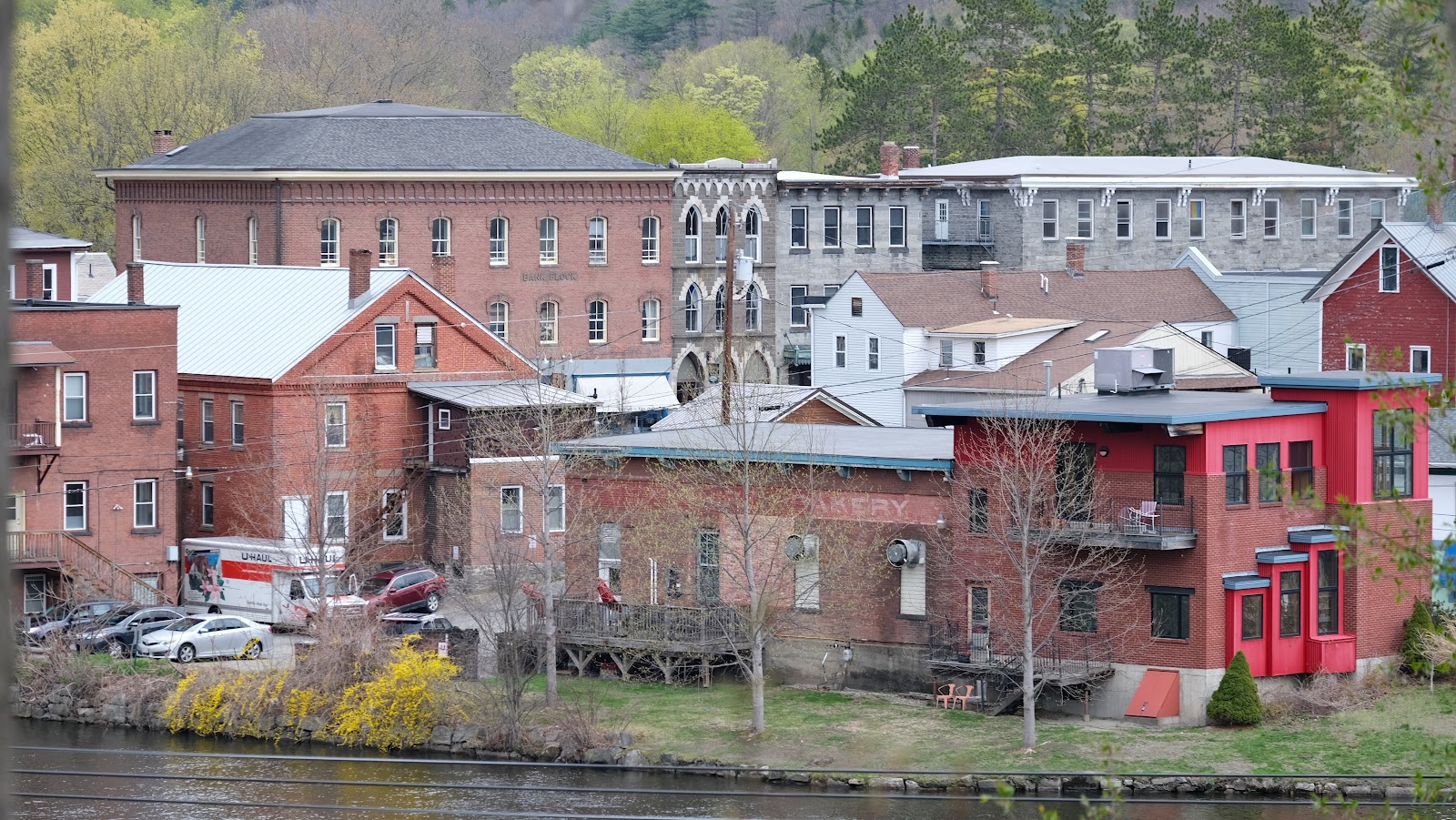
Shelburne Falls from Buckland side of Deerfield River  


Trolley bridge reflected in river; Buckland seen upside down  


Blooms on Bridge of Flowers


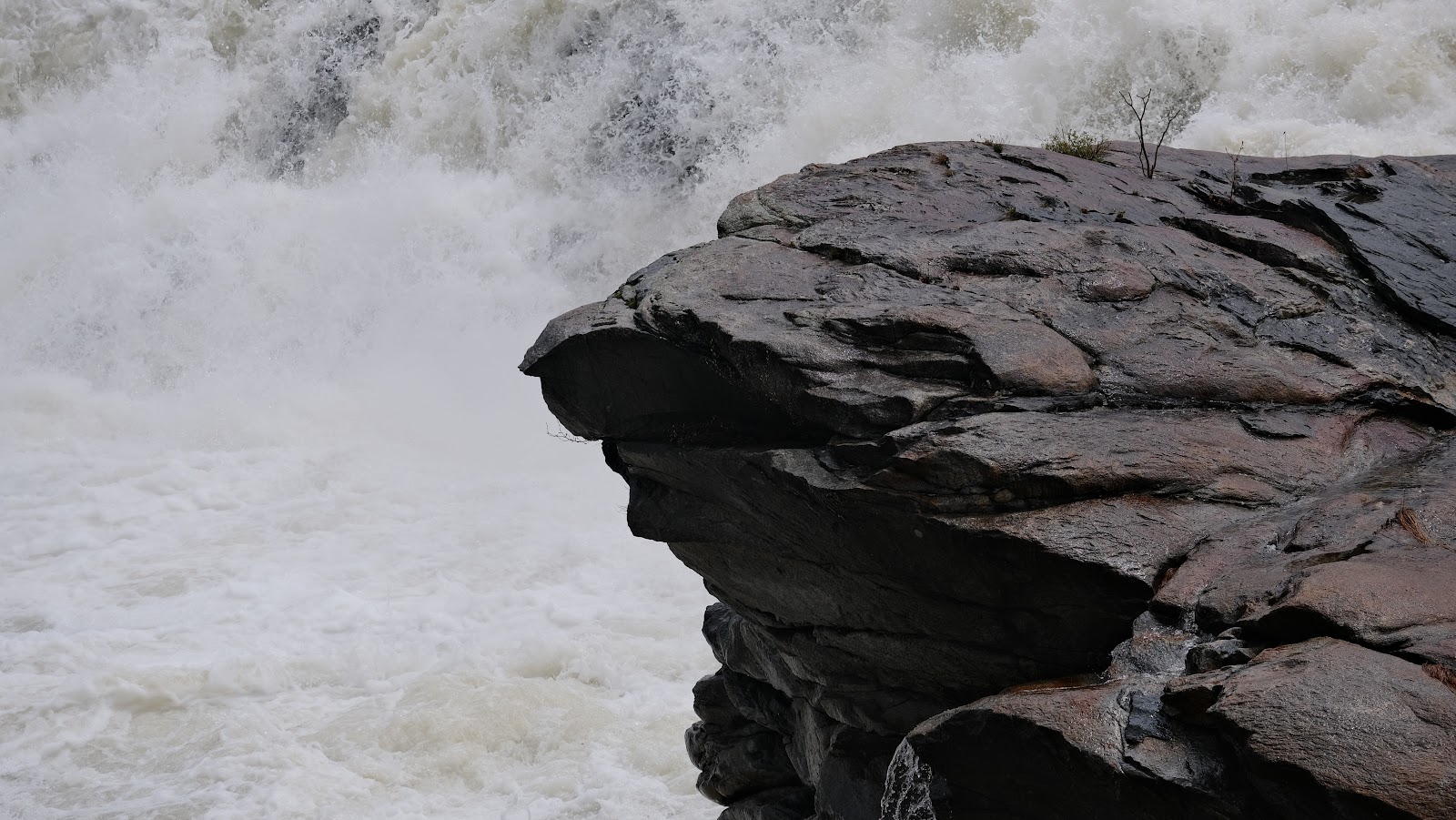
Spring Run Off


"Downtown"Shelburne Falls


Shelburne Falls has some quite lovely homes as you head towards Route 2, but that’s not why visitors come here. Its four-star attraction is slated to reopen soon (though check before you go): the Bridge of Flowers. Shelburne Falls is red brick and stone to Buckland’s wooden frames. Small industries, especially those devoted to Silas Lamson’s all-things-that-cut factories–he gets credit for the curved scythe–explains its different feel. People used to commute via trolley from Greenfield to the east and Charlemont to the west. The Bridge of Flowers was once where the trolley crossed the Deerfield River, though its capacity was such that heavy trade goods often had to be offloaded and taken across the truss bridge that now carries traffic. The trolley went bust in 1927, but two years later women’s clubs put loam beds on the old span and the Bridge of Flowers was born. It’s a gorgeous 400’ walk through seasonal plantings from May through October (or beyond), a riot of color against the backdrop of the river.


The Deerfield River has added bonuses. It makes a big bend and spills down a rocky waterfall and a side hydroelectric dam. When the river levels are high or the dam is doing its thing, it’s a roaring mini Niagara. Plus, there are glacial potholes carved into multi-colored metamorphic stone. 


Nearby is another village treat, a candlepin bowling alley. That facility might be the oldest continually operating bowling facility in Massachusetts, but even if it’s not, candlepin bowling is a blast. No one has ever rolled a perfect game and even seasoned pros know the agony of a well-rolled ball that chops straight through and knocks down two pins! Unless you are a pro you just can’t take candlepins seriously. Few novices break 100!


Outside the town you can challenge yourself with a hike up High Ledges Trail to see how the Deerfield has carved a valley through the hills and if it’s a clear day you can see deep into the Berkshires. You can refuel by driving on Route 2, the Mohawk Trail, toward Greenfield. Western Mass has six Shelburne Falls Coffee Roasters outlets, but its Ur store is on Route 2, a few miles from the village center. Do a little digging and you can detour past a large stay-out compound that is the home of Bill Cosby, though locals are more proud of war tax resistor Randy Kehler. When I say Shelburne Falls has a Vermont feel, it’s not just because the Deerfield River’s two branches originate in the Green Mountain State, it’s also its countercultural/nonconformist vibe.


Rob Weir

10/11/24

Small Towns: East Haddam, Connecticut (Pop. 8,890)


East Haddam, Connecticut is a place that blurs the line between a lived-in settlement and a theme park. Even its entrance is dramatic, especially if you approach from the west side of the Connecticut River. The river is picturesque from the Route 9 approach, and the crossing is a 900-foot-long swing bridge. On a busy boating day, plan on a 20 minute wait for sailboats to clear out.


Once in East Haddam you are immediately dazzled by the 19th century wedding cake-like Goodspeed Opera House. It is now home to a musical theatre that has attracted Tony Award winners. If you don't want to shell out for a play, a $5 ticket will get you a tour of the Goodspeed. A paddle wheeler used to sit on the riverside, but I'm told it has been sold.


East Haddam is not on Connecticut's Gold Coast, but it feels like it could be a distant suburb. For a lot of retail diversity you need to head toward Hartford; East Haddam is strictly upscale gift shops and antiques–unless you have a pretty expansive view of a “country” store like the one situated at Goodspeed Station. Two libraries, a golf club, a wallet-stretching restaurant (Geiston House), a nearby winery, and graceful homes make up the town proper. Former U.S. Senator Christopher Dodd hails from there, as does–believe it or not–Zippy cartoonist Bill Griffith. Several other notables have called it home, but one stands above the rest.


East Haddam was once the dwelling place of actor/playwright William Gillette ( 1853-1937 ). Before moving down the river, Gillette was raised in the Nook Farm section of Hartford also occupied by Harriet Beecher Stowe and Mark Twain. Gillette appeared in several Twain dramatizations, but was best known for portraying Sherlock Holmes on stage more than 1,300 times and once in a 1916 silent film. Most of what you associate with Holmes–deerstalker hats, pipes, dressing gown, violin–was popularized by Gillette. Even Arthur Conan Doyle thought Gillette brought more color to Sherlock Holmes than his own novels.


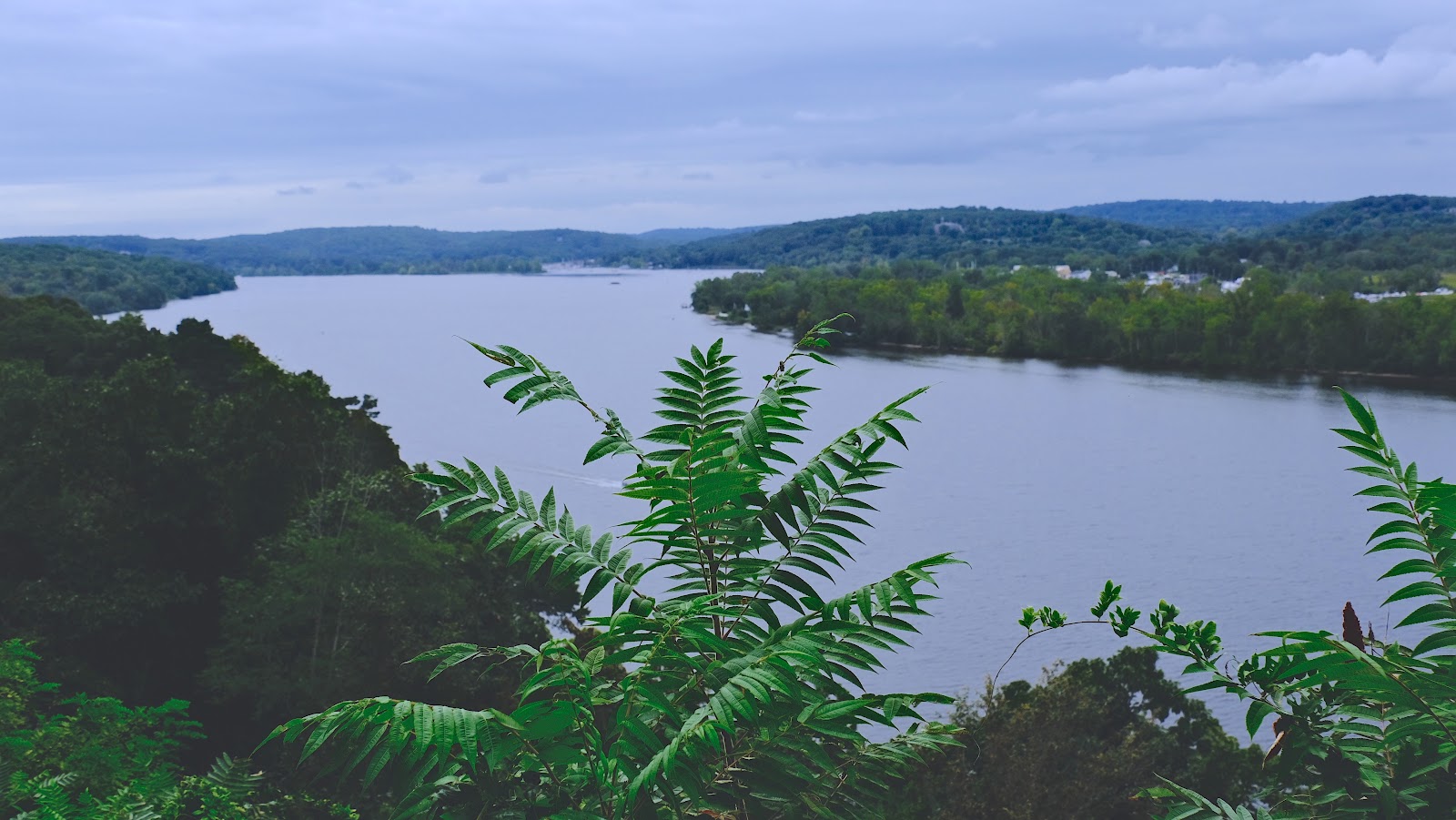
Still, Gillette might easily have become a famous-long-ago figure were it not for an impressive and imposing pile of rocks he left in the Hadlyme section of East Haddam: his home, Gillette Castle. He never called it that, but it's easy to see how it acquired its nickname. It sits atop an outcropping that towers high above the Connecticut River near where a ferry once ran between Hadlyme and Haddam. The river is majestic at this site as it broadens before emptying into the into Long Island Sound at Old Saybrook, just 20 miles distant.


Gillette made enough money that he could afford to live on several fantasy houseboats before his home was finished in 1919. Alas, he never got to share it with his beloved wife Helen (née Nichols), who died in 1888. Gillette was crushed and never remarried, but his home became a place to entertain his many friends, including President Calvin Coolidge and his wife Grace. 


 Gillette also loved to tinker and had impressive engineering skills. He designed and helped build a 3.6 mile miniature train to the ferry dock. He also handcrafted all of the wooden locks in the house, each one with a different puzzle-like unlocking mechanism. Because Gillette lived there during Prohibition, he also built a disappearing bar in case the place was ever raided. For his amusement he located a strategically placed mirror so he could watch and laugh from a balcony as his guests tried to figure out how to unlock it. Add a solarium, a strategically placed new invention­–a gramophone–and medieval trappings throughout. There's also a lot of cat bric-a-brac on available surfaces. Gillette adored felines and kept a small army of live specimens on hand as well.


Today Gillette Castle is part of a state park. Ticketed guided tours take you inside and should not be missed. East Haddam is well worth a visit even if you do need to have to cross the river in search of cheap nourishment!  


Rob Weir

8/14/24

Small Towns: Sutton and Knowlton, Quebec


Not every town in the Eastern Townships of Quebec is charming, but crossing the Canadian border can be a sobering lesson for Americans who can’t imagine that a “socialist” country surpasses the USA in quality of life. The other side of that dotted line from economically challenged locales in Maine (Calais, Houlton), New York (Buffalo, Massena, Rouses Point) or Vermont (Alburg, Highgate, North Troy, Richford) is a startling contrast. We recently crossed at Richford, which has struggled to adjust to post-industrialism. It is marked by boarded shops, potholed roads, dire trailer parks, and a 20% poverty rate. The Canadian side features smooth roads, tidy farms, clean lakes, happier people, and towns that invite you to poke about. Here are two nice Quebec towns that gained renewed interest courtesy of author Louise Penny and her Three Pines novels.


Sutton, Quebec, is less than nine miles from Richford and has but 4,548 residents but its main street is abuzz with shoppers. You’ll find non-chain store retailers, galleries, a microbrewery, concerts, heritage trails, and eateries. We didn’t eat dinner there, but our foodie traveling companions recommend Á La Fontaine, a French restaurant. We had a different destination in mind: La Rumeur Affamée (The Hungry Rumor). If you’re a Louise Penny reader it’s the model for Sarah’s boulangerie praised by Gamache and Jean-Guy for fresh croissants and sandwiches. Maybe I’ve not consumed as many croissants as someone who grew up in France, but I’ve pulled apart  enough buttery delights to say that the croissants from La Rumeur are as good as any I’ve eaten. Better yet, the half of the store that’s not a patisserie is a fromagerie. On the latter score, I can understand the rapture felt by Remy, the Little Chef rat in the movie Ratatouille.


Sutton’s economy is also bolstered by being in the midst of a wine-producing region–a small slice of microclimate, I’m told–and you can visit numerous neat-as-a-pin chateaux and vineyards in the area. Maybe some other time, though I’m highly suspicious of wines produced from grapes that can survive in cold climates,. Predictably, I opted for favor of extra treats from La Rumeur. Sutton is also a base for skiing at nearby Mount Sutton, but if you think the town’s vitality is artificially enhanced, it doesn’t explain why Vermont towns near more and bigger resorts haven’t gotten as much spillover. 


Pond across from bookstore. Rosa taking a swim?


Bench outside of bookstore dedicated to Penny's late husband.


Emily adding her thoughts to Penny's guest book in the Louise Penny corner.


Our overnight stop was Knowlton, which is roughly the same size as Sutton–roughly because it’s part of a larger entity called Lac Brome that collectively contains 5,609 residents. This confuses visitors, as there are numerous villages called Lac Brome and you have to note what’s inside the parentheses, as in Lac Brome (Knowlton). As the name suggests, it’s a lake town. It’s also where Louise Penny lives and we were fortunate enough to be in the bookstore when she walked in. (She’s also an owner of the store.) If you don’t know, there is no such place as Three Pines; it’s a composite of imagination and numerous places in the Eastern Townships. The Townships were a repository for United Empire Loyalists who didn’t want to break with Britain during the American Revolution. You can occasionally encounter those who sign U.E.L. after their names. For American travelers, the Townships are the place in Quebec with the highest percentage of people whose first language is English. No worries, though; more than half of all Quebecois understand and speak it. 


We stayed at Le Relais Knowlton which is where Penny (fictively) housed Gamache and other investigators spending the night in Three Pines. It was fun to stay there and to eat in the downstairs restaurant, though I’d caution that the place isn’t the fastidious or gastronomically stupendous establishment of Penny’s Olivier and Gabri. It’s quaint in all that said adjective implies. The food–I had cassoulet–was tasty and reasonably priced, but not one of the most memorable meals I’ve had.


Speaking of cassoulet, you might know that Rosa the duck is cranky Ruth Zardo’s companion in the Three Pines series. That made Rosa (whose likeness is ubiquitous) one lucky canard, as duck is a food staple in Knowlton. There are duck farms and at least one duck-centered butchery and sales shop. You name it and it has duck when you sit down to eat: dark lardons in salads, pulled duck in poutine, barbecued duck wings, duck sausages, duck pasta, duck main courses….  If that’s a turn off, you might prefer to visit the Lac-Brome Museum, a seven-building complex that’s like rooting around in attics from the past. That is, if there’s a complete World War I German Fokker biplane somewhere in the rafters. 


Sutton and Knowlton form the core of Penny’s Three Pines, but below are some of her other settings. As for the green, it’s up for debate but is probably the ultimate literary mosaic. 


Old Mansion House--still a bit creepy!


Bellechause in the novel but actually Hovey Manor


 A rich toff is offed on the grounds overlooking Lac Massawippi

Gamache's alleged church St. George's though "he felt closer to God in his Volvo." 


Abbaye St.-Benoit-Du-Lac on Lac Memprehemagog, the site of another novel

My vote for the town green goes to North Hatley, which is also home to the model for Beliveau's general store (actually J.B. LeBaron).