7/8/22

Georgia O'Keeffe Museum

GEORGIA O’KEEFFE MUSEUM

217 Johnson Street

Santa Fe, New Mexico


Other than those who love New Mexico cuisine–and I am decidedly not a fan–the first thing anyone asks when they hear you’ve been to Santa Fe is, “Did you go to the Georgia O’Keeffe Museum?”


Of course, I did. My first piece of advice to anyone planning to be in Santa Fe is to get tickets well in advance. The museum has some 1,200 pieces of O’Keeffe’s work–paintings, drawings, sculptures–but tickets are timed and in high demand. You can easily be shut out if you don’t reserve early. The second suggestion is that you don’t need to rush through it. The museum is small and only displays a few dozen of her works at a given moment in time.


Georgia O’Keeffe might well be the most famous artist in American history, so excuse me if you’ve heard this background spiel before. O’Keeffe (1887-1986) was born in Wisconsin and studied art first in Chicago, then in New York City. She arrived in New York shortly after the 1913 Armory exhibition that was the first time most Americans saw modern art. O’Keeffe was already disposed to accept it and began to produce abstractions that caught the eye of one of modernism’s biggest proponents, photographer Alfred Stieglitz. He sponsored O’Keeffe’s first solo show and soon the two were lovers. They married in in 1924.


In New York O’Keeffe produced abstracted cityscapes that attracted great notice. She was also one of Stieglitz’s favored models. His nudes of her cast her as a shapely and sensuous figure, though one whose facial features were more those of a “handsome” woman than a beautiful one. Stieglitz was also a quisquous rogue whose infidelities contributed to O’Keeffe’s mental health issues that resulted in several asylum confinements. Beginning in 1929, she began spending time in New Mexico and moved to Abiquiu in 1946 when Stieglitz died. She lived there for most of the rest of her life, though she spent her declining years in Santa Fe, where she passed in 1986. Eleven years later, the Georgia O’Keeffe Museum opened in that city.


It was an immediate hit and there has been much discussion of expansion or a new facility, but for now the Johnson Street facility is a big draw. O’Keeffe is best known for her New York abstractions, largescale flower paintings, dried skull ensembles, and New Mexico landscapes. Many of her works represent or suggest female genitalia, which were embraced by feminists. She was certainly an iron-willed individual in her own right, though she was a bundle of contradictions. She was also a clothes horse, could be as cranky as her late husband, and treated her artist sister Ida abominably. There is, however, no doubting her artistic genius.


Her work can also be found in Santa Fe’s New Mexico Art Museum (NMAM). Below are some works I found intriguing at both her namesake facility and the NMAM. As you might suspect, most of it consists of works she created in the Southwest, not south of Broadway. Both museums also have photographs that feature O’Keeffe. Enjoy these images, but know that there is no substitute for seeing them up close and personal.


Rob Weir   


7/6/22

Provincetown, MA: Small Town USA


Yes, Provincetown is a small town. On a really hot summer day, as many as 60,000 people flood the beaches, dunes, and streets, but its year-round population is under 3,700. Getting there is arduous but it’s hard to get lost. Cross the bridge onto Cape Cod and drive Route 6 until it ends!


Provincetown is a resort town, but one with a difference. It is (per capita) the gayest place in America (163/1000) and that doesn’t count LGBTQ visitors. P-town, as it’s often called, has been gay since the late 1970s.


Boys will be girls


You can certainly have a good time there if you’re straight; it’s a live-and-let-live place. You’ll encounter men in drag, same sex couples canoodling, gay-themed shows, and look-at-me flamboyance. This is especially true of the younger set. Longtime residents and business owners, gay and straight, have folded themselves into civic life and businesses and welcome everyone. But if you’re not okay with gay people, don’t go there; you’d be like a vegan complaining there’s nothing on the steakhouse menu to eat.


P-town is an American story. It’s not what it was because towns either adapt or decline. It was the first place Pilgrims made landfall after getting lost on their way to Virginia, a fortuitous mistake as the Pilgrims thrived when Jamestown starved. The Mayflower Compact is thought to have been penned on the site. Alas, the Compact didn’t apply to Algonquian natives.  


By the 1800s, though, the Pilgrim past was gone; P-town had become a fishing and whaling center whose  English population gave way to Azorean Portuguese immigrants. Like many fishing villages, it was a grimy, smelly place dominated by small unpainted homes, some shingle-style, others just bare clapboards–small because the winters were long and the winds off the Atlantic can be fierce. (They certainly were one of the May days we were there.) Fishing boats and piers remain in evidence, but the industry has declined, along with its Portuguese population. Because of P-town’s proximity to Boston, those of Irish ancestry now outnumber Portuguese by nearly 2:1.


I didn't say all the art was conventional


Artists and thespians altered Provincetown in the first half of the 20th century and the town remains famous for galleries and summer stock theater. Its once-thriving art colonies are now more individualized than collective, but painters, photographers, and sculptors abide.


You will see plenty of visible wealth in today’s P-town, but it was down-market during the late 1950s into the 1960s. The counterculture landed there in the ‘60s and ‘70s because it was cheap! Peek into a realtor’s window and you’ll know those days are gone. You will also need to search hard for reasonably priced dining or lodging, major reasons why many Bay Staters stay elsewhere when they visit Cape Cod.Yet, Provincetown is also an American story in that it has a lot of invisible poverty. Its yearly per capita income is $4k less than the Massachusetts mean. Some is due to being dominated by service industries, but its poverty rate of  15.4 percent is about 1/3 higher than the rest of Massachusetts. 


Foggy lower Commercial Street 6:30 am


Commercial Street is the heart of the tourist town. The lower part is filled with shops, restaurants, and motels and you can easily wile away a day wending your way along it. There is a lovely public library, an intriguing art museum, a handsome town hall, and some relatively cheap eats at the part of MacMillian Pier closest to Commercial Street. Nearby is a wonderful Portuguese bakery where you will be tempted to order everything. (I’m partial to the custard pastry that’s Portugal’s most famous, pasteis de nata.) Nor can you miss it; it’s called Provincetown Portuguese Bakery!


Inside the town limits the Pilgrim Monument is the prominent tourist destination, though you need not shell out $18 for a panoramic ocean view you can see elsewhere. I’d also avoid the Lobster Pot as well. It looks unpretentious, but it’s $20 appetizers and a $42 hunk of halibut. Why? Because Anthony Bourdain started there. Bah! That was 50 years ago. Ciro & Sal’s is a cozy Italian place further up Commercial (4 Kiley Court) and is reasonably priced. 


Race Point


The National Park Service’s Cape Cod National Seashore entrance is just outside the town limits. Make sure to travel down to Race Point for its desolate setting and wild surf, though swim somewhere safer, like Herring Cove. (Actually, who wants to swim in the icy Atlantic?) There are great bike paths in the National Seashore, but take your time as your calves will be bawling on the uphill dune trails. Birders love the area as well. 


Still, I doubt we’ll be back in P-town soon. It’s simply too bloody long to get there from Western Mass and we didn’t go when Route 6 gets packed. It’s far easier to hit the Southern Maine coast, so we’ll cede the Cape to Bostonians and hang with the crunchier Mainers.


Rob Weir

7/4/22

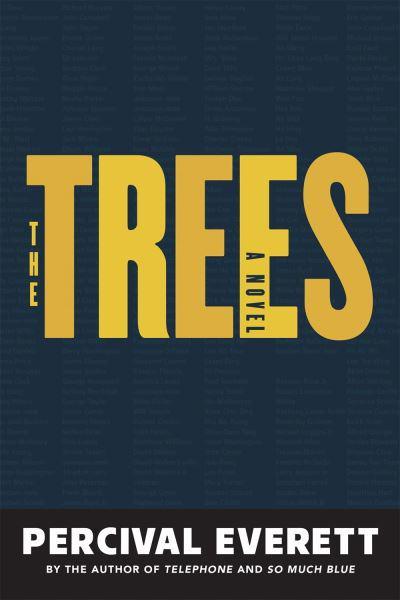
The Trees: Strange Fruit and Snarky Revenge


THE TREES (2021)

By Percival Everett

Graywolf Press, 305 pages.

★★★★★


“Hoisted on your own petard” means you are a victim of schemes of your own design. In The Trees novelist Percival Everett gives White racists a dose of their own medicine. The title derives from “Strange Fruit,” a famed song about lynching made famous by Billie Holiday. [link here] Among its lyrics:


Southern trees bear a strange fruit

Blood on the leaves and blood at the root

Black bodies swinging in the southern breeze

Strange fruit hanging from the poplar trees


The book opens in Money, Mississippi. If that rings a bell, it’s where 14-year-old Emmett Till was tortured and mutilated in 1955 for allegedly whistling at Carolyn Bryant, a White woman. His bloated body was retrieved from the Tallahatchie River with a cotton gin fan wrapped around his head with barbed wire. An all-White jury took just 67 minutes to acquit Carolyn’s husband Roy and his brother-in-law J. W. Milam, who subsequently bragged of their misdeeds.


Turn about is fair play in Everett’s wicked satire. Carolyn is now a CB-loving grandmother living in redneck squalor in the suburb of Small Change and putters about in an electric cart stolen from Sam’s Club. Her grandson, Junior Junior, is found dead, with his genitals ripped off and in the hand of a dead Black man. Mystery: that Black man was already dead—by many years. It gets weirder. The Rev. Fondle, also Money’s coroner, can’t explain how the Black corpse disappeared from his morgue. Try putting out a Most Wanted poster for that suspect.


Wheat Bryant, a no-account truck driver fired for nearly driving a Piggly Wiggly truck into the river, also shows up dead. Not only is the M.O. the same, he’s lying beside the same dead Black man. The investigation is handed over to the Mississippi Bureau of Investigation, which dispatches Ed Morgan, a 6’5” inch/300-pound giant and Jim Davis, smaller and more health-conscious. Both are Black, and local cops practically choke to say “Negro” after beginning to say a different word. Not that Ed and Jim care. They are like vaudeville stand-up comedians having fun working the crowd by insulting it and each other. Their IQ is high; that of Money’s Whites lower than a snake’s belly.


The first two victims are sons of Till’s murderers. Locals wonder if Till has come back for revenge but after still another murder, the corpse doesn’t walk off and it’s not Till. Not that this info gets anyone closer to solving the murders. So what can the KKK do except burn a cross in a ritual so dumb the third K could stand for Klown.


The fruit gets stranger. The FBI sends Agent Herberta Hinds to the scene and she too is Black. Meet Mama Z, a woman who has file cabinets filled with lynching material and claims to be 105-years-old. Her caregiver is a Black waitress who can hold her own in the Ed and Jim stand-up routine. Then the Rev. Fondle dies–the same M.O. for a minister who was also the KKK Kleagle. A couple more Klansmen and Trumpers die, also cuddled beside long-dead Black men bearing their severed equipment.


Before you can say, “revenge is a dish best served cold,” similar murders proliferate: Elaine, AK; Colfax, LA; Omaha, NB; Tulsa, OK; Rosewood, FL; East St, Louis, IL; Chicago, Detroit…. Google those places and “race riots” and you’ll know why. Other murders broaden the color spectrum: Rock Springs, WY; Wounded Knee, SD; Bisbee, AZ…. One of the book’s funniest sections involves a bloviating president of the United States who vows he will personally put a stop to all of this, then hides under his desk and whimpers when his Secretary of the Treasurer is murdered and missing his goolies.


I’ll let you discover if anyone figures out what’s going on. If laughter is the best medicine, The Trees provides a snarky look at righting past injustices and lampooning racists, a Wizard of Oz-like POTUS, good ole’ boys dumber than homemade sin, and other absurdities in these our troubled times. Lurking behind it, though, are implied warnings that the future race war touted by White supremacists might have the desired outcome. Seventy-one years ago the poet Langston Hughes mused about the fate of a dream deferred: “Maybe it just sags like a heavy load/Or does it explode?” Boom!


Rob Weir


* Holiday claimed she cowrote “Strange Fruit.” She did not. It was written by a White Jewish man, Abe Meeropol. He also adopted the sons of Julius and Ethel Rosenberg after they were executed for spying in 1953 in a highly controversial prosecution.  

7/1/22

MLB Contenders, Pretenders, Not Yet, and Hopeless

Baseball's Flowers and Skunks


More than a third of the baseball season is over. A lot can happen over the next 90+ games and, if you know baseball history, even a big lead like the Yankees possess can evaporate. But, if you think spring games don’t matter, the Yankees suggest otherwise. Now that baseball is almost as bad as the NHL in rewarding playoff spots to mediocre teams, the Yankees are nearly a lock for the postseason. As I type this, they are 50-18! If they merely split their remaining 94 games they will accumulate 97 victories, which would secure them a playoff slot.


How good are they? Hard to know given how many smelly teams are playing. Here’s my capsule analysis of Contenders (C), Pretenders (P), Not Yet teams (NY), and the Hopeless (H) by order of standings on 6/22/22.


American League East:


1. Yankees (C): Starting and relief pitching has been spectacular, Judge is having a historic year, and they hit a ton of home runs. Weaknesses: They don’t win unless they homer, Gallo stinks, like much of the bottom half of the order.


2.  Blue Jays (P): Spent a lot of money and got limited results. Guerrero is a stud but... Weaknesses: Biggio, Springer, and other young players haven’t impressed and their pitching is thin after Manoah.


3. Red Sox (C): Best batting averages in the AL and a strong manager. Weaknesses: They hit but only a few players make anyone quake. They will go as far as their frequently-injured starting pitching takes them. Terrible bullpen. 


4. Rays (C/P): Always steady but... Weaknesses: You can’t dump high-priced talent every year and expect replacements to duplicate them. The league has caught on to the “opener” gimmick. The Rays could surprise, but they won’t go deep into the postseason.


5. Orioles (H/NY): They don’t smell like dead Chesapeake Bay oysters any more, but no way they make the playoffs. Desperately seeking new ownership.


American League Central:


1. Guardians (P): Resource-poor Cleveland has the best manager in MLB (Francona), the wonderful (Jose) Ramirez, and a few good pitchers but every year Francona is like a single mom trying to feed 25 growing boys on a box of mac n’ cheese.


2. Twins (P): Some decent players. Also spent a lot of money and have gotten less than they hoped–I’m looking at you Correa–so I’ll just say this: Never bet on the Twins.


3. White Sox (P): Might be the most disappointing team in MLB. They should walk away with a weak division and still might, but they believed their hype and haven’t bothered to show up very often. Still the odds-on favorite, but won’t get far in October. Weaknesses: Pitching blows hot/cold. Need a manager from this era.


4. Tigers (NY): The rebuild will take time and there are still more holes than a pair of hobo socks. Not good when you best hitter is over 40.


5. Royals (H): Who cares?


American League West:


1. Astros (C): I hate them, but there’s no denying the talent. As they’ve been, so they are: a solid team with good pitching. Weaknesses: No production in center field or catcher. Closer Pressly can be had and Verlander is 39.


2. Rangers (NY): They are rebuilding slowly, as they should.


3. Angels (P): Can we just stop the Trout Hype Wagon for heaven’s sake? He’s great but also injury-prone.  He, Ohtani, and Ward are not enough. The pitching is just as lousy as it always is.


4. Mariners (PP): A team that deserves a double PP. A yawn, yawn roster crafted by inept leadership at all levels.


5. Athletics (H): Simply a shameful tear-apart of a former contender. Move this team. Now!


National League East:


1. Mets (C): Yep, they’re for real and a Subway Series with the Yankees is not out of the question (though probability is another matter). Alonso, McNeil, Lindor are productive. Weaknesses: Starting pitching is so-so with Scherzer on the DL. Not much power beyond Alonso and Lindor.


2. Braves (C): The defending champions have been lethargic but remain formidable. They are like Houston in that they are steady and solid, not spectacular. There is more power in their lineup than the Mets can muster. Weaknesses:  Acuna has been injured, the bullpen and starter Morton are showing their age.


3. Phillies (P): They fired Girardi, went on a small tear, and reverted to their usual around .500 routine. Harper is great though. Weaknesses: They already regret signing Castellanos and at some point must come to grips with a roster that looks better on paper than on the field. Nola and Elfin continue to underwhelm.


4. Marlins (P): Do you care? No one in Miami does. (I'll bet they would in Montreal.)


5. Nationals (H): Time to admit that Corbin was a one-year wonder, dump the always-injured Strasburg, and rebuild around Bell, Soto, and Robles.


National League Central:


1. Brewers (P): It’s them or St. Louis in a lousy division, but unless Yelich wakes up, all they have are guys (Tellez, Adames, Renfroe) punching above their weight class. Hader might be the best reliever in baseball. He needs to be on a ho-hum staff.


2. Cardinals (P): The Cards look great with Goldschmidt, Arenado, and Edman but when they play good teams–witness their trip to Fenway Park–they look very mortal. It’s not good to rely on a 40-year-old ace (Wainwright) or a guy who lives on the DL (Matz).


3. Pirates (NY): They’re not embarrassing anymore, but watch what happens at the trade deadline. If they trade young talent, bury ‘em again. Right now, they are a cut above AAA, but not a big slice above.


4. Cubs (H): What an embarrassment! An inexcusable tear down of a wealthy franchise. Season ticket holders should sue for refunds.


5. Reds (H): Two phrases: Sell ‘em. Move ‘em.


National League West:


1. Dodgers (C): East Coast hoopla aside, they’re probably the best team in the majors. Freeman, Betts, Turner, Gonsolin, Anderson... and Muncy and Bellinger haven’t yet gotten untracked. I vote them the team most likely to throw a monkey wrench into Subway Series dreams. Weaknesses: Not liking Kimbrel as closer and why they signed Heaney is anyone’s guess.


2. Padres (P): Lots of hope, but it’s most hype. This is another team bettors should avoid. Machado, Hosmer, Darvish, Musgrove (IL), and? Yeah, that’s the problem.


3. Giants (C/P): 2021’s 107 wins was a fluke, but this team has good chemistry and enough talent to make it to the postseason. Pederson has finally come into his own and where did (Luis) Gonzalez come from? If Yaztremski, Belt, and Crawford wake up they will make some noise. Rodon, Wood, Webb are a good top three for starters. Weaknesses: Like the Rays, they need all the pieces to fall into place.


4. Diamondbacks (H): When the weather heats up, the D’backs cool down. You probably wouldn’t recognize their starting lineup or any pitcher other than past-his-prime Bumgarner. There’s a reason no one beyond Tucson knows the names.


5. Rockies (H): Would somebody please trade for Blackmon and save him from all of this? MLB should not have a franchise at this altitude.


Rob Weir

6/29/22

June Music: Ike Reilly, Hadley Kennary, Marisa Monte, J.P. Gertler, FlamenGrass


Ike Reilly
has appeared on this blog before. He’s back with Because the Angels, a blue-collar album about blue-collar folks in the vein of Billy Bragg and Bruce Springsteen. His is a combination of raspy protest folk, country rock, blues, and attitude. The album title comes from a song titled “Little Messiahs” and it would be safe to say that Reilly has no time for the hollow promises of politicians. He asks: Who will sing these working blues/for the working poor/whose souls are oozing/solvent as each day it passes on?” When he sings: Because the angels are in the chamber/They’re casting ballots/with made up names/And all the dead men/they’ll vote again friend/And the angels/they’ll take the blame, he’s not talking about Trumpian paranoia or Fox News lies. His sympathies are solidly with those who struggle hard and fail (“Trick of the Light”) and those who try to drown their despair of a closed factory in drink (“The Failure of St. Michael”). And don’t get him started on hope testing negative/false prophets and positives dispatching all those lies (“Healing Side of the Night"” or cops who shot a man in front of his children in the back self-proclaimed Christians who proclaim the shooter a martyr or a saint (“Someday Tonight”). In some form or another, Reilly spends most of the album calling out BS and hypocrites. If you wonder where protest music has gotten to, look no further. What a relief to hear someone call a spade a spade.


If you need something catchy to bring you up from the (needed) medicine Reilly gives you to drink, try a dose of the pop-laced offerings of Hadley Kennary. Crooked Roots is more than balloons and sugar. Think of it as pop-like in places, but not the stuff dipped from the radio play slop bucket. The title song  makes a few things obvious. First, Kennary (rhymes with canary) can really sing. She knows when to let the melody drift and when to open the dam. Second, she makes sure to enunciate the lyrics. About those, they are decidedly a cut above the usual in that they are personal and confessional in ways associated more with folk music than pop: My roots are shallow but they’re many/Hallowed strong and steady, and I know I’ll be fine/With these crooked roots of mine.  I rather wondered why her material is labeled “pop,” and suspect it’s because “folk” doesn’t market well these days. (More’s the pity!) The studio version of “"Orbit” has pop hooks and sheen, but they’d lose little if the latter was stripped away. By the way, I love the little catch in her voice and the off-kilter cadences in the chorus.  She’s been called part pop starlet and part troubadour. Let’s go with the latter, shall we?


I like bold artists who aren’t afraid to put themselves out there no matter what anyone thinks. That fits Marisa Monte like a glove. But I guess it helps one’s self-confidence to be acknowledged as one of Brazil’s greatest vocalists and the recipient of four Latin Grammys. Her latest, Portas, is another rose in the hair of a 30+ year career. The title track video captures her various personae: elegant, sophisticated, quirky, Gothic, sexy. Her repertoire is a combination of pop, Latin soul, and salsa. “Calma” shows that mix  as well as the effortlessness that marks truly great vocalists who save their sweat by not forcing the voice to go outside its range, though Monte’s is considerable. Check out the breath control and exquisite timing in the pop-meets-cool jazz “Medo do Perigo.” Or her smooth-as-silk duet with Seu Jorge e Flor on “Pra Melhoar.”  I get it that some might find her too mainstream for their taste, but watch some of the clips to see a legend in the making.


Jonathan Paull Gertler
is currently based in the Boston area. He’s one of those artists who gets slapped with labels such as folk rock, folk, or Americana. No Fear won’t resolve this, so pick one. “Grasp the Moon” is a sweet song with some nice tumbling guitar runs, but I guess it can’t be pure folk because there’s no pain in it!  It’s about a stable relationship and calls upon him and his main squeeze to Grasp the moon/Shoot the stars, a metaphor for being open to serendipity. He ups the tempo and adds catchy melody lines in “I Wish I Knew”  but its theme is similar. “Just Another Day” has a touch of shuffle, but like most on the album it has an upbeat message of getting up when life tries to slap you down. “Low Lying Sun” has a folk rock vibe, but also a little dash of Spanish-style guitar work. ’m not wild about Gertler’s voice, but his message of perseverance is a needed antidote for our times.    


Thomas Friedman proclaimed that earth is flat. If you doubt him, listen to the Barcelona-based quarter FlamenGrass. Their new recording Alegria (“Joy”) is North Amercian styled bluegrass with a lot of other stuff thrown in. That album-defining song has a grassy feel with hints of Roma and klezmer. As you’ll see right away, the band is anchored by Lluís Gómez on banjo and vocalist/fiddler Carol Durán. (Maribel Rivero is on double bass and Javi Vaquero on acoustic guitar.) As you will see on “Station to YourHeart,” Durán is the sparkplug and Gómez is the quiet virtuoso. But everybody gets do his or her thing on “RumbaGrass,” with its take-your-turn breakout solos. FlamenGrass is fun to hear and watch because their music is at once familiar but not too familiar.


6/27/22

Thursday Murder Club: Seniors Rule


THE THURSDAY MURDER CLUB (2020)

By Richard Osman

Viking Press, 400 pages

★★★★ ½ 


Richard Osman is a game show host in Britain. I assume he’s an amusing one because his novel The Thursday Murder Club is witty, wicked fun. We are told never to judge a book by its cover and the same applies to people. It’s mostly set at Coopers Chase, a rest home filled with folks in their 60s, 70s, and above who gather weekly to discuss murders, be they real or imaginary cases.  


A bunch of old codgers wiling away their days before the Reaper calls? Don’t be so sure. Coopers Chase also has residents who were once smart cookies and haven’t yet gone to crumb. They make sure unwanted interlopers don’t wander into their discussions by reserving a room as a gathering to appreciate Japanese opera! When not debating the fine art of homicide, several of them like to drink gin and tonics—from a can—or discuss the silliness of vegetarianism at a restaurant called Anything with a Pulse. In the best tradition of British eccentrics, they seldom resist whinging or judging. Joyce, a retired nurse, narrates much of the book and wears her opinions on her sleeve. When her Murder Club compatriot Bernard, a former petrochemical professor, is on his way to breakfast, she writes in her diary: “What he has for breakfast I don’t know, but who really knows what anyone has for breakfast? I usually have tea and toast with the local radio. I know some people have fruit, don’t they? I don’t know when that came into being, but it’s not for me.”


You know you’re in for a funny book when a character is more shocked by fruit for breakfast than gory crime. As you might anticipate, the club will get its chance to help solve an actual murder, something that prompts another member, Elizabeth, to remark, “So we were all witnesses to a murder. Which, needless to say, is wonderful.” She’s the most mysterious member of the senior set, one who knows so much about all things dodgy that we suspect she may have worked with British intelligence in her salad days. There’s also Ron, once a tough labor union boss, and Ibrahim, a former psychiatrist. Spouses and children also appear, the latter prone to wondering why their parents can’t act their age. Short answer: When you live in a place where people become senile or die on a regular basis, they are of an enjoy-it-while-you-still-have-it mindset.


They share the belief that the home’s director, Tony, is oily and untrustworthy. None shed a tear when he’s bludgeoned to death, but they thrill to an opportunity to solve the crime. Another delight of the novel is how able-bodied professionals underestimate their elders. This includes local law enforcement, though the geezers find a reluctant ally in Donna DeFreitas, a police officer whom they met when she gave a talk at Coopers Chase.


The novel’s humor is supplemented by a twisty plot in which all manner of suspicious and odd people drop in: a priest (or maybe not), a Polish builder, a reckless SUV driver, an ex-boxer/perhaps violent criminal (Ron’s son), a Cypriot gym owner, a thug-turned-florist, and a land developer so sleazy he makes Tony seem like a saint. (He’s reading a Richard Branson book titled Screw It, Let’s Do It, Lessons in Business and Life. That’s not a real title, but it could be.)


Like most mystery novels, this one has a barrelful of red herrings and long-buried secrets that leak from the barrel’s bottom. Osman strikes a nice balance in presenting his senescent investigators as a charming mix of being well-connected, logical, and perceptive, yet also out of touch with recent developments. When told that some of the answers she seeks might be lurking on the dark web Elizabeth asks, “And how would I go about getting on the dark web?” Ibrahim replies, “Well, I’m guessing, but if it were me, the first thing I would do would be buy a computer. Perhaps go from there.”


Will the elders and the young ‘uns solve the local crime wave? Of course, it’s a mystery novel. But I loved how Osman reminded us not to assume things about seniors, yet also interjected their feelings of loss and mortality. Maybe the only sensible recourse is to laugh your way to life’s final chapter.


Rob Weir


6/24/22

Dear Committee Members an Arch Book


DEAR COMMITTEE MEMBERS (2014)

By Julie Schumacher

Doubleday, 182 pages.

★★★★★


Who’s been keeping this amazing book from me? Dear Committee Members is the funniest book I’ve read on academe since Richard Russo’s Straight Man. Julie Schumacher, a professor of Creative Fiction and English at the University of Minnesota, won the 2015 Thurber Prize for American Humor and I can’t imagine the vote was close.


Schumacher’s novel–more of a novella– is everything one could want in a parody of the professoriate: literate, arch, and oozing vengeance, though you don’t need to have any university experience to love this book. Her alter ego, Professor Jayson “Jay” Fitger of fictional Payne University, says exactly what he thinks. His weapon of choice is the LOR (letter of recommendation) and he’s obviously written way too many.


Fitger is a divorced, aging horndog whose infidelities with grad students and colleagues are the reason he’s single. His ex-wife Janet, now in charge of law school admissions, only submits to have lunch with him twice a year– on the date of their wedding and the anniversary of their divorce. Jay is vain and uses his erudition and enormous vocabulary to club perceived inferiors into submission Neanderthal-style. Payne’s English department is so dysfunctional that everyone in it–except for its invisible adjuncts–despise each other with such fervor that Ted, a member of the sociology department, is appointed to chair it. Ted is so anxious to exit that viper pit that he suggests Jay should chair, but Fitger knows he’s burned more bridges than there are rivers to cross.


Jay’s office is in a building undergoing an expensive, messy overhaul, but for the economics department, which sees no need to have any humanities. Fitger loathes econ with poison pen, that implement appropriate for someone who refuses to fill out online forms. Only the English department’s IT assistant, Duffy Napp, comes in for more scorn and you can imagine what Fitger does with a name like that! He’s over the moon when Napp applies for another job and happily writes a LOR. Ahh, but there’s the rub. Here’s an excerpt:


Colleagues have warned me that the departure of ... our only remaining tech help employee, will leave us in darkness. I am ready. I have girded my loins and dispatched a secular prayer in the hope that ... a former mason or carpenter or salesman – someone over the age of 25 – is it this very moment being retrained in the subtle art of the computer and will ... refrain from sending text messages or videos of costumed dogs.... I can almost imagine it: a person who would speak in full sentences – perhaps a person raised by a Hutterite grandparent on a working farm. As for Mr. Napp: you are welcome to him.


Dear Committee Members is structured as a series of LORs, memos, and communiques. Fitger uses them to amuse himself and discharge frustration. He writes one LOR after another, each stuffed with asides, innuendo, oversharing, and acidic commentary. He’s the sort who is likely to detour into an admission that Janet might have a point that one of his novels is a soft porn version of their former sex life. Just what every undergrad applying for a scholarship or seeking a job reference needs, right? He’s weird even when trying to make the case for one of his grad student fiction writers, though it’s usually at expense of another student whose writing Fitger finds preposterous and begging for lampoon.


If the book sounds mean-spirited and nasty, rest assured it’s not. Dear Committee Members is like a speech you compose in your head to suggest your boss commit a biologically impossible act. Of course, you never actually say those things, but Fitger does! As we read–more like rip through–one LOR after another, you’ll find yourself splitting a gut in laughter. Who wouldn’t like to tell that person you barely know and begs you for a LOR that insofar as you know, their major accomplishment is that they don’t slobber in public? This novel will make you guffaw with such gusto that you’ll double over when trying to read it aloud to another.


The Napp LOR isn’t even come close to being the funniest in the book; I quoted it because I’m one of many who find IT people infuriating. Dear Committee Members is so quirky and offbeat that it could have been subtitled Id Unchained. But I suspect all of us have a bit of Jay Fitger lurking within.   


Rob Weir


PS: If you’re one of my former students, rest assured I never wrote a LOR like the ones in this book.