6/23/11

Stanley Cup Autopsy: Don't Bet on the Canucks Next Year

Finally--a Canuck as soft as the Sedins!


There’s an old sports adage that says that some times a top-ranked team’s glaring weaknesses aren’t revealed until they lose the championship. Chuck the Canucks into that file and, by all means, don’t bet on them to make it the Stanley Cup finals in 2012.

The Boston Bruins were a far superior team to the Canucks, who were lucky enough to run the series to seven games. I began watching the finals with a slight sentimental preference for a Vancouver win that would put Canadians out of their cups and into Lord Stanley’s after a thirteen-year drought. But even when they won games one and two, it appeared to me that the Bruins were better. And as the series went on and Vancouver evolved from being chippy to being dirty, I found myself pulling for the Bruins. It wasn’t just Aaron Rome’s vicious hit on Nathan Horton, it was small things like gloating, sticks to the midsection when officials were preoccupied, and defensemen who were clearly looking to line-up hits instead of skating to position to make a play. With a two-game lead they played like they were desperate; after that the Canucks played like what they were--a team that couldn’t match up and were trying to force their opponents to beat themselves. Good luck with that if you’re facing a team coached by Claude Julien, the NHL’s smartest coach. Poor Alain Vigneault was outmaneuvered time and time again, especially on home ice where it simply shouldn’t happen.

Here are six reasons why I don’t think Vancouver will recover from their game seven thumping.

1. The Sedins are soft. Look for renewed lampoons calling them the “Sedin Sisters.” Feel no pity; Daniel and Henrik earned their scorn. They sure as hell didn’t earn the $12 million they collectively pocketed. Daniel will win MVP this year, but don’t think for a moment the rest of the NHL didn’t see what the Bruins did: clog up the lanes, put a body of them, and never let them see open ice. The Sedins scored 198 points this year; I’m betting that drops by a third next year. Tim Thomas won the MVP award for the finals, but I think that Zdeno Chara was the real difference maker. Want to stop the Sedins? Park a Chara clone in front of the net and watch them skate away.

2. The Sedins have little help. As I said, the Bruins were a better team. Much was made of the Canucks being the league’s highest-scoring team. Actually, they weren’t; Daniel Sedin and Ryan Kessler scored nearly a third of their goals. After Kesler’s 73 points, the Canucks had only four guys with more than forty; the Bruins had ten with forty or more. Put simply, you can win games with several superstars, but you won’t win it all unless the rest of the roster is strong. (Ask the Miami Heat!)

3. Western conference hockey is too European. The Canucks were the best European team on the ice; too bad it was NHL ice. Teams west of Chicago tend to go soft in the playoffs because most of them like wide open offenses and lots of skating room--exactly what doesn’t happen once the playoffs begin and defenses clamp down like pit bulls with bones. In the past twenty years, only four teams from the far west have won the Cup (Anaheim ’06, Colorado ’00, ’97, Edmonton ’90.) The Canucks actually aren’t the worst team in the west when it comes to not being able to scrap, dig out pucks, or blast their way out of the neutral zone--that would be the chronically disappointing San Jose Sharks led by Powder Puff Joe Thornton.

4. Roberto Luongo is vastly overrated. Yeah, the guy puts up big numbers, but can he do it when it matters? Even before the finals this guys was as shaky as a can of grated parmesan. Bottom line--in game 7 of 1-0 game you simply can’t let a fallen player slide a shorthanded goal past the goal line with the play in front of you. Luongo gets a lot of praise, but who wouldn’t rather have any of the following: Marty Brodeur, Ryan Miller, Henrik Lundqvist, Marc-Andre Fleury, Casey Price, Jimmy Howard….

5. It’s hard to set up plays if you never win a face off. Seriously, did you ever see a team lose so many face offs on its home ice? That’s just horrible execution. Look for teams to learn from this and start pinching in their defensemen when a face off is in the attack zone.

6. The Canucks aren’t a pressure team. Some teams lose a series, get mad, and come back and win it all the next season. That doesn’t look like the Canucks’ MO to me. Here’s a team that had all of Canada rooting for them and they came out in game seven as flat as road kill. I’d say the Canucks have some serious character and courage issues.

6/21/11

New Neil Young Video a revealing Winner


NEIL YOUNG’S MUSIC BOX: HERE WE ARE IN YEARS

Directed by Alix Westbrook

Sexy Intellectual (2011)

* * * *

This two-hour video is true to its title; it opens Neil Young’s music box and samples the myriad styles that have inspired him from his boyhood on. Toward the end of the film one commentator notes that Young has been a sponge his entire career, yet within ten seconds of anything he’s every done you know it’s a Neil Young song! Young is not only a chameleon; in some cases he’s flat-out stolen licks and lyrics from other performers. As the film so astutely shows, “Tonight’s the Night” lifts melody lines from The Rolling Stones’ “Lady Jane,” “The Last Trip to Tulsa” is Young’s take on Dylan’s “Desolation Row,” and “Ambulance Blues” stripped of the vocals is a Bert Jansch guitar solo. But here’s the thing: Neil Young has never denied any of that! He has proudly honored musicians that have inspired him, refuses to be pigeonholed, thumbs his nose at corporate rock, continues to experiment--even when he doesn’t understand a genre--and lives according to a principle he took from Dylan in that he never bothers to explain or apologize for what he does. Is it any wonder that only a handful of performers have left their mark on as many forms of music as Neil Young? Since first hitting his stride in the 1960s as a solo artist and with the raw band Crazy Horse, Young has performed rock, folk, country, folk rock, country rock, punk, electronic music, grunge, and rhythm and blues. As he approaches his sixty-sixth birthday in November, Young continues to inspire.

Here We Are in Years is one of the stronger rockumentaries I’ve seen in some time. As Westbrook reveals Young’s influences we receive a survey history of rock music. The expected influences are there--Elvis, Little Richard, Dylan, The Beatles, The Rolling Stones--but what is most revealing is the exploration of less-obvious role models. Do you associate Neil Young with surf music? Watch the sequences featuring The Fireballs and The Shadows and you will. Of course Neil Young was influenced by folk music, but Jansch and Ian and Sylvia played a bigger role than Pete Seeger or Woody Guthrie. Young co-founded Farm Aid in 1985, hangs out in Nashville a lot, and owns Hank Williams’s guitar, but he didn’t play much country music until the early 1970s and his biggest influence wasn’t the Williams, Johnny Cash, or the Carter family, it was Don Gibson, whose “Oh Lonesome Me” he turned inside out. And when rock lost its way in the late 1970s, Young grooved on The Sex Pistols and adored punk’s irreverence. He felt the same way about early electronic music and embraced bands such as Devo and Kraftwerk, even while admitting he didn’t always understand all of what they were trying to do. As one music critic noted, “the lure of the new is irresistible to Neil Young.” So of course he embraced grunge, performed with Pearl Jam, and made several grunge-influenced albums. Or did he and Crazy Horse actually invent the genre? Just like he may have invented country rock.

Unlike far too many rock films, this one actually tells us some things we didn’t already know. Want to hazard a guess who his first guitar mentor was? You only go to the head of the class if you said Randy Bachman (The Guess Who, Bachman-Turner Overdrive). Who was his vocal model? Did you know it was Roy Orbison? Favorite Beatle? Most influential member of The Rolling Stones? Probably not whom you thought!

Okay, the film could have used more comments and music from Young, but the commentary is incisive and connections and influences aren’t merely asserted; they’re demonstrated. This DVD hits the streets on June 21 and I’d recommend you check it out.

6/19/11

Woody Allen Bombs Again!


Midnight in Paris (2011)

Directed and Written by Woody Allen

Mediapro Productions, PG-13, 100 mins.

(Zero--the pits!)

An old probability theorem holds that if you had an infinite number of monkeys banging away at an infinite number of typewriters, they’d eventually compile the complete works of William Shakespeare. I don’t know about that, but I suspect it would only take two or three to come up with more realistic dialogue than Woody Allen produces. I only made it through 45 minutes of his latest tortuous turkey before walking out. I’ve only myself to blame. I swore off of Allen years ago after a string of films that made me consider doctor-assisted suicide. But several people assured me that Midnight in Paris was different--”Paris is gorgeous, “I was told,” and “this one is actually enjoyable.” Right on part one, but pull the lever for the trap door in the floor on the second.

Yes, Paris is lovely to look at. If the opening montage feels familiar, it should; it’s the opening sequence of Manhattan set in full-color Paris minus the voice-over, and with Gershwin replaced with jazz. I guess it’s not plagiarism if you copy off your own paper, but you’ll also find Allen riffing off past works such as Zelig and The Purple Rose of Cairo. Michael Sheen playing Paul, a know-it-all professor, will also seem familiar. That’s because he’s channeling roles Tony Roberts played in Allen movies in the 1970s and 80s. It’s clear that Allen hasn’t had an original thought in years. It’s equally clear he hasn’t hobnobbed with any real people in decades. Honestly, dolphins communicate better with humans than Allen does.

The set-up? Another fabulously wealthy jet setter couple, Gil Pender (Owen Wilson) and his fiancĂ©, Inez (Rachel McAdams), is in Paris where, for some strange reason, her folks have joined them to help plan a wedding that will take place in Hollywood. Huh? Wait, it gets worse. Gil is a wealthy screenwriter--Stop Woody, you’re killing me!--who wants to be a novelist. He’s in love with Paris and obsessed with the culture that developed there in the 1920s. He’d like to move to Paris, but his bubblehead fiancĂ©e finds Paris a bore. Paris a bore? Like anyone would believe that! There’s absolutely no spark between Gil and Inez. Fine; the plot demands that we find them incompatible before they tie the knot, but we are left wondering how they were ever compatible. The script is bad, but neither Wilson nor McAdams help it with their shallow performances. As has become his norm, Wilson expresses his full range of emotions--both of them--the gee-whiz astonished look, and the disaffected couldn’t-care-less pout. McAdams doesn’t have much to do, and she responds by living down to the role. She’s eye candy and nothing else.

Here’s the film’s big idea. Gil wanders Paris streets at night and when the clock strikes midnight, a fancy antique car appears, a voice commands him to jump in, and he’s with Zelda and F. Scott Fitzgerald in--you guessed it--Paris in the 1920s. In his various trips back in time he meets Picasso, Henri Matisse, Salvador Dali, t.s. elliot, Edgar Degas, Josephine Baker, and Ernest Hemingway, among others. Movie magic? Not really; it plays like one of the cheesier episodes of Star Trek: The Next Generation when the scriptwriters couldn’t come up with intergalactic ideas so they shipped the crew off to the holodeck and let them interact with historical figures. All of this so Gil can get feedback on his novel from Gertrude Stein. Good lord! It’s all just an excuse for actors such as Kathy Bates (Stein), Adrien Brody (Dali), Marion Cotillard and others to walk onto the set, chew up a bit of scenery, and say they’ve been in a Woody Allen movie. One performance demands note, that of Corey Stoll as Hemingway. He’s memorable, but only for being more wooden than the Home Depot lumberyard.

It baffles me how Woody Allen continues to be seen as an intellectual just because he quotes dead ones. Midnight in Paris is unimaginative filmmaking wrapped around turgid dialogue and recycled ideas. Maybe there were some better moments toward the end; like I said, I was outta there after 45 minutes. I’m officially taking the pledge--no more #@!*%$% Woody Allen films. My advice: If you want to see nice shots of Paris go to Google images, send your favorite images to your desk top, and create a slide show. Then go round up some monkeys and see if one of them can write a script.

6/16/11

Cave of Forgotten Dreams would be Better without Herzog

You'll see a lot of this image in Herzog's doc.

Cave of Forgotten Dreams (2010)

Directed by Werner Herzog

IFC Films/History Channel

90 mins. PG (in 3D)

* * ½

In 1994 three spelunkers plunged into a cave in the Ardeche River Valley of southern France; little did they know what awaited them. When their headlamps hit the wall of a limestone chamber they saw things no one had seen for 25-30,000 years. The underground cavity now known as Chauvet (show-vAy) Cave--named for one of the spelunkers--is one of the most spectacular collections of prehistoric art ever found. Its glories surpass even those of Lascaux, also located in southern France. The art is so impressive that scholars have begun to speculate that more was at stake than ritual, that perhaps an artistic aesthetic was present in ancient humans.

Filmmaker Werner Herzog was one of the few individuals allowed to view the cave, which was preserved by a fluke landslide that sealed its entrance for many millennia. He and his three-member film crew reveal an enchanted world of horses, panthers, hyenas, handprints, and fanciful figures sketched in charcoal upon the limestone walls. Several of the figures are akin to ancient abstraction, and quite a few anticipate Picasso by tens of thousands of years. Even more remarkable, some of the drawings were rendered to take advantage of curves, indentations, and varying shapes of the rock. They seem to leap off the cliff face, a compelling reason to film--as Herzog did--in 3D. (I’m not a big fan of 3D, a technology that’s still far from perfection, but for once I applaud the decision to use it.) Cinematographer Peter Zeitlinger lovingly reveals the cave’s magic for those of us (nearly anyone who isn’t a French scientist) who will never venture beyond the cave’s locked steel vault doors.

If only Herzog had left the paintings speak for themselves. This is a so-so film that should have been a great one. Herzog is like Michael Moore in that he can’t keep himself out of his own films. The people who used the cavern appear to have venerated bears, another Herzog fascination (See Grizzly Man, 2005). I mention this because Herzog’s presence in this film is close to unbearable. He seems to fancy himself a modern-day philosopher, but it’s hard to suppress the gag reflex for some of New Age pap and nostrums he dispenses. Mostly, though, his comments are just intrusive, which is also how I’d characterize the original score from composer Ernst Reijseger. It’s loaded with Wagnerian drama and a lot of it is very interesting as music, but it’s simply inappropriately operatic for the subject matter. (And it’s made doubly so by Herzog’s insistence that we contemplate the images and their possible meanings with the hushed reverence he fails to heed.) Because Herzog insists on cluttering the film with extraneous material that is neither enlightening nor needed, this film clocks in at 90 minutes when it could have easily been half that length. There is, for example, a spectacular panel of four horses running astride each other; Herzog shows this ad infinitum as a backdrop for his own musings. He also tells us so much about the challenges of filming in the cave that I wanted to shout “Save it for the film festival Q & A.”

If you can find a 3D theater showing this, by all means go; the film deserves to be seen on a big screen and in the format it was made. If you rent it, though, you could do worse than turn off the sound. Herzog seems to think he’s a shaman; much of the time he’s just a sham. --LV

6/13/11

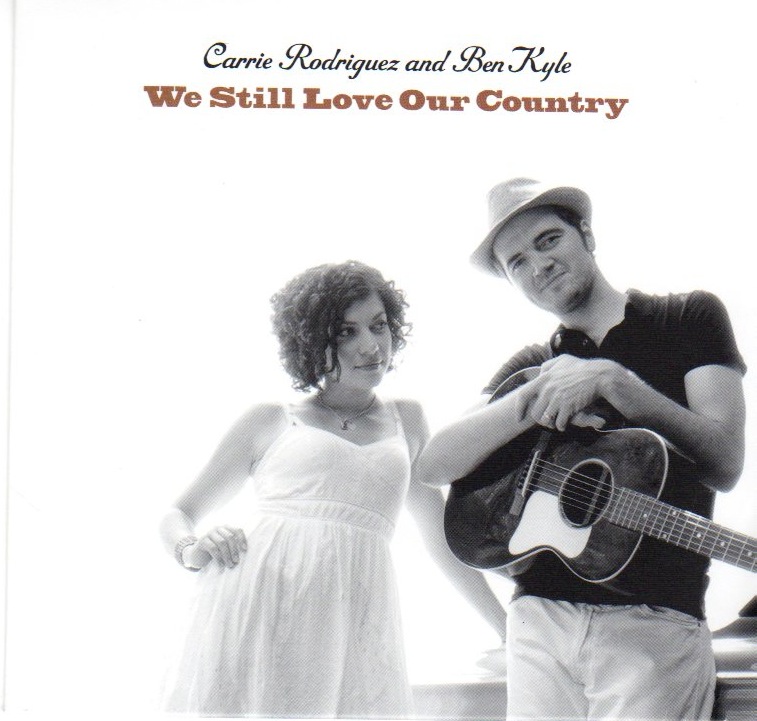
Carrie Rodriguez Teams with Ben Kyle


CARRIE RODRIQUEZ AND BEN KYLE

We Still Love Our Country

North Street Opus

* * *

Carrie Rodriguez bends the boundaries between country, folk, and rock. She also performs songs so sexy that they’re what Barry White would have done if he had worn a skirt and sang with a Texas twang. On her latest, though, she teams with Ben Kyle and returns to country music’s roots. This eight-song EP consists of old-style covers such as “If I Needed You,” My Baby’s Gone,” and “Love Hurts,” with a few vintage-sounding originals tossed in, including “Fire Alarm,” which could have been torn from the Ronettes’ backlist. The duo feature Kyle’s lead vocals a bit more than Rodriguez’s. I would have preferred the reverse, but the project is a sweet reminder of what country music was like before it got slicker than the waters of a Gulf Coast bayou.

Carrie Rodriguez is touring the East Coast this month; catch her if you can.

6/9/11

The GOP Thinks You're an Idiot!


To arms, citizens! Sarah Palin is coming!


From the mouths of babes--There was a charming letter from Sarah Burke in yesterday’s Boston Globe. Burke wondered how Sarah Palin could not know about Paul Revere’s ride, an event with which most elementary school students have familiarity. Burke remarked, “Paul Revere was letting the Minutemen know that the British were coming so they could get their guns. Revere was not letting the British know that the British were coming.” Sarah should know what’s taught in grade school; she’s nine. That’s Sarah Burke; Sarah Palin just acts like she’s nine, a talent she’s currently demonstrating on a cross-country freak show in which she insists she wasn’t wrong about Paul Revere, merely a victim of the “gotcha” media.

Sorry Sarah Palin--you were wrong. Paul Revere was not letting the British know, as she insisted, that they weren’t going to take our guns from us. She’s from Alaska and I’m sure that I could be stumped on an Alaska history question, but Paul Revere’s ride doesn’t exactly fall into the category of esoteric trivia; as Sarah Burke reminds us, it’s something that even nine-year-olds know. Sarah Burke probably has parents who told her it’s not nice to call people names. I forgot that lesson, so allow me: Sarah Palin is a first-class idiot. I’d laugh at her very existence save for one fact: she represents a political party that thinks it’s fine to be an idiot. The Republican Party cultivates morons and calls them office-ready. It banks on the hope that the electorate is dumber than nine-year-olds. The scariest part of all? The party might be right.

Think this is harsh? I wish I could dismiss Palin as an aberration, but the GOP also gave us Dan Quayle, George W. Bush, Christine O’Donnell, Scott Walker, and Paul LePage. To refresh your memory, they gave us--in chronological order of ignominy--the potatoe, weapons of mass destruction, the assertion that the U.S. Constitution does not call for separation of church and state, the belief that public employees shouldn’t have bargaining rights, and the claim that the first female Cabinet officer was a radical leftist. Put all of these subatomic brains together and you don’t crack triple digits on the IQ scale. When I look at today’s Republican Party I wonder if there has been this many dumb people in one place since free beer night at the lobotomy clinic.

Okay, I’m the kind of guy who thinks Bernie Sanders is too conservative, so granted I’m biased. I admit it. But does conservatism have to be so utterly stupid? Now that William Buckley has gone to the Big Tax Break in the Sky, who in the party--aside from George Will and David Brooks--could pass a urine test? Rick Santorum? Mike Huckabee? Michelle Bachman? Ron Paul? Not exactly Plotinus, Socrates, Plato and Aristotle, are they?

If you are a conservative voter, aren’t you insulted that the party thinks you have the intelligence of a brain-damaged mollusk? If you continue voting for such pandering fools, maybe you do! Just for the record, I’m not saying that the Democrats are much better. If you go back to the IQ scale, they score dull normal at best. I’m not telling anyone to vote for Democrats, but here’s what I do advocate: If a political figure has less intellectual heft than a nine-year-old, tell them to shut up and get lost. Insist that whatever party you support fields candidates who use their brains for something more substantial than preening, parroting nostrums, spreading fear, and playing cavalier with facts. At the end of Sarah Burke’s letter she mockingly suggested that maybe she’s more qualified to be president than Sarah Palin. Given a choice between the two, Burke has my vote!

6/8/11

Secretariat an Alternative View to the Belmont Stakes


Secretariat (2010)

Directed by Randall Wallace

Disney, 123 mins. PG

* * *

No horse has won racing’s Triple Crown since Affirmed in 1978 and it’s not going to happen in 2011. Who could blame a casual fan who decided to skip the June 11 Belmont Stakes and pop in the DVD of Secretariat instead? After months of being hard to secure as a rental, Secretariat is finally widely available. Is it a great movie? No, but Secretariat (1970-1989) is probably the greatest horse to ever munch oats. In 1973, Secretariat won the Triple Crown and set records in all three races. (A timekeeper’s error robbed the horse of his deserved record in the Preakness.) I can still recall watching Secretariat destroy the field in the Belmont in what may be the most thorough domination of a peer group in professional sports history. It was like Bob Feller facing Little League hitters.

Secretariat the movie tells the story of this remarkable animal and of the Cherney family that owned him, thanks to a bad choice by Ogden Phipps, who shared rights to the offspring of sire Bold Ruler. (Cherney and Phipps yearly tossed a coin for first choice; Phipps won and bet on the wrong horse!) This is a Disney movie, so you know that sentimentality and melodrama will reign, just as you also know that everyone will be straight-teethed, scrubbed, and airbrushed. You could eat off the floor of the horse barns in this film and even mud-covered jockeys look fresh as a daisy. Like most Disney films, it’s also predictable that the American Dream will triumph and that critiques of it will dissolve in the face of shucks-gee whiz wholesomeness. Check out this film’s needless and ridiculous subplot of Penny Cherney Tweedy’s counterculture-wannabe daughter (pop singer A. J. Michalka as a hippie designed by L’Oreal). It’s the worst depiction of the 1960s since Selling Woodstock. You may also have some trouble choking down the performance of Nelsan Ellis as black stable hand Eddie Sweat, who sashays around Penny with wide eyes and a broad smile that border on Stepin’ Fetchit territory. And a few of the scenes between Penny and Secretariat might make you think you’ve accidentally downloaded Dr. Doolittle.

Luckily the actors transcend the PG (for Perfectly Gentile) writing and add the illusion of script depth. Diane Lane plays Penny Tweedy and does a credible job as a woman recovering her girlhood feistiness, thanks to an emergent feminist movement, birth family trauma, and contact with enough chauvinist piggies to open a bacon factory. John Malkovich spouts execrable French as trainer Lucien Laurin, but he’s wicked fun as a swishy misanthrope with an unfortunate wardrobe. Also turning in good performances are Otto Thorwarth as jockey Ron Turcotte, and Margo Martindale as Cherney family secretary Miss Ham, who gave the big red horse his name.

But you can forget all the human actors, because that big red horse is definitely the star of the film. Disney has always excelled in big build-ups to crowning (literally in this case) moments. The horse racing sequences are excellent, even when they were exaggerated. (No horse could make up the deficit in which director Randall Wallace placed Secretariat in the Kentucky Derby.) Wallace puts us at the edge of out seats when the gates open, which is quite a feat because we already know that Secretariat is going to win. My vote for best actor goes to Trolley Boy, the horse discovered by Hollywood in a Secretariat look-alike contest. Call it the best doppelganger performance since Jamie Foxx morphed into Ray Charles.

This is a flawed and predictable film, but a fine way to wile away two hours. Those of you old enough to remember Secretariat will be transported back in time. And for those of you too young, t’is a shame; I doubt his likes will come again.