9/14/12

Rescuing Liberals from Themselves


Time to play rope-a-dope with the Loony Right.

Liberals have long been their own worst enemy. It’s as if the liberal agenda got frozen in time around 1968, when the Great Society peaked. It’s time to trim the gray hair, put away the tie-dye, and toss out the Birkenstocks. If liberals want to compete in 21st century politics, some serious adjustments are needed. Among them:

1. Put away the kid gloves. Stop being so reasonable and nice. Nobody wants to read your white papers; they don’t even want to read the lines at the top of your petition. Want to compete? Get some sound bites, baby! Repeat them early and often. When attacked, fight back like a snarling tiger. Have you not been paying attention? Politics has been reshaped by figures such as Lee Atwater, Spiro Agnew, Karl Rove, and Dick Cheney. Joe Biden actually has the right idea. Don’t tighten his lease; take off his collar.

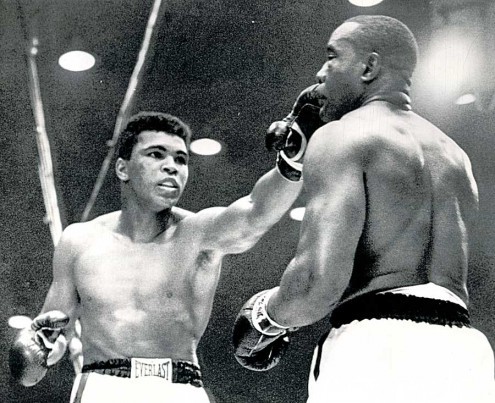
2. Go on the offensive. Aren’t you tired of defending all your beliefs? Aren’t you sick of being stereotyped by the LR (Loony Right)? Come out like young Ali and throw the first punch. Goad the LR; play rope-a-dope with them. (That shouldn’t be all that intellectually challenging!) Don’t listen to any complaints about “Obamacare;” start screaming about how the LR wants to turn the country over to Big Pharm and Big Insurance. Don’t take the “They’re going to raise taxes” bait; play the class warfare card and accuse the LR of defending robber barons who send jobs overseas and don’t pay their taxes like “normal” Americans. Don’t stop screaming until Romney releases his taxes. And when he does, tell everyone he’s an “elitist” who is “out of touch with ordinary Americans.”

3. Divorce the working class. This is a romance from which the spark vanished decades ago. There isn’t much of a blue-collar working class anymore and what little that does exist consists largely of angry white boys more attracted to the LR than liberals. Sorry, but the days of “Roll the Union On” are gone. Today’s working class is filled with sexists, racists, nativists, and militarists. Move on. It’s a small (and declining) minority that hates you.

4. Don’t defend the undefendable. Liberals have too many “bleeding heart” issues that have no chance to succeed in the short run. It’s time to stop wasting resources and energy on pipedreams and save them for another day. Case in point: illegal immigration. My heart also bleeds for workers and their kids who’ve been in America for decades, but what part of illegal confuses you? We go ‘round and ‘round on this issue, but here’s what I know: the United States is the only nation in the world (okay, maybe Canada too) where this is even a conversation. I lived in New Zealand for a time. I liked it, but I know that if I went back, overstayed my passport and got caught, I’d be detained and deported no matter how long I avoided detection. End of story. This is a losing issue supremo. You want American taxpayers to support illegal immigrants in public schools? To shelter them in public housing? Pay their medical bills? You may be morally correct, but you are politically naïve. I’d personally like to knock down borders so that workers can move with the freedom with which goods move. But this is definitely an issue for another day. What we could have is a serious dialogue about punishing employers and individuals who employ illegals. Reduced job opportunity = reduced illegal immigration.

5. Don’t trash the picture; change the frame.  Every time a liberal opens his or her mouth and utters the word “rights,” a vast number of Americans hear “special privileges.” Their bad? Only partly. It’s fundamental folks. It’s something I try to impress upon undergraduates: How you say something is often as important as what you say. Don’t say the “right of gays to marry,” say, “The government shouldn’t be allowed to tell adults what they can do in their private lives.” Don’t say “abortion rights;” ask, “How would you like some church you don’t attend come into your home and force their views on you?” Don’t tell people you oppose wilderness region oil drilling, say, “We need to develop new resources that free us from foreign suppliers and from the Big Oil Companies (capitalize it, dude!) that gouge us.” Do not say “women’s rights, civil rights, disability rights,” or any other such phrase, say, “I believe everyone should be treated equally and that we need to level the playing field.” (Love that last phrase; it’s been used for decades and everybody thinks it sounds good even though no one has the slightest idea what the hell it means!) When liberals put forth policy initiatives, name them things that sound “American:” the Eagle Opportunity Act, the Personal Freedom Act, the Energy Independence Initiative….

6. Reclaim patriotism. If there’s anything that boils my shorts while I’m still wearing them, it’s loudmouths who hate their government, hide their money offshore, care more about the Chinese economy than their own, plough under American youth in wars that have no bearing on the United States, want to run our lives, and yet still manage to wrap themselves in the flag. See # 2 above. Go on the offensive. Use harsh rhetoric. Call the LR names, like “Tea Party extremists,” “fanatics,” “right-wing anarchists,” “selfish tax dodgers,” “job killers,” “war-mongering budget-busters,” and “freedom haters.” Do to the LR as it did to Clinton and Obama: impugn its patriotism. Don’t let those who represent self-interest pretend that they are patriots. Suggest that if Mitt Romney wants to hide his money in the Cayman Islands, he should follow the example of Eduardo Saverin, renounce his citizenship, and go reside with his cash.

There are other examples I could think of, but these six make a good start.

9/12/12

Exit Project an Aural Mess


EXIT PROJECT
Livesplashes
Creative Commons 7378-11
*

This CD made me feel like I was a teenager again, but not in a good way. It reminded me of early encounters with non-representational art; back when I didn’t appreciate it because I insisted on trying to figure out what it was. Maybe this Russian club band is like non-representational art and what, to my ears, are shapeless compositions filled with random tones, squawks, and disconnected beats, are actually brilliant explorations of music’s lines, shapes, and colors. Or maybe it really is random noise in search of a groove that’s been foisted off as “cool” to an art music crowd too image-conscious to ask, “What the hell is this?” I’m going with the second explanation. The album’s four drawn-out tracks were recorded live in a Moscow club. Both the music and the crowd evoked misguided sessions from Andy Warhol’s The Factory that similarly entranced hipsters working on their image, but which history subsequently dubbed elaborate ruses performed by charlatans for the benefit of poseurs. Perhaps that’s overly harsh on my part. Fine. I’m perfectly willing to say that I just didn’t get this album, but one that opens with a track titled “Je ne sais pas lá” (I am not there) makes me think there really isn’t anything to get. Label it soundscaping without an exit strategy. –Rob Weir   

9/10/12

Cosy Sheridan's Latest Worthy, but too Homespun


COSY SHERIDAN
The Horse King
Waterbug 102
* * *

Cosy Sheridan’s latest CD is a humor sandwich with poignant filling. She leads with three whimsical songs that dare to make suggestions that have occurred to lots of us. On the barrel house/honky tonk-styled “Higher Financial Reform” she advises us not to trust our pensions to high-flying boys who are younger than we. Then she offers career counseling for those seeking to make a living by the arts: “Keep Your Overhead Low.” And, at last, someone tackles the non-appeal of “Air Guitar” and makes the commonsense remark that it would be better to learn how to play the real thing!

After little flights of folly and frolic, Sheridan turns serious for four songs. The title track pays homage to a real-life horse whisperer she knew when she was younger; “Icarus” retells the classic by making him into a hero with the courage to fly rather than the foil of a cautionary tale; “The Angles in Rome” muses on the statuary that (in my view) often evokes more spirituality than what lies inside the building; and “Don’t Walk Away from Love” could be an Emmylou Harris song.

Then it’s back to the lighter side when contemplating naked bodies of older women (“Religious Art”), the scariness of one’s inner thoughts (“Would You Like to Meet the Voice inside My Head”), and in providing the antidote to life’s trials and tribulations (“Be Outside”). The latter would make a great anthem for the Boy and Girl Scouts!

This is a very likable album, but it’s also too homespun for its own good. Sheridan’s vibrato is starting to show some wear and the instrumentation and backup vocals do little to assist her. She’s always been upbeat, vivacious, and fearless, but it sounded to me as if a lower key might have been a better fit for several of the songs. I recommend this album for its cleverness, good heart, and kind spirit, but it’s a bit like Sheridan’s take on the aging female body: don’t expect a work of art.—Rob Weir


9/7/12

The Sorry States of Casino Gambling


There are currently 28 states that have casino gambling, and like a drunken man tossing down his last $20 at the roulette table, Massachusetts is rushing pell-mell to become number 29. Here in Western Massachusetts, depressed locales such as Holyoke, Palmer, and Springfield are already battling for the dubious honor or further depleting resources in order to lure a hypothetical casino to their squalid borders. I say hypothetical because no casino has actually been built yet, and only one in the region stretching west of Worcester to the Berkshires will be permitted. Cities are literally betting on red—they are going deeper into debt to toss financial inducements to developers that might be awarded a casino license.

I shall not delve into the morality of casino gambling. I will say, though, that the poorest state in the Union, Mississippi, has 15 casinos and shows no sign of pulling itself above the Inferno's lowest rung. I understand the allure of casino gambling—it’s a lot like the drunken man down to his last twenty. As the Massachusetts’ Lottery—a cash cow in danger of being sent to the abattoir once casinos open—puts it, “You have to play to win.” Cities are like dream-drunk bettors who think they can defy the odds. After all, look what happened at Foxwoods in Connecticut. Funny that everyone looks there, but fail to see; Foxwoods has been hemorrhaging cash for several years and has been quietly moving resources into non-gambling ventures. Funny that people continue to treat the post-apocalyptic landscape of Atlantic City as an aberration rather than the rule. When Holyoke or Springfield boosters speak of casinos as the centerpiece of urban renewal, I wonder why they never invoke Detroit, which has three casinos and remains near the top of everyone’s “Why would I want to go there?” list. They never visit the wastelands of St. Louis, which opened casinos on dry land in the vain hope of raking in money that it thought went to Illinois when riverboat gamblers drifted across the Mississippi River’s state line.

What’s not to understand, folks? The entire point of casino gambling is that the house wins and the rest of us lose. Please refrain from playing the “Casinos create jobs” card because the house is holding at 21. Go online and check out where the nation’s 500 casinos are located. They fall into two categories: places you’ll never be able to afford, or places you’d never want to live. Casinos are simply the latest quick-fix straw at which down-on-their-luck states and municipalities are grasping. When the U.S. economy tanked in the 1970s, lots of places were sure that shopping malls were the answer and built them at the speed at which Henry Ford once cranked out Model-Ts. America got malled/mauled and the only discernible effect was that inner cities declined further. Come the 1980s, it was tourism that was supposed to rescue the economy. Golf course projects got enormous tax breaks, but we didn’t really become a nation of duffers; we simply built lavish playgrounds for the 1%, the ones who never stop at the local visitors’ center to pick up brochures for the area’s historical houses, scenic delights, home-cooking restaurants, or “unique shopping experiences.” Now it’s gambling’s turn to fuel false hopes.

If we actually lived according to the logic of one-fix experts, the America of the future would consist of dividing the masses in halves. A pot of money would be set aside for allocation to the masses. For six months of the year people would work in either the tourist or gambling industries and collect their allocations; for the other half of the year they would be furloughed and forced to spend their earnings at tourist sites and casinos while the other half worked. If my remarks sound as if I see municipal planning as a cynical shell game, that’s because I think it such. Has it not dawned on anyone that we’ve been spinning our wheels trying to substitute a future one-industry strategy (gambling) for the failed one-industry models of the past? (Detroit-automobiles; Holyoke-paper; Atlantic City-conventions; Springfield-machine tools) As a student of proverbs, I know that many of them convey timeless wisdom. Like the one that goes: Don’t put all your eggs in one basket. Like the one that says: A fool and his money are soon parted.

The drunken man stumbles to the table. His hoodie says Massachusetts on the front.        

9/5/12

Orient an Ecumenical Tour of Music, Culture, and Religion

ORIENT NOIR
Orient Noir
Piranha 2645
* * *

If you want a musical tour of Middle Eastern and North African rhythms as they might have sounded in the 1930s when Western grooves etched themselves into the musical landscape, Orient Noir is your ticket. It’s a set of offerings assembled by Dr. Bertram Nickolay, a German scientist, computer programmer, and intellectual who also happens to collect world music, especially “Jiddish” music–Yiddish songs, klezmer, and Sephardic traditions. This collection branches across religious, geographical, and cultural borders. We get Nubian wedding dance music, pop songs, Turkish chants, Lebanese café bands, Serbian songs, New York City musicians…. You name it. Some of the music was on Euro charts back in the 1970s, such as Efendi Garden’s “The Garden,” a stellar example of what was once labeled Krautrock. It also includes The Klezmatics’ “I Ain’t Afraid,” one of the finest songs I know that takes down religious zealots of all stripes. It’s closing refrain line “I’m afraid of what you do in the name of your God” pretty much sums up about half of what’s wrong with the world these days. World music aficionados will recognize names such as Watcha Clan and Mahmoud Fadl, but most of the performers are not as well known. Some of the artists package themselves as avant-garde, but a track such as “We Daret El Ayam” sounds as if it’s in search of a black-and-white movie and “Maka Shelishit” as if we’ve been transported to a dusty casbah. Intriguing stuff throughout.

For something more contemporary, check out The Klezmatics singing “I Ain’t Afraid.” 

9/3/12

Waiting to Ex-Kale


Kale chips? Are you freakin' kidding me? 

Summer’s almost over. Among other things this means the offerings from our CSA (Community Supported Agriculture) farm are winding down. It’s just a matter of weeks until late tomatoes, zucchini, cabbage, and onions give way to potatoes and squash. After that, it’s winter pickup time–sometime around mid November we can swing by for some winter keeping foods such as beets, turnips, potatoes, tear-inducing onions, and giant blue squash that can be hollowed and rented out as student apartments.

There is one silver lining in the bitter drama we New Englanders call “winter;” its impending arrival means it’s at least six months before we have to pretend we’re interested in kale. I want to go on record as saying that kale is to green vegetables what carob is to pod foods–a non-edible weed posing as nutrition. Let’s be honest–human beings are carnivorous mammals that occasionally devour plants. But we are not meant to consume kale or Swiss chard, sorrel, or other such horror stalks. These are the kinds of substances, which, if Rover ingested them, you’d take him to the vet to see if he’ll survive.

Spare me all sure-fire recipes for scrumptious kale. You might as well tell me you’ve discovered Noah’s Ark intact in downtown Atlantis. I’ve boiled kale, sautéed it, steamed it, added it to soups, seasoned it with herbs, and nailed it to the doorframe to ward off zombies. I’ve eaten kale chips, as if somehow these were a substitute for Cap Codders. I’ve tried recipes from every source from Bon Appétit to Worm and Grub Weekly. Thus far I have found a single good use for kale and its ilk–they make excellent compost, which is where they end up every week. I want to tell my CSA–don’t grow this crap; harvest something we actually want, like cheeseburgers.

I have found only one leaf plant that’s choke-downable: collards. I attribute that to African Americans, who brought their Southern foodways with them during the Great Migration. Give me some pork barbecue, some cornbread, thirteen side dishes, and a plop of collards soaked in vinegar and I’m okay with that. Of course, barbecue is a food no kale-o-holic would ever dream of eating. They like to tell me how good kale is for me. Yeah, so are periodic colonoscopies, but you don’t see anyone growing them in fields, do you? Who wants to live forever if it means eating stuff that induces suicidal thoughts?

The leaves are turning and soon the snow fill fly. I will grumble as I shovel my driveway, but I will gaze out at the frozen fields and smile when I think of all the dead kale buried in their white tombs.

8/31/12

Tam Matsumoto Guitar Album Blows New and Tired

TAK MATSUMOTO
Strings of My Soul
335 Records 1208
* * ½

Guitarist Tak Matsumoto assumes four identities, that of a New Age artist, a crunching rock and roller, an introspective jazz innovator, and a Japanese traditional musician. He sometimes wears all four identities in the same piece. So does this make Strings of My Soul a daring blend, or a shepherd’s pie with too many ingredients? To my ear, both. The good news is that Matsumoto avoids the common guitar solo album problem of presenting everything as if it’s cut from the same cloth; he simply doesn’t dwell anywhere long enough for you to feel that way. He’s also highly skilled, as befits the Grammy Award winner that he is. It’s also a delight to hear tracks such as “Hana” and “Koi-Uta,” in which the Asian erhu (a two-stringed fiddle) shares sonic space with Western instruments. The bad news? Matsumoto’s rock departures may go down a storm in Japan, but most seem like decades-old news here in the West. Ditto atmospheric his New Age meanderings, a genre that’s well past its sell-by date. Even with the aid of Larry Carlton, I can do without a cover of “Suriyaki,” and I’ve always hated “My Favorite Things,” so that one left me cold as well.  A reworking of themes from the 1968 soundtrack for “Romeo and Juliet?” Okay, but…  I think Matsumoto is an amazing fret-board wizard, but the material and his arrangements left me hungry for more one moment, and slightly queasy the next.--Rob Weir