9/26/12

Perfect Sense an Under-appreciated Film


Be among the tens who have seen this film! 

PERFECT SENSE (2011)
Directed by David MacKenzie
Scottish Screen, 92 mins. R (full frontal nudity and sensuality)
* * * *

Perfect Sense was a hit at Sundance and nowhere else; it bombed at the box office in both the United States and Britain, where it was released. Too bad, because it’s a very well acted and provocative film, despite several shortcomings.

There’s no getting away from the fact that Perfect Sense is ultimately a depressing film. It’s a science fiction romance set in the near future, one in which Armageddon unfolds slowly and mysteriously. Across the globe people experience sudden, violent temper tantrums and then lose their sense of smell. As in all such films, the scientific community is baffled by what it labels S.O.S. (Severe Olfactory Syndrome). Susan (the scrumptious and sexy Eva Green) is a Glasgow epidemiologist, one of many who are clueless about what causes S.O.S. Just outside of her apartment, Michael (the hunky Ewan McGregor) has a different dilemma; he’s the head chef of an upscale restaurant and he, his boss (Denis Lawson), and his food artist assistant James (Ewen Bremmer) worry about the financial future of a business in which aromas matter almost as much as how the food feels in the mouth. Michael, as it turns out, is a man of other hearty appetites; he’s a serial womanizer as well as a master chef.

One can, of course, predict that he and Susan will become an item, but this is not your conventional good-girl-tames-rogue picture. The two will be thrown together as much by a desire to retain a balance between passion and normality as by animal magnetism. As it turns out, loss of smell is just the outside leaf of the apocalyptic iceberg lettuce. It’s followed by mass outbreaks of sheer terror, followed by insatiable hunger, then loss of taste. So what does one do in a world without smell or taste? What do humans generally do in the face of tragedy? They seek routine and pattern. Thus Michael continues to consult his recipes, and James lovingly crafts each plate that leaves the kitchen, though neither cooks nor patrons can do other than feel the food and drink upon their tongues.  By this time, though, Susan and Michael have quite a lot of tongue action of their own on their private menus.

If only loss of smell and taste were the end of the bad news! But, of course, it isn’t. Waves of worldwide sadness bring deafness; momentary eruptions of bliss give way to blindness. All that is left is touch, which we presume to be the “perfect sense,” though one can’t hold out a lot of hope for a planet filled with humans who have no way of communicating, let alone farming, hunting, or foraging. I presume we’re supposed to muse upon how the world we live in overloads our other senses to the degree that we’re both figuratively and literally “out of touch” with one another, though I give director David MacKenzie credit for not moralizing, sorting out, or gift-wrapping an ending for us. I would yield to anyone who said the film is manipulative, but one can’t escape musing upon how the world would cope with catastrophic loss, or what one would cling to if all else was lost.

Green and McGregor are both terrific, and there’s real frisson and electricity between them. Okay, so you watch this film and wobble away off your stride because it’s unlikely that anyone lives for very much longer, let alone happily ever after. Still, you’ll be thinking about what you’ve seen and what it made you feel for days afterward, which is quite a bit more than can be said for 99% of the goes-down-easy pabulum we’re fed these days. My only beef is with critics that have heaped praise upon Danish writer Kim Fupz Aakeson, who blatantly expanded upon the central premise of Portuguese novelist José Saramago’s Pulitzer Prize-winning novel Blindness (1995). I kept waiting for some acknowledgement of inspiration, but none was forthcoming. As I warn students, changing a few details but pirating another’s major idea is plagiarism unless you give credit. So a thumb’s up for the film, but a raspberry to Aakeson.--Rob Weir

9/24/12

Maine a Page-Turner That Blows the Sheen Off Bourgeois Life


MAINE (2011)
By J. Courtney Sullivan
Knopf 978-030759126
* * * *

There are two types of fiction writers, those who extrapolate from real-life experience, and those who reside entirely in their imaginations. For her sake, I hope that J. Courtney Sullivan is from the second school because if her family is anything at all like the Kelleher clan at the heart of her newest novel, Maine, she will spend every royalty nickel she makes on therapy. To call the Kellehers dysfunctional is akin to calling Rush Limbaugh insensitive—correct, but light years short of ultimate truth. It gives away nothing to say that among the book’s pleasures is its devastating critique of blind faith and bourgeois ethics.

I picked up this book because I was headed to Maine for a vacation and know well the Cape Neddick/Ogunquit region where much of the book is set. It is a beautiful area, the perfect backdrop for hell masquerading as heaven. Sullivan’s sprawling novel spans four generations of a Boston Irish Catholic family. That’s a lot of time and, initially, the sheer number of characters seems daunting, but it eventually centers on four women: 83-year-old family matriarch, Alice; her eldest daughter Kathleen; Kathleen’s daughter, Maggie; and Alice’s (overly) dutiful daughter-in-law Ann Marie. Everything revolves around Alice, a self-absorbed, vain (and still striking) woman who wears her piety like a too-revealing summer dress. She is a complex character, but also so thoroughly calculating that hardly a page goes by in which you don’t wish you could personally strangle the old bat (even after her dark secret is revealed). But she has plenty of obnoxious competition--the Kellehers are a collection of substance abusers, recovering addicts, ne’er do wells, liars, egoists, social climbers, dreamers, and other malcontents.  When he lived, Alice’s husband, Daniel, kept the lid on the poison jar; now that he's gone, not even the cold Maine waters can absorb Kelleher toxicity. The central role of the Catholic Church notwithstanding, Daniel is the only thing resembling a saint in this novel.

Right after World War II, Daniel he won a bet in which the payoff was a hunk of oceanside real estate along what was then an undeveloped slice of southern Maine coastline. Now the unpretentious cottage he built and where Alice holds court is reachable only through the clamor of Route 1 and even that oasis stands cheek-by-jowl with a Yuppie McMansion thrown up by their lawyer son Patrick and his obsequious wife Ann Marie. Ann Marie grew up working-class disrespectful—think gangsters without money. The family beach house is part of her relentless drive to live in a happy bubble, as is her refusal to see that her own son is the white-collar analog to her thug/brother, her fruitless currying of Alice’s favor, and her obsessive building of fantasy dollhouses that are like the beach house but without the Kellehers. (Well, that’s a start!) We soon get the point that the only way to stay sane is to stay as far removed from Alice as possible. Middle daughter Clare manages this, but not the eldest, Kathleen, though lord knows she’s tried. She divorced her philandering husband decades earlier, but that’s a mortal sin in the eyes of Alice, partly because of her putative faith and partly because Alice is partial to any slime ball who flatters her. Kathleen got drunk, got sober, met a Baby Boomer dreamer named Arlo, and moved to California to take up yoga and organic worm farming. (Yep!) Unfortunately, her own daughter, Maggie, forces her to end her self-imposed exile when she shows up at the beach with a muffin in the oven, but without her pathetic boyfriend, Gabe (whom Alice thought was wonderful).  Predictably, Kathleen rushes off to Maine to confront Maggie and, just as predictably, family sparks fly. (Maggie is a character over whom debates will rage. For the record, I found her as cloying as Gen Xers can be when they seek to shift the blame for all their troubles to anyone in the world except themselves.)

As a family drama, Maine is first rate. Sullivan has a great ear for dialogue and she also has a gift for observing small details that make ordinary things seem extraordinary. The novel is certainly open to the charge of being cluttered, as if Sullivan became so enamored of things she’s contemplated that she felt the need to force fit them into the plot. You will find echoes of the Catholic Church sex scandals, the Bulger family, Boston politics, and the devastating 1942 Cocoanut Grove nightclub fire in which 492 people died. (And one suspects she’s eliding the 2003 Warwick, Rhode Island fire with some of that.) The book also feels claustrophobic when it moves to Boston or New York, as if it needs the Maine air to breathe. Okay, sure, but this is still a crisp novel, a proverbial page-turner that’s filled with memorable characters, skin-squirming situations, and quotable lines. It topped my summer reading list, but this Smith College graduate’s second novel makes for compelling reading in any season.

Footnote: I was mightily amused to read some of the comments left on Good Reads. Quite a few people hated the book because they didn’t “like” some of the characters. Duh! That’s the whole damn point. Sullivan hit the self-absorbed middle class with a right hook and Irish Catholicism with a left cross. If you don’t get that, maybe you should build dollhouses!


9/21/12

Global Village or Veiled World? Muslims Must Decide

This simply cannot be the global norm!

On September 19, 2012, Harvard professor Karen King dropped a bombshell that is sure to reverberate throughout the West. She held in her hands a scrap of 4th century Egyptian papyrus that quotes Jesus mentioning his wife! If authenticated, King’s revelation undermines more than two centuries of Roman Catholic teaching and the very rationale for the celibacy of priests.

King’s announcement was greeted with rioting. Angry mobs streamed out of the Vatican and clashed with Italian police. Forty people died before the Italian military forced the surging mob back within the confines of the Vatican. In Cambridge, Massachusetts, an estimated 5,000 Irish-American Catholics forced their way onto the grounds of Harvard University. The mob, marching behind a crucifix-emblazoned banner, toppled the statue of James Harvard as they shouted “Mendacium!” (“A lie!”), a direct slam at Harvard’s motto: “Veritas” (truth). Three Harvard professors were pulled form their classrooms and were beheaded as the crowd chanted, “Jesus is Lord!” Worldwide at least 17 other nations saw protests and a reported 115 people have been killed.

You don’t remember hearing about this? Of course not. It never happened. The only thing that’s true in the above two paragraphs is that Professor King did, indeed, unveil a scrap of papyrus in which Jesus mentions a wife. (She also said that she’s working with teams of experts to make certain it’s not a forgery.) So why did I write this? To contrast it to the ridiculous (and childish) reaction currently occurring in Muslim lands in reaction to, of all things, a YouTube video.

In case you’ve tuned out the news, some jerk in California calling himself Sam Bacile—yeah, I know, where you find a jerk in California?—made a cheap movie in which Mohammed is depicted as a randy ladies’ man and a charlatan. Offensive and needlessly provocative? Of course it is, and you don’t have to be a Political Correctness freak to condemn his actions. But a better reaction is simply to ignore Bacile and allow him to obtain the obscurity he so richly deserves. Instead, Muslims across the globe have stormed U.S. embassies, burned flags, attacked citizens, and have killed at least 30 people. Congratulations! The disgusting and inexcusable carnage aside, the major accomplishments of such actions have been to send thousands of people to YouTube to watch the repulsive video, transform Bacile from an idiot into a civil libertarian, cast Islam in a more negative light than Bacile could have ever done, and encourage copycat parody, such as that found in the French journal Charlie Hebdo, in which Mohammed appears as a naked letch. The reaction to the French cartoons? Why more rioting of course.

Let’s be blunt about the problem here. Muslims must stop allowing fanatics to define them. This sounds clichéd, but it’s true: I know numerous Muslims and they are sweet, loving, devout people. I’d much rather spend time with them and have them as neighbors than the Bible-thumping zealots who attend a nearby church. A lot of people associate riots and murder with all Muslims. That’s very sad and it’s akin to associating all Christians with the bloodthirsty murderers who gun down doctors who perform abortions. But the cartoonist calling himself Luz who drew the French lampoons has a point when he notes that the only time there have been protests over the magazine’s content have been the three times he parodied Islam. He also has a point when he says, “I live under French law. I don’t live under Koranic law. I’m not the one going into the streets with stones and Kalashnikovs.”

I’ve never seen this French magazine, so maybe Luz is a jerk also, but he’s not wrong about his defense. Here’s the deal—we live in the Global Village. That means the world is a marketplace of ideas as well as goods, including the concept of free expression (even if means freedom to be a jerk). If Muslims wish to live in the modern world, they must purge themselves of those who would cast them back to the 10th century and throw a veil over the rest of the planet. Every religion contains zealots, fools, and those who spread hatred and call it God’s will. What civilized nations do is prosecute such people; they don’t revere them as leaders, prophets, or martyrs. Civilized nations also tolerate everyone’s beliefs. Sort of like what Mohammed said when he told Muslims to respect all “the peoples of the book (Scripture)” and specifically mentioned Jews, Christians, and Sabians!

Muslims have been slandered. Some of it is self-induced; Muslims cannot expect respect when they blaspheme the traditions of others. Remember the Afghan Taliban blowing up the Buddhas of Bamiyan in 2001? Remember the beheading of Daniel Pearl? (A person “of the book.”) How many Muslims nations demand Palestinian statehood? Compare that list to the number that recognizes Israel’s right to exist. Remember the killing of two US soldiers because of a rumor (false as it turned out) that soldiers willfully destroyed Korans? This must stop and Muslims  must take the lead in wiping out those who cast Islam in a murderous light.

If one wishes to live in the Global Village, one must put up with (and learn to ignore) jerks–not because we wish to, but because it’s simply too dangerous to impose any one variety of orthodoxy. So some fool burns a Koran or a Bible. So what? Does this in any way diminish the power of God? Many Americans view the nation’s flag as a sacred symbol. What if, every time protestors in some far-off land desecrated an American flag, the United States sent waves of bombers and Marines to lay waste to the offending nation? Can you say “Armageddon?”

Muslims have a right to be angry when someone disrespects their core beliefs. But civilized people do not resolve their problems with Kalashnikovs. They do, as millions of Christians have done in the wake of the Jesus revelation—they return to those core beliefs for solace. Muslim nations must learn to accommodate difference, even boorish behavior, or they will find themselves persona non grata in the Global Village. The veil of isolation will descend, not from the hands of extremists, but from the Villagers who will ignore them.

9/19/12

Romney Doesn’t Give a F * * K


Graphic but true words of wisdom from the late George Carlin.

I was in college in the 1970s, after having lived through the idealism of the 1960s. My first major was political science, and my dream was to enter politics and change the world. That was before I learned about lobby groups, fund-raising, compromise, and how campaigns work. It was before the epiphany that I lacked an essential prerequisite for elected office–I am not politic. I wanted no part of the public scrutiny, the dissembling, or what Joni Mitchell called the “cardboard cut-out smiles.” In candor, I realized that there are a lot of folks I just don’t like: stupid people, the selfish, the dishonest, religious zealots, the mean-spirited…. It’s not like teaching, where you deal with minds that (for the most part) seek to discover knowledge, not proclaim (perceived) truth from whatever soapbox has their name on it. I would have been a horrible politician, even if one accepts the doubtful premise that I could have been made electable.

But here’s the thing–politicians dissemble and curry favor, but they have to at least try to show (or cast the illusion) that they care about everybody. We live in a representative democracy in which officials are expected to answer to the electorate–not the impossible “all” of it, but as broad a swath as possible. If you can’t do that, get out of the game. Forget your personal ideologies for a moment and ask yourself a simple question: Does Mitt Romney care enough about the American people to be president?  The answer is a resounding “No!” That’s not my opinion; those are his words.

Mitt has been caught, metaphorically speaking, with his pants to his ankles. He’s been tone deaf all along. The median income in the U.S. is a tick over $52,000 per year, but Mitt thinks that $250,000 per makes you “middle class.” That would be nice, but if you have reached that lofty height you’re among the 3%, not the vast middle. Mitt also thinks he understands autoworkers because “Ann drives a few Cadillacs.” Good grief! Okay, that’s just cluelessness, but if you think Mitt Romney cares about America, what do you do with his statement that “47%” of Americans “are dependent upon government” and feel they “are entitled to health care, to food, to housing, to you-name-it.” He also expressed anger that the same 47% pay no income taxes.

Where to start? First of all, a man who refuses to release his own income taxes stands on the moral equivalent of quicksand when condemning the tax habits of others. (Romney is reputed to have paid no income taxes in 11 of the past 13 years.) I guess taxes are just for the unwashed, not the well-heeled. 1% of Americans making over $1 million pay no taxes; just .6% of those making under $10,000 paid none. Half of Romney’s 46% (the correct number) are those filing jointly with another person–as a married person or as a dependent, like college kids, for instance–so let’s knock it down to 23% to be accurate. Of that figure, over a fifth is elderly living entirely on social security. When we parse it further, we get a whopping 3% who are on “welfare” and pay nothing. Two-thirds of those “paying nothing” according to Romney, do pay SSI and/or Medicare.

Yeah, a lot of numbers, so let me cut to the chase. Yes, I think people are “entitled” to health care, food, and housing. In 1937, Franklin Roosevelt expressed outrage when he observed that one third of the nation was “ill-housed, ill-clad, ill-nourished,” not that poor people didn’t pay taxes. Mitt Romney thinks that it’s all right that millions go without life’s basics. I find that thought so outrageous that my visceral reaction is to shout out, “F**k you! Mitt.” I can say that; I’m not running for office. I don’t have to pretend to like Romney or any of the selfish little bourgeois piggies that think it’s just fine to let all the rich white boys keep their money while others suffer.

I can say this because, as I discovered decades ago, I don’t have what it takes to be a politician. Neither does Romney. I hear so many people say that they’re sick of all the divisiveness in American life, that they feel a yearning for unity. If you feel that way, the question is basic: Why on earth would you vote for a man who has just said, “F**k you!” to nearly half the American population. It proves he lacks the temperament, the patience, the compassion, or the wisdom to be president of the American people, all of them–not just his fellow piggies at the trough. About that “wisdom” thing… that’s what separates me from Mitt. I don’t claim to be a better person than he, merely one who is aware enough of his limitations to know I can’t represent the masses.   


9/17/12

Sun Parade Hasn't Yet Dawned


THE SUN PARADE
Yossis
Self-Produced
* * ½  

When I hear The Sun Parade I need a pinch to remind me that these guys are based in western Massachusetts. Everything about them screams “California,” including the falsetto vocals, the atmospheric tunes, the bouncy rhythms, the ahh, ahhh, ahh bridging vocals, and–yes–the sunny nature of their material. The duo consists of guitarist/lead vocalist Chris Marlon Jennings (who also plays keyboards) and Jefferson Lewis, who plays just about anything that has strings. Songs such as “Nothing Lasts Forever” have a soft rock groove reminiscent bands such America. In fact, The Sun Parade are quite a lot like America, with one very big exception–one that some might find a deal breaker–they don’t have America’s sense of catchy pop hooks. A song such as “Sometimes Sunny,” for instance, has the same bright acoustic guitar strums and runs, but it doesn’t linger very long because too many of the offerings are interchangeable.

One small change that might help: Jennings and Lewis tend to sing in unison; more complex harmonies would add depth. One hears hints of this in “Need You By My Side,” one of the album’s better tracks. The Sun Parade’s repertoire could use more arrangements that are energetic rather than enervating. It also needs more discrimination between the instrumentation and Jenning’s soft vocals.  Simple arrangements such as the opening ukulele-driven strains of “Waiting for Life to Drastically Change” work much better than its more heavily instrumented bridge. Stripped down it sounds like an acoustic Beatles’ offering; textured it doesn’t have much identity at all. It’s possible that Jennings may have a better voice for country music. I hear this in pre-refrain parts of “Pickin’ My Pockets.” (It’s hard not to find the ohh-hhh-ooh refrain kind of juvenile.) My favorite track was “Oh No,” which is quiet, moody, and uses bouncy orchestration to invoke an “Eleanor Rigby” like sense of desperation.

Okay, maybe I’m too much of a jaded East Coast guy and none of what I see as shortcomings would bother folks on the Left Coast. But my current bottom line is this: I admire what these young guys are trying to do. They are talented and may have a very bright future. But “young” is the watchword of this review. There’s not enough depth, variety, or edge to the music and too much reliance upon easy-out tricks to (try to) cover the holes. As a reminder that new talent is on the horizon, Yossis has its pleasures, but Sun Parade hasn’t yet dawned.-- Rob Weir


Don’t take my word for all of this. The Sun Parade offers several free tracks from this release that you can hear at: http://thesunparade.bandcamp.com/

9/14/12

Rescuing Liberals from Themselves


Time to play rope-a-dope with the Loony Right.

Liberals have long been their own worst enemy. It’s as if the liberal agenda got frozen in time around 1968, when the Great Society peaked. It’s time to trim the gray hair, put away the tie-dye, and toss out the Birkenstocks. If liberals want to compete in 21st century politics, some serious adjustments are needed. Among them:

1. Put away the kid gloves. Stop being so reasonable and nice. Nobody wants to read your white papers; they don’t even want to read the lines at the top of your petition. Want to compete? Get some sound bites, baby! Repeat them early and often. When attacked, fight back like a snarling tiger. Have you not been paying attention? Politics has been reshaped by figures such as Lee Atwater, Spiro Agnew, Karl Rove, and Dick Cheney. Joe Biden actually has the right idea. Don’t tighten his lease; take off his collar.

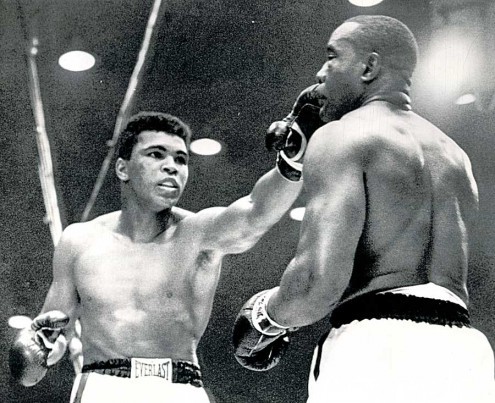
2. Go on the offensive. Aren’t you tired of defending all your beliefs? Aren’t you sick of being stereotyped by the LR (Loony Right)? Come out like young Ali and throw the first punch. Goad the LR; play rope-a-dope with them. (That shouldn’t be all that intellectually challenging!) Don’t listen to any complaints about “Obamacare;” start screaming about how the LR wants to turn the country over to Big Pharm and Big Insurance. Don’t take the “They’re going to raise taxes” bait; play the class warfare card and accuse the LR of defending robber barons who send jobs overseas and don’t pay their taxes like “normal” Americans. Don’t stop screaming until Romney releases his taxes. And when he does, tell everyone he’s an “elitist” who is “out of touch with ordinary Americans.”

3. Divorce the working class. This is a romance from which the spark vanished decades ago. There isn’t much of a blue-collar working class anymore and what little that does exist consists largely of angry white boys more attracted to the LR than liberals. Sorry, but the days of “Roll the Union On” are gone. Today’s working class is filled with sexists, racists, nativists, and militarists. Move on. It’s a small (and declining) minority that hates you.

4. Don’t defend the undefendable. Liberals have too many “bleeding heart” issues that have no chance to succeed in the short run. It’s time to stop wasting resources and energy on pipedreams and save them for another day. Case in point: illegal immigration. My heart also bleeds for workers and their kids who’ve been in America for decades, but what part of illegal confuses you? We go ‘round and ‘round on this issue, but here’s what I know: the United States is the only nation in the world (okay, maybe Canada too) where this is even a conversation. I lived in New Zealand for a time. I liked it, but I know that if I went back, overstayed my passport and got caught, I’d be detained and deported no matter how long I avoided detection. End of story. This is a losing issue supremo. You want American taxpayers to support illegal immigrants in public schools? To shelter them in public housing? Pay their medical bills? You may be morally correct, but you are politically naïve. I’d personally like to knock down borders so that workers can move with the freedom with which goods move. But this is definitely an issue for another day. What we could have is a serious dialogue about punishing employers and individuals who employ illegals. Reduced job opportunity = reduced illegal immigration.

5. Don’t trash the picture; change the frame.  Every time a liberal opens his or her mouth and utters the word “rights,” a vast number of Americans hear “special privileges.” Their bad? Only partly. It’s fundamental folks. It’s something I try to impress upon undergraduates: How you say something is often as important as what you say. Don’t say the “right of gays to marry,” say, “The government shouldn’t be allowed to tell adults what they can do in their private lives.” Don’t say “abortion rights;” ask, “How would you like some church you don’t attend come into your home and force their views on you?” Don’t tell people you oppose wilderness region oil drilling, say, “We need to develop new resources that free us from foreign suppliers and from the Big Oil Companies (capitalize it, dude!) that gouge us.” Do not say “women’s rights, civil rights, disability rights,” or any other such phrase, say, “I believe everyone should be treated equally and that we need to level the playing field.” (Love that last phrase; it’s been used for decades and everybody thinks it sounds good even though no one has the slightest idea what the hell it means!) When liberals put forth policy initiatives, name them things that sound “American:” the Eagle Opportunity Act, the Personal Freedom Act, the Energy Independence Initiative….

6. Reclaim patriotism. If there’s anything that boils my shorts while I’m still wearing them, it’s loudmouths who hate their government, hide their money offshore, care more about the Chinese economy than their own, plough under American youth in wars that have no bearing on the United States, want to run our lives, and yet still manage to wrap themselves in the flag. See # 2 above. Go on the offensive. Use harsh rhetoric. Call the LR names, like “Tea Party extremists,” “fanatics,” “right-wing anarchists,” “selfish tax dodgers,” “job killers,” “war-mongering budget-busters,” and “freedom haters.” Do to the LR as it did to Clinton and Obama: impugn its patriotism. Don’t let those who represent self-interest pretend that they are patriots. Suggest that if Mitt Romney wants to hide his money in the Cayman Islands, he should follow the example of Eduardo Saverin, renounce his citizenship, and go reside with his cash.

There are other examples I could think of, but these six make a good start.

9/12/12

Exit Project an Aural Mess


EXIT PROJECT
Livesplashes
Creative Commons 7378-11
*

This CD made me feel like I was a teenager again, but not in a good way. It reminded me of early encounters with non-representational art; back when I didn’t appreciate it because I insisted on trying to figure out what it was. Maybe this Russian club band is like non-representational art and what, to my ears, are shapeless compositions filled with random tones, squawks, and disconnected beats, are actually brilliant explorations of music’s lines, shapes, and colors. Or maybe it really is random noise in search of a groove that’s been foisted off as “cool” to an art music crowd too image-conscious to ask, “What the hell is this?” I’m going with the second explanation. The album’s four drawn-out tracks were recorded live in a Moscow club. Both the music and the crowd evoked misguided sessions from Andy Warhol’s The Factory that similarly entranced hipsters working on their image, but which history subsequently dubbed elaborate ruses performed by charlatans for the benefit of poseurs. Perhaps that’s overly harsh on my part. Fine. I’m perfectly willing to say that I just didn’t get this album, but one that opens with a track titled “Je ne sais pas lá” (I am not there) makes me think there really isn’t anything to get. Label it soundscaping without an exit strategy. –Rob Weir