3/11/22

Gorgo: It Came from 1961


GORGO (1961)

Directed by Eugène Lourié

MGM (Britain), 78 minutes, not-rated

(filmmaking) ★★★ (campiness)


People often get nostalgic on their birthdays. Since it’s mine today, I’m visiting the Movie Wayback Machine for a new look at a flick I saw as a kid. In the early Sixties helicopter parents weren’t a thing. Mothers routinely slipped kids a buck and told them to walk downtown to see­ a movie. (Anything to get them out of their hair.)


I was fond of monster pictures like Godzilla and Gorgo, the latter an attempt to cash in on cheesy Japanese sci-fi. As a film Gorgo is a cave full of cheddar, but the production team knew that and didn’t try to dress it up as a warning against atomic weapons or scientists gone mad. It has an all-male lead cast, which was how most monster movies were made. It stars Bill Travers, William Sylvester, Vincent Winter, and Martin Benson. Never heard of them? That’s a tipoff that you are in the presence of a low-budget picture. Gorgo cost $650,000 to make, which wasn’t chump change—about $6.1 million today—but still wasn’t much. Apparently most of it was spent on rubber suits and Styrofoam.


The plot line involves pearl divers near Ireland’s “Nara” Island—an anagram of Aran—whose rust bucket trawler nearly capsizes when an underwater volcano erupts and sends huge waves across stern and bow. When Captain Joe Ryan (Travers) and First Officer Sam Slade (Sylvester) take a dingy ashore to Nara, a furtive harbormaster tells them they cannot dock for repairs. Why? An orphan lad named Sean spills the beans; there is Viking gold in the waters and sharing isn’t on the agenda.


Until, that is, an eruption-aroused monster stirs from the sea bottom and takes out several islanders. Ryan and Slade cut a deal—some of the gold in exchange for killing it. It occurs to them, though, that such a creature taken alive would be worth its weight in treasure. They proceed to net, chain, and haul it aboard, where several Irish professors pronounce the critter as prehistoric (duh!). They assure Ryan and Slade that the government in Dublin will “compensate” them for their efforts. Instead, they head for London, where Andrew Dorkin (Benson), a Barnum-like circus impresario, offers top-dollar to display “Gorgo,” a backdoor reference to the nickname of the Greek gorgon Medusa. 

 

Tower Bridge is falling down/Falling down...


What could go wrong with placing a large red-eyed, pointy-toothed creature in a deep concrete pit surrounded by electric wire? Gorgo’s mother, for one. When she can’t find junior, she flattens Nara, sinks a British destroyer, and is unfazed by bullets, shells, and depth charges. Mama is ripped and on her way to London. It’s naff fun to watch her destroy vast swaths of London, including Tower Bridge, Big Ben, and loads of Georgian townhouses and apartment flats—if you watch carefully, it’s the same footage recycled in many cases—and there’s nothing the British military can do to stop her. There’s some wry humor of a general telling aides they must “bother” the prime minister to authorize more extreme measures. The ending, though, is not a military solution.


Gorgo is camp on par with cult films like Plan 9 from Outer Space. The special effects reflect the film’s budget. The monsters were done via “suitmation,” meaning actors were placed in scaly, clawed, gape-mouthed rubber suits and sets were built around them. When London falls it’s pretty obvious that it’s a model built of Styrofoam, balsa wood, plastic, and other such materials. Is there a point beyond cheap thrill? Call its morals very Cold War: Don’t seek to destroy what you don’t understand, don’t assume big guns will save you, and don’t screw with Mother Nature. Oddly, though, the bargain basement effects leave more room for imagination than today’s CGI f/x. (Gorgo is better than the sandworm in Dune!)


If you can believe it, chums and I used to argue over who would win a fight between Gorgo and Godzilla. (Director John Carpenter made such a short film, but he’s never allowed it to be seen!) I held out for Gorgo. After all, all Godzilla had was burning atomic breath, but if you can’t stop Gorgo with an army of flamethrowers or four million volts of electricity, Godzilla should take a breath mint and get out of the ring!


Rob Weir 


3/9/22

Black Widow: For Fanboys Only


BLACK WIDOW (2021)

Directed by Cate Shortland

Marvel/Disney, 134 minutes, PG-13

★★


In some circles, there’s been an angry backlash against the Academy of Motion Picture Sciences because Black Widow was blanked in Oscar nominations. If you hadn’t noticed, it’s probably because you’re neither a teenaged fanboy nor an adult suffering from delayed development. Heaven knows there are plenty of reasons to be critical of the Oscars but for once its snub was a good call.


Black Widow is the 24th edition of the Marvel Universe and that train ran out of creative steam long ago. It should tell you everything you need to know that this film is distributed by Disney. Read into this that all subversive edges have been filed to rounded corners to accommodate values that don’t push the envelope much further than presenting an unorthodox nuclear family.


Black Widow is at heart a Cold War movie that’s set in the years 1995-2016. Umm…. the Cold War ended in 1991. Okay, it’s a comic book but this is a glaring misstep even for Marvel, which loves alternative timelines and parallel universes. The opening sequences are set in Ohio (Georgia, actually), where a family living undercover makes a mad dash to an airport with police and intelligence officers in hot pursuit. See police cars go flying through the air. Hear loud explosions. Watch paterfamilias Alexi Shostakov (David Barbour) hurl himself onto the wing of a small plane and trade assault rifle fire with members of S.H.I.E.L.D. (an intelligence agency) who couldn’t hit a target with a bazooka from 3 feet away, though Alexi is capable of shooting his gun and hang on after takeoff. They land in Cuba where the wounded fake mom, Melina Vostokov (Rachel Weisz) is rushed into surgery, and her two young “daughters,” Natasha and Yelena are separated. We learn later that, against their will, they are transported to the Red Room to be trained as Black Widows, assassins under the control–vials of red chemical gasses factor into this–of Dreykov (Ray Winstone), a Russian general with his own agenda.


When we pick up the tale years later, Alexi is in a Russian prison, Natasha (Scarlett Johansson) has defected to S.H.I.E.L.D., has allied with the Avengers, and hasn’t seen Yelena (Florence Pugh) since Cuba. Natasha thinks she has killed Dreykov and his daughter, but that’s not the case. Too bad; we could have ended the movie right there. Instead, we have to reunite our Disney family, blow up a lot of things, watch ScarJo run from many, many bullets, always in a straight line–the better to see her tight-fitting outfit–but not get shot when she busts Alexi out of a maximum-security facility. (Isn’t the point of automatic weapons that you can’t miss?)


After that it’s track Dreykov who is, in turn, tracking Alexi, Natasha, and Yelena with Melina’s help (or not). Can they save the world? Can Alexi fit into the uniform that makes him look like he washed out of Human Cannonball school? Did I mention that lots of things blow up? Can Natasha’s lovelorn admirer Rick Mason (O-T Fagbenle) get a rise out of her? What is the Lycra tension of ScarJo’s white uniform? Do you care?


Black Widow was a classic summer movie–loud, high on thrills, and low in logic, character depth, or background development. It presumes that viewers have faithfully followed the Avengers series and its various offshoots; if you’ve not, you might well wonder what in the name of red chemicals is going on. You’ll probably assume, though, that the world will be saved and that the titular character will live to save it again in the future.


Am I being too hard on this movie? Maybe, but you need not take my word for it. It’s made a lot of money–there are a lot of fanboys out there–and it’s good that it did rake it in because it costs a lot of lucre to destroy things. If you check out other critics, though, you’ll see that many of them were underwhelmed. Black Widow’s weighted score is 67%. In the Grade Inflation Alt-Universe, that’s like passing someone with a D-. Fanboys gave it an A-. Make of that what you will.


Rob Weir


3/7/22

The Asphalt Jungle: John Huston Goes Noir


THE ASPHALT JUNGLE (1950)

Directed by John Huston

Loew’s, 112 minutes, not-rated

★★★★


You can count on the fact that any film in the Criterion Collection or directed by John Huston will be worthwhile. That’s certainly the case of Asphalt Jungle, which ticks both boxes.


It’s a classic crime drama from the tail end of an era in which crime wasn’t allowed to pay. At its heart is Dix Handley (Sterling Hayden), a guy with more brawn than brain. He’s a down-on-his-heels tough guy trying to get his life in order, but his major virtue is his girlfriend “Doll” Conovan (Jean Hagen). Her biggest problem is that she puts up with Dix’s antics, his silent treatment, and his explosive temper. Yeah, that’s another trope, though one (sadly) borrowed from real life: the gal who thinks she can save her bad-boy man.


Another trope is the criminal mastermind who takes the harebrained scheme of local thugs and makes them “foolproof.” In this case, that role falls upon “Doc” Riedenschneider (Sam Jaffe), who assembles a team to tunnel under and into a building, blow a safe, and pull off a jewel heist. Dix needs money, as he dreams of getting out of Chicago and buying back the Kentucky horse farm that once belonged to his family. He’s the muscle, with Louie Ciavelli (Anthony Caruso) the safecracker, Gus Minissi (James Whitmore) the getaway driver, bookmaker Cobby (Marc Lawrence) the guy who cooked up the scheme, and sleazy lawyer Alonzo Emmerich (Louis Calhern) getting a cut for serving as legal backup if any suspicion should befall the den of thieves. Still another trope: In movies such as this it’s rare for anyone to wonder why a “mastermind” like Doc has just gotten out of jail!


You can bet that not everything will go as planned, or otherwise you’ve got a mighty short movie. Plans are laid, rehearsed, and there’s an alternative workaround for every contingency that comes to mind. Of course, it’s the ones that don’t come to mind that’s the problem. The Asphalt Jungle is filled with double crosses, corruption on both sides of the law, broken hearts, and broken people. It literally stumbles to a tragic ending.


As I intimated, this is not a film in which the bad guys are allowed to prosper. The open questions are who the good guys are and whether one or more of the bad guys can be redeemed. It’s gritty, if predictable, but is carried by superb performances. Hayden excels as a big, dumb lug who suspects he’s out of his depth but can’t think of any other way to get back to Kentucky. Whitmore has a lesser role, but you get to see him play a hunchback, and Jaffe puts on a very convincing German accent as Doc Riedenschneider. Why is he German? The film was made just five years after the end of World War II. Although he’s not depicted as an ex-Nazi, there remained a whiff of anti-German sentiment in 1950, which made him a perfect villain, albeit a mild-mannered one. 


NOT a Marilyn Monroe Movie


Don’t be fooled by posters that prominently plaster Marilyn Monroe’s body across a color backdrop. First of all, The Asphalt Jungle is in black and white. Secondly, she has only a bit role and is not central to the plot. She got some notice for this film­–she plays Emmerich’s mistress–and was on the cusp of stardom, but hadn’t yet arrived. Several films from the late 1940s through 1953 were given a second life by studios implying Monroe had a bigger role than she did. Huston initially wanted to dump Monroe, as he wasn’t impressed. She only got the part because his first choice was unavailable.


The Asphalt Jungle is considered a mature film noir picture. It is also tagged as a neorealist film, which in this case meant that Huston, an art fan, preferred stillness to non-stop motion and turmoil. Huston gave cinematographer Harold Rosson the greenlight to linger in places where other directors would edit for quick cross cuts to maximize lurid action. A lot happens in the film, but Huston Asphalt Jungle to play out in a more naturalistic fashion. It’s dated, but it works.


Rob Weir


3/4/22

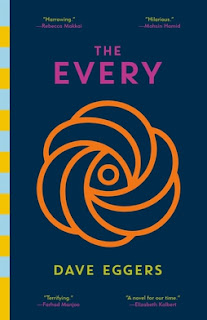
Dave Eggers Thinks Amazon is An Existential Threat!


THE EVERY (2021)

By Dave Eggers

Penguin Random House, 608 pages.

★★★★


The Every opens with these words:


This story takes place in the near future. Don’t try to work out when. Any anachronisms of time and physics occur on purpose. All errors pertaining to technology, chronology, or judgment are intentional and exist to serve you better.


If you recall The Circle (book or film), this is its sequel. For once, the second act is superior.  The Circle was a Google/Not Google/Microsoft/Not Microsoft/Amazon/Not Amazon dystopia. Dave Eggers pulls no such punches in The Every; his corporation bent upon global control is Amazon. As we come in upon The Every, it is busy acquiring three companies a week for the sole purpose of stripping them of any value and destroying them—all in the name of “saving” humankind from the horrors of competition, inefficiency, waste, and crippling choice. Moreover, it claims to be saving the planet. Its main campus on Treasure Island in San Francisco Bay has banned plastic, has mandatory recycling of virtually everything, is scent-free, and vegetarian.


Think of The Every as Orwell crossed with a take-down of cancel culture and seemingly benevolent fascism. One of its (many) mottos is “sharing is caring.” In that spirit, every employee is perpetually connected  to devices and various apps that make all their medical data available, advise when to drink, when to exercise, and when to sleep. Anything that can’t be measured is deemed worthless and the ovals worn on the form-fitting lycra of Every employees rates all activities, including positive green flashes for using multi-syllabic words or giving low scores for not posting enough content each day. (It doesn’t matter what.)


 Its founder, the Bezos-like Eamon Bailey, has given over the company reins to Mae Holland. (They are holdovers from The Circle.) Holland, though, is rumored to be on shaky ground as she hasn’t had a new idea in ages (whatever that might mean in such an instant feedback world). The company’s reach has become so universal that only a few “trog” pockets exist and even they are under heavy surveillance. (Motto: “peace through surveillance.”) Since almost everyone is connected, why not harvest data to “improve” the world? Another motto: “clarity is objectivity.” The data is “clear,” for instance, that Norman Rockwell is the greatest artist who has ever lived. FictFix can clean up old novels and removal material that might distress a reader.Does such a world scare you?


It scares Delaney West, a young woman from Idaho now sharing a San Francisco trog apartment with odd duck Wes Makazian. She’s very smart and wants to take down Every, but as a lit major she needs Wes’ tech savvy. The idea is to secure a job at the main campus, learn its vulnerabilities, and create apps that are so outrageous that the masses will stir rise up in anger to destroy the global monolith. How about an app that allows anonymous employees to report on the micro aggression of someone else?  Or one that uses Alexa-like devices to listen for words or angry voices and report them to the police so they can intervene to prevent a crime before one happens?  What else can be promoted in the name of making people feel “safe?” AuthentiFriend measures who really cares about you, another assures voting rights for Every account holder, and still another makes consumer choices so you won’t make a mistake. StayStïl allows you to “travel” without leaving the Every, thereby reducing the carbon footprint and saving possible discomfort such as observing animals harming each other.


There are rumblings in the air. Is Holland the target of a palace coup? Are there other trog sympathizers on Treasure Island? What can Delaney come up with that would be the proverbial final straw? Can she hide without disconnecting and thereby calling attention to herself? Then again, who can’t be co-opted in a globe full of sheeple? Is Delaney or anyone else fooling anyone? And the ultimate question: What if most of the world likes being told what to do? 


If you’re a trog, The Every is a chilling look at a dehumanized future brought on by its very victims. One wonders whether Eggers’ opening comments are meant to be smug, cautionary, or ironic, though that is essentially a debate over each of his books. He is open to the charge of launching a personal vendetta against Amazon, but that doesn’t necessarily make him wrong. If you enjoy irony embedded in irony, though, you can buy The Every on Amazon!


Rob Weir

3/2/22

The Power of the Dog an Astonishing Masterpiece


THE POWER OF THE DOG (2021)

Directed by Jane Campion

Netflix (distributor), 126 minutes, R (language, nudity)

★★★★★


The Power of the Dog has been nominated for a dozen Academy Awards. With due respect to several other really good movies, it is the not just the finest film of 2021, it is one of the very best of the 21st century. The only things that would prevent it or director Jane Campion–who is also nominated for best adapted screenplay–from winning everything in sight is that it’s not a Hollywood movie and Campion has won before (The Piano).


Why do non-Americans have a better grasp of U.S. history and national metaphors than those born here? Part of the blame lies with Hollywood, which plays to tired formulas rather than taking chances. The joke is on Hollywood; Campion’s film has already quintupled its production costs with an English lead (Benedict Cumberbatch) and a cast that includes four Aussies, a Canadian, and two others who, like Ms. Campion, hail from New Zealand.


The title comes from the Old Testament Book of Psalms 22:20: Deliver my soul from the sword, my life from the power of the dog! King David used it and other scavenging animals as metaphors for his enemies. Christians say it prefigures the Crucifixion of Jesus. Campion adapted a 1983 Western novel by Thomas Savage of the same name, and perhaps you’ll wonder why on earth the title wasn’t changed. Be patient; all will be explained.


On the surface (key word), The Power of the Dog is a Western, but this one is not of the John Wayne variety. It is set in Montana in the year 1925, a time in which cattle drives are long over and ranching is in transition. Two brothers, Phil (Cumberbatch) and George Burbank (Jesse Plemons) have grown rich from the ranch, but Phil hangs on to bygone days and George has seen the future.


Phil, is a man’s man–there’s a joke here but I won’t spoil it–and fits most of your preconceptions of a cowboy: sweaty, dirt-caked, stubble-faced, and loud-mouthed. He left Yale for the rugged life, spends his days with other ranch hands, and regales them with tales of yore when he hung out with his mentor, Bronco Henry. Phil ascribes Bunyanesque qualities to Henry, whose (metaphorical) ghost haunts Phil’s thoughts.


George is altogether different. He has cleaned up his act to the degree that his conversations with his brother are practically monosyllabic. He has become mild-mannered, polite, and has exchanged his dusty duds for fancy ones. Rather than drink and whore with the boys, he has his eye on the widow Rose Gordon (Kirsten Dunst), whom he soon marries. (Plemons and Dunst are also married in life.) With Rose comes her son, the effeminate Peter (Kodi Smit-Phee), who at first is Phil’s object of ridicule. Smit-McPhee was an inspired choice. He’s the proverbial tall sip of water, a guy who over six-feet tall but looks as if he’s all legs. He’s a perfect foil for Phil, though watch his eyes, as they tell a different tale.


The pace of the film is slow and told in various chapters, but Campion brilliantly sneaks profound themes and tropes into her picture: sweat and cleanliness, the coming of modernism, sibling rivalry, respectability and alcoholism, banjo versus piano, things covered and uncovered, schemes gone wrong and those realized. At its core are damaged people who cannot express their true natures. Had this film been made in the 1970s, it would have been labeled an anti-Western Western. In other words, it’s more Robert Altman than John Ford.


Campion deftly personifies non-humans. The long-dead Henry never appears, nor does his ghost, but his saddle is so fetishized that you expect it to speak. Steers, horses, gloves, and hats are more than background, and cinematographer Ari Wegner shows you Montana as you’ve never seen it–unless you’ve been to Central Otago in New Zealand! His shots are so convincing, though, that belief will be suspended. Campion and Wegner also use the hulking decrepit-on-the-outside/posh-on-the-inside Burbank mansion, but situate it amidst a landscape so huge that it looks as if the sky will open its maw and swallow it whole. A shout out also goes to Jonny Greenwood whose musical score perfectly sets the mood without resorting to pyrotechnics. Even small things are done expertly, such as taking Keith Carradine out of his usual Western hero/villain role and casting him as Montana’s governor.


From start to finish, The Power of the Dog is a masterpiece.


Rob Weir


2/28/22

February 2022 Music Reviews: Caamano and Ameixeiras, Claudia Combs Carty, Foundry Town Survivors, Rachel Magoola


The sounds of Galicia come alive courtesy of two talented young women, singer/accordionist Sabela Caamaño and violinist Anita Ameixeiras. Their album Aire! is mostly instrumental with either Caamaño or guest vocalist Sílvia Peréz Cruz adding occasional leads or filler voice. A reminder to those who have forgotten; Galicia is in the far northwest corner of Spain and was once the domain of Celtic tribes. Galician music sometime baffles listeners because it sounds sort of Spanish sometimes and sort of Celtic. This duo sounds more Spanish, but they also do things such as give a Galician and Basque spin on Bulgarian tunes, as they do on "Buchimista" which is also a good tune to check out because you’ll also hear Caamaño on the trikitixa, a two-row accordion common in both Basque country and Galicia that’s noted for having buttons on both sides of the squeeze box tuned a fifth apart. It produces a distinctive “stutter” effect that sounds a bit like bip-bip-bip or bup-bup-bup. “Maneo de Cambre” uses accordion drone to accompany lovely singing, though I confess I could do without the video’s weird improv dance which looks like Lurch having a spasm. “Alegría Dio’la dea!” has a better unusual addition, a bit of musical saw that I first thought was a theremin. Though the title track feels darker, the album’s overall vibe is of joyous village life, as you will experience to fine effect on “Florencío.” ★★★★


Let’s (sort of) stay in Spain for a moment I adore the voice of Claudia Combs Carty, a Barcelona native who now lives in Boston. On her debut record Phases, she accompanies herself on piano for the most part. She lays bare her soul on the breakup song “All That,” which she reminds is harder than it sounds when it’s a long-term relationship that’s been shipwrecked. “Don’t Blame Me” is another in this vein: Don’t blame me, don’t blame me/Even though it was my fault don’t blame me/Don’t blame me, don’t blame me/I’m the one carrying a heart that will never be free. In fact, you have to wend your way to the last track, “You Make MeWanna Stay” to get away from a theme she introduces in “Silent Whispers” where she proclaims, I’m a broke down woman. Carty’s voice will stay with you and is reminiscent of the go-low/go-high tones of Carrie Newcomber. The downside is that Carty’s tunes might not. I get it that most people want music in mp.3 form these days, but there’s a real problem with how producers fail to realize the need to record with more care; compressed files have less room to compensate for differing tones and volume. Carty’s a capable pianist but when the keys are too loud, the vocals sound muddy. Take away the mic from the piano and set her songs free. ★★★ ½


If you are of a certain age and grew up along the shores of Lake Erie near Detroit, you have witnessed the American Dream crest and crash. It’s no wonder that the Foundry Town Survivors wrote a song titled “Hope and Dreams” for their self-titled EP, though it’s actually about a drug-runner whose luck is about to run out. Ominous electric guitar interludes heighten the foreboding. The Factory Town Survivors are a rock band anchored by Mark Tomorsky and Tommy Johnsmiller. Theirs is a hearty blend of hard and soft rock spiced with psychedelia and folk rock. The latter gives them a unique flavor in that unlike (too) many hook-defined rock bands, they pay a lot of attention to melody and clear vocals. That’s crucial when you’re telling stories. “Foundry Town” starts with a carefree ten-year-old boy growing up in the shadow of factories and lakeside shipping and moves us to this: Now there is a man/He’s standing gray with time/He knows that his world is gone/But the memories are sublime. The man’s grayness is a metaphor for postindustrialism, a fact driven home by images from the official video. “Mississippi Rising” tells of flooding along the big river, but images from the 1930s are mixed with those from recent history to make us see that it’s mostly poor folks who suffer from events shrugged off as yearly routines. A splash of mandolin gives the instrumentals an Americana feel. It’s as if this band is Springsteen sans the gruff voice. If you need a break from the heaviness, cue “Everything’s Okay” and you, like the narrator, can muse upon finding your happy place and staying there. ★★★★  


Rachel Magoola lives in Uganda, a place whose recent history is far worse than Detroit’s. Instead of lamenting it, she became part of the change and got elected to Parliament. In addition to those duties, she’s a longtime member of Afrigo Band, Uganda’s longest-running musical act, and also fronts her own band. The very title of her new record sings to her optimism, Resilience: Songs of Uganda. Magoola can bring it and has rhythm to burn, but she largely ducks the diva role to be part of a richer musical performance. Watch her sing “Emaali (Bride Price).” She takes the stage Aretha-like, but melds with the band for a joyous dip into some singing, some stage exhortation, percussion galore, and some flute, guitars, and keys. The feel is more trance than star turn. “Otuuse (You Have Arrived)” is sunny, light, and swaying. Bird-like vocalizations from other band members lend the impression of a morning song. Magoola honors her mother in “Maama Mutesi,” and we often hear singing in the split-second spaces between xylophone and thumb piano notes. Note how the band introduces brass to embolden the tune. For pure fun, though, watch her video to “Mugati gwa Butter (Bread and Butter).” She threads the seams between performer, politician, elder, and teacher in a piece that suggests simple things like bread and butter take the sting out of minor annoyances. And dancing makes it better still. ★★★★


Rob Weir


2/25/22

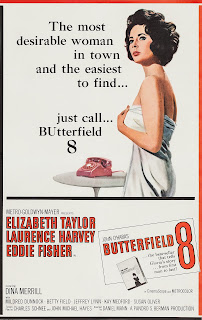
Liz Taylor is Luminous in Butterfield 8


BUTTERFIELD 8 (1960)

Directed by Daniel Mann

MGM, 109 minutes, Not-rated

★★★★ ½ 


Elizabeth Taylor was truly one of the screen’s most beautiful leading ladies. If you don’t believe me, watch the first five minutes of Butterfield 8 as the camera pans over her face and sheet-draped body as she awakes in the empty posh apartment of the man with whom she spent the previous evening. Taylor was 28 then, pretty much at her glorious prime and six years before she played a boozy slightly rumpled harridan in Who’s Afraid of Virginia Woolf? for which she won her second Best Actress Oscar.


The later was shot in black and white, but Butterfield 8 was bathed in rich technicolor. Taylor won the first of her two Oscars for this film. First, a word on the title. If you were born after 1963 you don’t remember when telephones were still few enough in number that you could call an (actual) operator and ask to be connected by giving the exchange name and a number of two, as in Colony 17 or Butterfield 8. The inside joke is that Butterfield 8 was allegedly a modeling agency; it was really a high-class escort service, “escort” itself being a nod-nod-wink-wink name for hooker. Gloria Wandrous (Taylor) actually does some modeling but she’s also under psychiatric care for her active libido. It speaks volumes about American society of the day that a sexually vigorous woman would be treated for such a perceived malady.


Gloria has other issues though, including an explosive temper and drinking too much. The bed from which she arises belongs to Weston Liggett (Laurence Harvey) who leaves $250 by the bedstead before sneaking out. This leads to an outburst that is perhaps the film’s most reproduced still; when Gloria sees the money and note, she angrily takes out her lipstick and writes “No Sale” on Liggett’s elaborately framed mirror and storms off after grabbing a mink coat to cover herself. (Apparently the night before was pretty wild, as her dress was torn.)


Gloria lands in the apartment of her childhood chum Steve Carpenter (Eddie Fisher) for chaste consolation. You could say that so far Taylor was playing to type. She married eight times­–twice to Richard Burton–and Fisher was husband number four. Butterfield 8 gets much messier, as Liggett is married to Emily (Dina Merrill) whose family owns the chemical firm for which he works. Plus, Steve’s girlfriend Norma (Susan Oliver) is the proverbial nice girl who is tired of playing second fiddle to Gloria any time she commands Steve’s attention.


Steve might be the last person on the planet other than Gloria’s mother (Mildred Dunnock) who doesn’t know that Gloria is, in the parlance of the period, a tramp. The club owners know it, most of their patrons know it, Weston’s buddy Brigham (Jeffrey Lynn) knows it, and even her mother’s best friend, the snarky Francis (Betty Field) knows it. Weston, though, has become obsessed with Gloria and finds himself falling for her. Gloria dares hope that maybe Liggett can be her ticket to respectability because she's tired of being a tramp.


Butterfield 8 was based upon a John O’Hara story and is a searing tragic drama. As suggested, the values are those of an earlier time period, so expect the film to exploit thinking that today might seem head-scratching. Will Emily and Norma stand by their men? Can mama accept her daughter for who she really is rather than her willfully ignorant fantasy of her? Even the extras have issues, especially Happy (Kay Medford in a small but juicy part), an ex-vaudevillian who now operates a low-class motel that caters to surreptitious trysters.


This is an actors’ ensemble film and everyone in it is superb. Moreover, though the technicolor hues are vibrant, we view all the earmarks of film noir except the shadows. Maybe you won’t come away desirous of taking a course on psychology as understood in 1960–or maybe 1935, as O’Hara’s roman à clef was based on the unsolved murder of socialite Starr Faithfull–but I suspect you will find yourself so immersed in the film’s well drawn characters that you’ll forget to look at your calendar.


Rob Weir