7/15/22

Edward Gorey House a Must-See for Cape Cod Travelers


EDWARD GOREY HOUSE

Yarmouth Port, Massachusetts


I’d like to introduce some new material for the Art Smarts section of the blog. If you will, call it small museums. Maybe you’re one of those who gets overwhelmed by places like New York’s Metropolitan Museum of Art, Boston’s MFA, or the Chicago Institute of Art. Often, you’re in one of those places, have a limited amount of time, try to cram in as much as you can, and end up viewing art the way you might observe a roadside fender-bender. Or, perhaps, you’ve simply grown weary of the “great artists” approach of such places. Small museums are antidotes. Many are more creative and few of them will exhaust you.


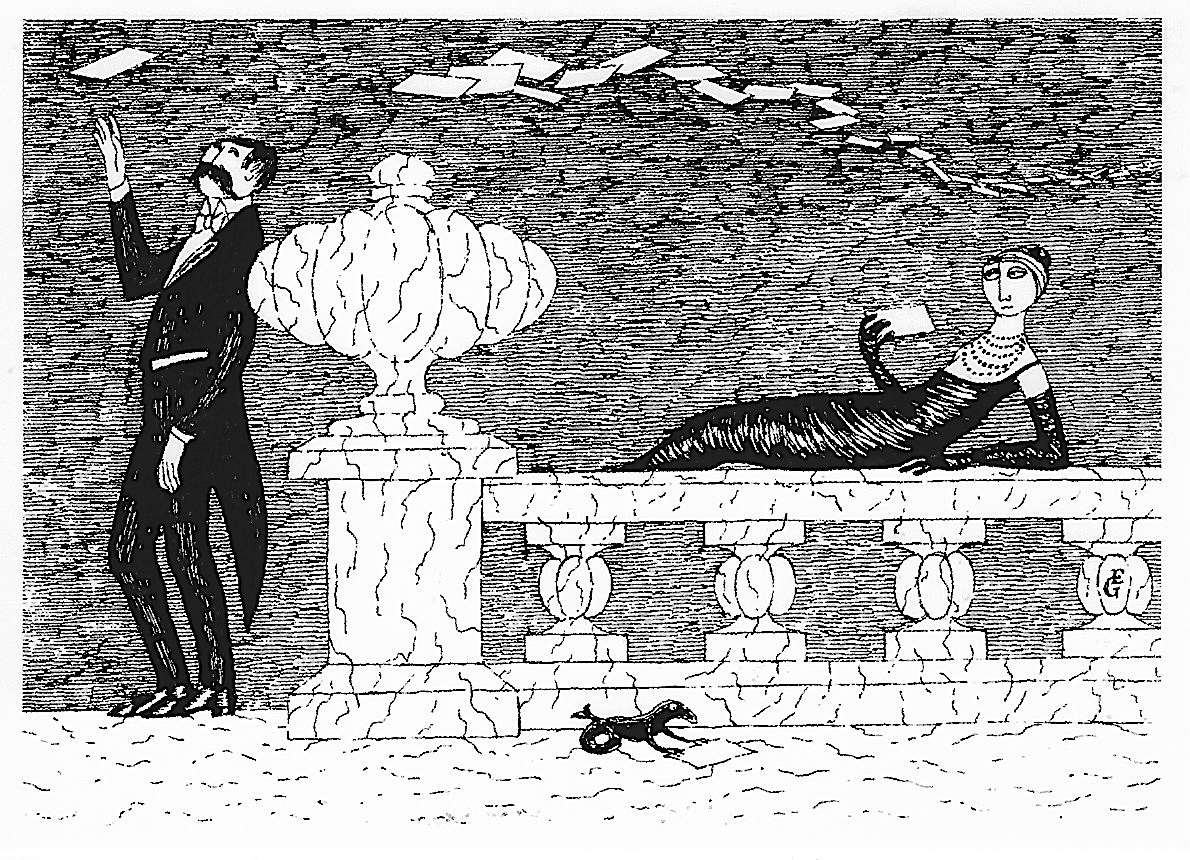
If you are headed for Cape Cod this summer or fall, be sure to stop at the Edward Gorey House in Yarmouth Port. It will be an hour or so well spent. Does the name Edward Gorey (1925-2000) ring a bell? If you’ve ever seen an episode of Mystery on PBS, Gorey’s illustrations introduce the episodes, complete with damsels in distress, falling cornices, cracking lightning, and lurking shady characters. 


Gorey is often labeled an illustrator, but that doesn’t quite get it. He specialized in etchings and drawings, but he also loved theatre and bagged two Tony Awards, one for costume design and the other for set design. In addition, he wrote or illustrated an untold number of books for children of non-snowflake parents. You know, the kind of kids who love a bit of, well, gore and a good scare now and then. Not that there was anything explicit about his work. I like to think of his verse, stories, and illustrations for the younger set as Edwardian surrealism. It’s analogous to his lead-ins for Mystery in that it’s vaguely creepy and endlessly amusing. The latter quality makes it irresistible for adults as well. 


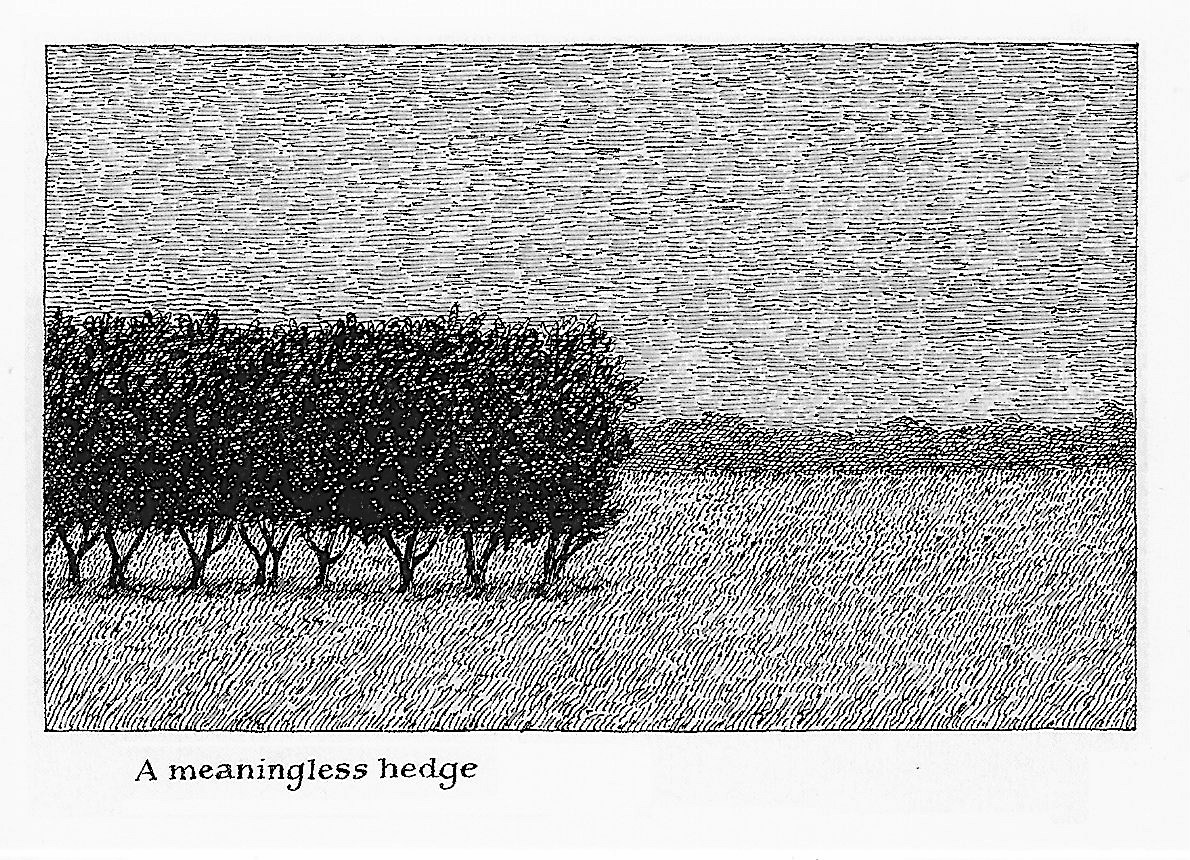
Gorey was embraced by the Goth movement, but that doesn’t quite fit either. It’s more like tongue-in-cheek Gothic. Gorey simply couldn’t resist figures with capes pulled across their faces, architecturally challenging hats, and faces as enigmatic as the Mona Lisa. Toss in some broken crockery, animals plucked from some madcap Bestiary, falling objects, Seuss-like odd words, and vile-weather settings and it’s welcome to the vision of Edward Gorey. He also delighted in offbeat humor–many of his books were credited to those with anagrams of his own name, such as Dodgear Wryde–and in finding offbeat ways of depicting prosaic things such as hedges, rocks, articles of clothing, or simply people doing nothing. 


Gorey was born in Chicago and studied at its Art Institute. He served in the Army during World War II, then attended Harvard. At the latter he got involved with the Poets Theatre and rubbed elbows with luminaries such as Alison Lurie and Frank O’Hara. He was a great admirer of Broadway choreographer George Balachine and worked on several of his shows, including Dracula. (What could be more appropriate?) His personal life was open to great speculation, the consensus being he was probably an asexual gay man. Meh. Who cares? 


Each season the Gorey House features one aspect of Gorey’s work and for 2022 the theme is dance. Think you don’t care about theatrical dance and ballet? Forget tulle and tutus; Gorey brought his skewed views to illustrations of dance as snobs would never recognize it!


The Gorey House also maintains shelves, niches, and cabinets of curiosities as he left them. Like a lot of artists, he was fascinated by shapes, picked up found objects whose designs he liked, and purchased items that simply caught his fancy. He adored cats, owned lots of them, and was a serial fascinationist who thought nothing of procuring bronze bugs, masks, and all manner of bric-a-brac. Treat yourself to a visit. You’ll leave smiling, which is the right attitude to have as you battle Route 6 traffic to wherever you’re headed.


Rob Weir

7/13/22

Little Fires Everywhere Deserves Its Kudos


LITTLE FIRES EVERYWHERE (2017)

By Celeste Ng

Random House, 308 pages.

★★★★★


Little Fires Everywhere was so much in demand that the waiting list was too long at my local library, I gave up, and moved on. I came across it on an old list and finally got my hands on it. By then I had forgotten why I wanted it in the first place. Now I know; what a book! I can see why author Celeste Ng was praised to the skies.


On the surface it’s about the collision of two unlikely families. Haute bourgeois Elena and Bill Richardson live in the tony Cleveland suburb of Shaker Heights with their four children: high school senior “Lexie” (Alexandra); her jock brother Trip; Moody, the aptly named younger brother; and “Izzy” (Isabella). Lexie is 18 and siblings were popped out in highly regimented fashion, just like Shaker Heights. Two passages from the book establish the barriers for a novel set in 1995-96. The first is a prologue from a 1963 Cosmopolitan that dubbed Shaker Heights a Utopia; the second a thought from Elena: “Rules exist for a reason: if you followed them you would succeed; if you didn’t, you might burn the world to the ground.” When you see material like this you immediately think, “uh-oh.”


The second family is that of peripatetic artist and single mother Mia Warren and her 15-year-old daughter Pearl. Mia is a rolling stone and has been since she was an art school dropout, though she remains a person who simply must create. Every six months or so, Mia and Pearl pack their few possessions into a VW Rabbit and move on–sometimes because they are low on money and sometimes because Mia needs to recharge her artistic batteries. That VW is occasionally their home, but they scrape by and, against all odds, Pearl is a brilliant kid who burns through AP classes. When they finally arrive in Ohio, Mia promises they’ll settle down there–another “uh-oh,” if I’ve heard one. It helps figure that out when the novel opens and closes with a conflagration.


Remember the Billy Joel song “We Didn’t Start the Fire?” In this book, everyone seems to start fires of some sort. Ng once lived in Shaker Heights, but the morally ambiguity of Little Fires Everywhere gives it verisimilitude. It is at once a love letter to Ng’s former home, a withering social critique of it, and a series of cross-cultural clashes. It's Lexus, Explorer, and Jeep versus one battered VW; invention versus reinvention; falling in line versus making your own rules; shopping at thrift shops because they are retro cool versus those who can’t afford to go to the mall; McMansions and rental units; and ethnic identity versus liberal make-believe. On the last score, Lexie has a Black boyfriend, but if his family is as Shaker Heights as Lexie’s, does that make her enlightened? Don’t expect simplistic answers in a book that also delves into who should have the right to an abandoned Chinese baby, who is taking advantage of whom, who is sincere and who isn’t, who is following their dreams and who is simply following, good lies and bad ones....  


Pearl is a jewel, but I also really liked Izzy, a Doc Marten-wearing surly teen who knows she doesn’t fit but finds an unexpected bond. I also appreciated how Ng situated her tale amidst Jerry Springer scream fests and the Bill Clinton/Monica Lewinsky debacle via subtle references that neither dwell upon details nor moralize. (I admire writers who, in turn, respect readers enough to let them draw their own conclusions.) Ng ultimately challenges us to evaluate whether deceptions lie along a spectrum or are always indefensible. That’s not easy to answer given that a lot of people end up playing the parsing game. You will probably come away hating busybody Elena and worring about Lexie, but we can’t be sure who will turn out okay and who will be shattered.


I really admired how Ng negotiated the question of what makes a person free: their possessions, their essential nature, who they pretend to be, or who they want to be. A lot hinges on a challenge hurled by Mia in a different context, “What do you want to do about it?” Bill Clinton infamously dodged an uncomfortable query with the oily retort, “It depends on what the definition of is, is.” I think that Little Fires Everywhere wants us to answer Mia’s question with a more substantive comeback: it depends on what “it” means.


Rob Weir


7/11/22

The It Girl Ruth Ware's Lastest Mystery


THE IT GIRL (2021)

By Ruth Ware

Scout Press (Simon & Schuster) 389 pages.

★★★★


Do you prefer drama or melodrama? If you don’t care, The It Girl is a murder mystery you will enjoy. Few modern authors can spin a tale as well as Ruth Ware. At her best, readers scarcely notice when Ware transgresses the drama/melodrama border; when the storyline is weak—think The Woman in Cabin 10 (2016)—we do. Luckily, The It Girl falls into the first category.


The term “It Girl” originated in the film industry. Evelyn Nesbit (1885-1967) is considered the first Hollywood It Girl, though the most famous was 1920s starlet Clara Bow. It Girl conjures an ingénue who is sexually alluring and draws a crowd. That’s April Clarke-Cliveden in a nutshell in this 21st century story set at Oxford University’s Pelham College. April seemingly has it all going on; she’s filthy rich, smart, beautiful, and a good actress. Never mind that she’s also pampered, privileged, vain, drinks too much, and is occasionally cruel. 


Against usual odds, her assigned first-year roomie at Pelham College is Hannah Jones, a rare working-class Oxfordian whose background necessitated working at a supermarket before coming to university. Against even greater odds, April becomes Hannah’s best friend and Hannah need not worry about pocket change any more; April thinks nothing of lending or giving Hannah designer frocks and shoes worth a small fortune. April becomes Hannah’s entrée into social circles she’d never crack on her own. Not surprisingly, many of them are men, especially medical student Hugh Bland, economy undergrad Ryan Coates, and hunky Will de Chastaigne, allegedly April’s boyfriend, though she’s so flirtatious that her sexual mores are hazy.


Ware applies a “Before” and “After” structure for much of the book, the “Before” largely confined to a single year at Oxford (2012) and “After” a decade later. The Oxford sections are light on serious studies and heavy on pub-crawls, pushing boundaries, and Hannah’s transformation from a mousy frump to a vivacious wit and intellect. It is also fraught with encounters with an older porter, John Neville, who is too familiar and has a creepy tendency of appearing in inappropriate places. But the only known strain in Hannah and April’s friendship is frisson between Hannah and Will. The Oxford experience collapses when April is strangled in her room and Neville is arrested for her murder, partly on Hannah’s testimony that he was the only person leaving the building after she discovered April’s body. 


In the “After” sections, Hannah and Will are married, living in Edinburgh, and expecting a baby. Will is a reluctant accountant; Hannah works in a bookstore, having left Oxford without her degree after April’s death. (She was too shattered by April’s death.) A big reason for moving to Scotland was to escape the endless hounding of journalists seeking her take on the death of the It Girl. Hannah’s been working on trauma recovery and is doing okay—though she occasionally thinks she has “seen” April­­-–until the cycle starts anew upon Neville’s death in prison. To his dying day, Neville proclaimed his innocence and Ryan, who had been a journalist before he had a stroke, thinks Neville might have been wronged. Ryan’s newshound friend Geraint discovered that none of Neville’s DNA was found on April’s body and there were other inconsistencies that cast doubt on the verdict.


A heavily pregnant Hannah travels back to Oxford to reopen a sealed can of worms, not that raging hormones, high blood pressure, and old wounds make for logical thinking. At around this juncture, Ware switches to a “Before” and “Before” format in which hours and days are in play, not a decade. Hannah discovers many things about her old friends, a mentor, and April that further muddle her perceptions. The novel concludes with a beat-the-clock chase and confrontation. If you ponder the latter too much, you might perceive that Ware careens into melodrama. Ditto the introduction of one of April’s family members who is more convenient than believable.


And yet… The It Girl is a classic page-turner that most readers will zip through in a sitting or two. Even when the plot turns obvious, Ware twists matters just enough to keep those pages turning. This novel is too new to have “Soon to be a Motion Picture” emblazoned on its cover, but I suspect it’s just a matter of time.


Rob Weir


7/8/22

Georgia O'Keeffe Museum

GEORGIA O’KEEFFE MUSEUM

217 Johnson Street

Santa Fe, New Mexico


Other than those who love New Mexico cuisine–and I am decidedly not a fan–the first thing anyone asks when they hear you’ve been to Santa Fe is, “Did you go to the Georgia O’Keeffe Museum?”


Of course, I did. My first piece of advice to anyone planning to be in Santa Fe is to get tickets well in advance. The museum has some 1,200 pieces of O’Keeffe’s work–paintings, drawings, sculptures–but tickets are timed and in high demand. You can easily be shut out if you don’t reserve early. The second suggestion is that you don’t need to rush through it. The museum is small and only displays a few dozen of her works at a given moment in time.


Georgia O’Keeffe might well be the most famous artist in American history, so excuse me if you’ve heard this background spiel before. O’Keeffe (1887-1986) was born in Wisconsin and studied art first in Chicago, then in New York City. She arrived in New York shortly after the 1913 Armory exhibition that was the first time most Americans saw modern art. O’Keeffe was already disposed to accept it and began to produce abstractions that caught the eye of one of modernism’s biggest proponents, photographer Alfred Stieglitz. He sponsored O’Keeffe’s first solo show and soon the two were lovers. They married in in 1924.


In New York O’Keeffe produced abstracted cityscapes that attracted great notice. She was also one of Stieglitz’s favored models. His nudes of her cast her as a shapely and sensuous figure, though one whose facial features were more those of a “handsome” woman than a beautiful one. Stieglitz was also a quisquous rogue whose infidelities contributed to O’Keeffe’s mental health issues that resulted in several asylum confinements. Beginning in 1929, she began spending time in New Mexico and moved to Abiquiu in 1946 when Stieglitz died. She lived there for most of the rest of her life, though she spent her declining years in Santa Fe, where she passed in 1986. Eleven years later, the Georgia O’Keeffe Museum opened in that city.


It was an immediate hit and there has been much discussion of expansion or a new facility, but for now the Johnson Street facility is a big draw. O’Keeffe is best known for her New York abstractions, largescale flower paintings, dried skull ensembles, and New Mexico landscapes. Many of her works represent or suggest female genitalia, which were embraced by feminists. She was certainly an iron-willed individual in her own right, though she was a bundle of contradictions. She was also a clothes horse, could be as cranky as her late husband, and treated her artist sister Ida abominably. There is, however, no doubting her artistic genius.


Her work can also be found in Santa Fe’s New Mexico Art Museum (NMAM). Below are some works I found intriguing at both her namesake facility and the NMAM. As you might suspect, most of it consists of works she created in the Southwest, not south of Broadway. Both museums also have photographs that feature O’Keeffe. Enjoy these images, but know that there is no substitute for seeing them up close and personal.


Rob Weir   


7/6/22

Provincetown, MA: Small Town USA


Yes, Provincetown is a small town. On a really hot summer day, as many as 60,000 people flood the beaches, dunes, and streets, but its year-round population is under 3,700. Getting there is arduous but it’s hard to get lost. Cross the bridge onto Cape Cod and drive Route 6 until it ends!


Provincetown is a resort town, but one with a difference. It is (per capita) the gayest place in America (163/1000) and that doesn’t count LGBTQ visitors. P-town, as it’s often called, has been gay since the late 1970s.


Boys will be girls


You can certainly have a good time there if you’re straight; it’s a live-and-let-live place. You’ll encounter men in drag, same sex couples canoodling, gay-themed shows, and look-at-me flamboyance. This is especially true of the younger set. Longtime residents and business owners, gay and straight, have folded themselves into civic life and businesses and welcome everyone. But if you’re not okay with gay people, don’t go there; you’d be like a vegan complaining there’s nothing on the steakhouse menu to eat.


P-town is an American story. It’s not what it was because towns either adapt or decline. It was the first place Pilgrims made landfall after getting lost on their way to Virginia, a fortuitous mistake as the Pilgrims thrived when Jamestown starved. The Mayflower Compact is thought to have been penned on the site. Alas, the Compact didn’t apply to Algonquian natives.  


By the 1800s, though, the Pilgrim past was gone; P-town had become a fishing and whaling center whose  English population gave way to Azorean Portuguese immigrants. Like many fishing villages, it was a grimy, smelly place dominated by small unpainted homes, some shingle-style, others just bare clapboards–small because the winters were long and the winds off the Atlantic can be fierce. (They certainly were one of the May days we were there.) Fishing boats and piers remain in evidence, but the industry has declined, along with its Portuguese population. Because of P-town’s proximity to Boston, those of Irish ancestry now outnumber Portuguese by nearly 2:1.


I didn't say all the art was conventional


Artists and thespians altered Provincetown in the first half of the 20th century and the town remains famous for galleries and summer stock theater. Its once-thriving art colonies are now more individualized than collective, but painters, photographers, and sculptors abide.


You will see plenty of visible wealth in today’s P-town, but it was down-market during the late 1950s into the 1960s. The counterculture landed there in the ‘60s and ‘70s because it was cheap! Peek into a realtor’s window and you’ll know those days are gone. You will also need to search hard for reasonably priced dining or lodging, major reasons why many Bay Staters stay elsewhere when they visit Cape Cod.Yet, Provincetown is also an American story in that it has a lot of invisible poverty. Its yearly per capita income is $4k less than the Massachusetts mean. Some is due to being dominated by service industries, but its poverty rate of  15.4 percent is about 1/3 higher than the rest of Massachusetts. 


Foggy lower Commercial Street 6:30 am


Commercial Street is the heart of the tourist town. The lower part is filled with shops, restaurants, and motels and you can easily wile away a day wending your way along it. There is a lovely public library, an intriguing art museum, a handsome town hall, and some relatively cheap eats at the part of MacMillian Pier closest to Commercial Street. Nearby is a wonderful Portuguese bakery where you will be tempted to order everything. (I’m partial to the custard pastry that’s Portugal’s most famous, pasteis de nata.) Nor can you miss it; it’s called Provincetown Portuguese Bakery!


Inside the town limits the Pilgrim Monument is the prominent tourist destination, though you need not shell out $18 for a panoramic ocean view you can see elsewhere. I’d also avoid the Lobster Pot as well. It looks unpretentious, but it’s $20 appetizers and a $42 hunk of halibut. Why? Because Anthony Bourdain started there. Bah! That was 50 years ago. Ciro & Sal’s is a cozy Italian place further up Commercial (4 Kiley Court) and is reasonably priced. 


Race Point


The National Park Service’s Cape Cod National Seashore entrance is just outside the town limits. Make sure to travel down to Race Point for its desolate setting and wild surf, though swim somewhere safer, like Herring Cove. (Actually, who wants to swim in the icy Atlantic?) There are great bike paths in the National Seashore, but take your time as your calves will be bawling on the uphill dune trails. Birders love the area as well. 


Still, I doubt we’ll be back in P-town soon. It’s simply too bloody long to get there from Western Mass and we didn’t go when Route 6 gets packed. It’s far easier to hit the Southern Maine coast, so we’ll cede the Cape to Bostonians and hang with the crunchier Mainers.


Rob Weir

7/4/22

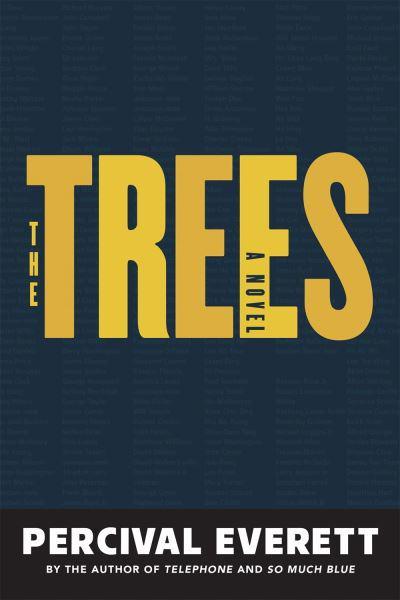
The Trees: Strange Fruit and Snarky Revenge


THE TREES (2021)

By Percival Everett

Graywolf Press, 305 pages.

★★★★★


“Hoisted on your own petard” means you are a victim of schemes of your own design. In The Trees novelist Percival Everett gives White racists a dose of their own medicine. The title derives from “Strange Fruit,” a famed song about lynching made famous by Billie Holiday. [link here] Among its lyrics:


Southern trees bear a strange fruit

Blood on the leaves and blood at the root

Black bodies swinging in the southern breeze

Strange fruit hanging from the poplar trees


The book opens in Money, Mississippi. If that rings a bell, it’s where 14-year-old Emmett Till was tortured and mutilated in 1955 for allegedly whistling at Carolyn Bryant, a White woman. His bloated body was retrieved from the Tallahatchie River with a cotton gin fan wrapped around his head with barbed wire. An all-White jury took just 67 minutes to acquit Carolyn’s husband Roy and his brother-in-law J. W. Milam, who subsequently bragged of their misdeeds.


Turn about is fair play in Everett’s wicked satire. Carolyn is now a CB-loving grandmother living in redneck squalor in the suburb of Small Change and putters about in an electric cart stolen from Sam’s Club. Her grandson, Junior Junior, is found dead, with his genitals ripped off and in the hand of a dead Black man. Mystery: that Black man was already dead—by many years. It gets weirder. The Rev. Fondle, also Money’s coroner, can’t explain how the Black corpse disappeared from his morgue. Try putting out a Most Wanted poster for that suspect.


Wheat Bryant, a no-account truck driver fired for nearly driving a Piggly Wiggly truck into the river, also shows up dead. Not only is the M.O. the same, he’s lying beside the same dead Black man. The investigation is handed over to the Mississippi Bureau of Investigation, which dispatches Ed Morgan, a 6’5” inch/300-pound giant and Jim Davis, smaller and more health-conscious. Both are Black, and local cops practically choke to say “Negro” after beginning to say a different word. Not that Ed and Jim care. They are like vaudeville stand-up comedians having fun working the crowd by insulting it and each other. Their IQ is high; that of Money’s Whites lower than a snake’s belly.


The first two victims are sons of Till’s murderers. Locals wonder if Till has come back for revenge but after still another murder, the corpse doesn’t walk off and it’s not Till. Not that this info gets anyone closer to solving the murders. So what can the KKK do except burn a cross in a ritual so dumb the third K could stand for Klown.


The fruit gets stranger. The FBI sends Agent Herberta Hinds to the scene and she too is Black. Meet Mama Z, a woman who has file cabinets filled with lynching material and claims to be 105-years-old. Her caregiver is a Black waitress who can hold her own in the Ed and Jim stand-up routine. Then the Rev. Fondle dies–the same M.O. for a minister who was also the KKK Kleagle. A couple more Klansmen and Trumpers die, also cuddled beside long-dead Black men bearing their severed equipment.


Before you can say, “revenge is a dish best served cold,” similar murders proliferate: Elaine, AK; Colfax, LA; Omaha, NB; Tulsa, OK; Rosewood, FL; East St, Louis, IL; Chicago, Detroit…. Google those places and “race riots” and you’ll know why. Other murders broaden the color spectrum: Rock Springs, WY; Wounded Knee, SD; Bisbee, AZ…. One of the book’s funniest sections involves a bloviating president of the United States who vows he will personally put a stop to all of this, then hides under his desk and whimpers when his Secretary of the Treasurer is murdered and missing his goolies.


I’ll let you discover if anyone figures out what’s going on. If laughter is the best medicine, The Trees provides a snarky look at righting past injustices and lampooning racists, a Wizard of Oz-like POTUS, good ole’ boys dumber than homemade sin, and other absurdities in these our troubled times. Lurking behind it, though, are implied warnings that the future race war touted by White supremacists might have the desired outcome. Seventy-one years ago the poet Langston Hughes mused about the fate of a dream deferred: “Maybe it just sags like a heavy load/Or does it explode?” Boom!


Rob Weir


* Holiday claimed she cowrote “Strange Fruit.” She did not. It was written by a White Jewish man, Abe Meeropol. He also adopted the sons of Julius and Ethel Rosenberg after they were executed for spying in 1953 in a highly controversial prosecution.  

7/1/22

MLB Contenders, Pretenders, Not Yet, and Hopeless

Baseball's Flowers and Skunks


More than a third of the baseball season is over. A lot can happen over the next 90+ games and, if you know baseball history, even a big lead like the Yankees possess can evaporate. But, if you think spring games don’t matter, the Yankees suggest otherwise. Now that baseball is almost as bad as the NHL in rewarding playoff spots to mediocre teams, the Yankees are nearly a lock for the postseason. As I type this, they are 50-18! If they merely split their remaining 94 games they will accumulate 97 victories, which would secure them a playoff slot.


How good are they? Hard to know given how many smelly teams are playing. Here’s my capsule analysis of Contenders (C), Pretenders (P), Not Yet teams (NY), and the Hopeless (H) by order of standings on 6/22/22.


American League East:


1. Yankees (C): Starting and relief pitching has been spectacular, Judge is having a historic year, and they hit a ton of home runs. Weaknesses: They don’t win unless they homer, Gallo stinks, like much of the bottom half of the order.


2.  Blue Jays (P): Spent a lot of money and got limited results. Guerrero is a stud but... Weaknesses: Biggio, Springer, and other young players haven’t impressed and their pitching is thin after Manoah.


3. Red Sox (C): Best batting averages in the AL and a strong manager. Weaknesses: They hit but only a few players make anyone quake. They will go as far as their frequently-injured starting pitching takes them. Terrible bullpen. 


4. Rays (C/P): Always steady but... Weaknesses: You can’t dump high-priced talent every year and expect replacements to duplicate them. The league has caught on to the “opener” gimmick. The Rays could surprise, but they won’t go deep into the postseason.


5. Orioles (H/NY): They don’t smell like dead Chesapeake Bay oysters any more, but no way they make the playoffs. Desperately seeking new ownership.


American League Central:


1. Guardians (P): Resource-poor Cleveland has the best manager in MLB (Francona), the wonderful (Jose) Ramirez, and a few good pitchers but every year Francona is like a single mom trying to feed 25 growing boys on a box of mac n’ cheese.


2. Twins (P): Some decent players. Also spent a lot of money and have gotten less than they hoped–I’m looking at you Correa–so I’ll just say this: Never bet on the Twins.


3. White Sox (P): Might be the most disappointing team in MLB. They should walk away with a weak division and still might, but they believed their hype and haven’t bothered to show up very often. Still the odds-on favorite, but won’t get far in October. Weaknesses: Pitching blows hot/cold. Need a manager from this era.


4. Tigers (NY): The rebuild will take time and there are still more holes than a pair of hobo socks. Not good when you best hitter is over 40.


5. Royals (H): Who cares?


American League West:


1. Astros (C): I hate them, but there’s no denying the talent. As they’ve been, so they are: a solid team with good pitching. Weaknesses: No production in center field or catcher. Closer Pressly can be had and Verlander is 39.


2. Rangers (NY): They are rebuilding slowly, as they should.


3. Angels (P): Can we just stop the Trout Hype Wagon for heaven’s sake? He’s great but also injury-prone.  He, Ohtani, and Ward are not enough. The pitching is just as lousy as it always is.


4. Mariners (PP): A team that deserves a double PP. A yawn, yawn roster crafted by inept leadership at all levels.


5. Athletics (H): Simply a shameful tear-apart of a former contender. Move this team. Now!


National League East:


1. Mets (C): Yep, they’re for real and a Subway Series with the Yankees is not out of the question (though probability is another matter). Alonso, McNeil, Lindor are productive. Weaknesses: Starting pitching is so-so with Scherzer on the DL. Not much power beyond Alonso and Lindor.


2. Braves (C): The defending champions have been lethargic but remain formidable. They are like Houston in that they are steady and solid, not spectacular. There is more power in their lineup than the Mets can muster. Weaknesses:  Acuna has been injured, the bullpen and starter Morton are showing their age.


3. Phillies (P): They fired Girardi, went on a small tear, and reverted to their usual around .500 routine. Harper is great though. Weaknesses: They already regret signing Castellanos and at some point must come to grips with a roster that looks better on paper than on the field. Nola and Elfin continue to underwhelm.


4. Marlins (P): Do you care? No one in Miami does. (I'll bet they would in Montreal.)


5. Nationals (H): Time to admit that Corbin was a one-year wonder, dump the always-injured Strasburg, and rebuild around Bell, Soto, and Robles.


National League Central:


1. Brewers (P): It’s them or St. Louis in a lousy division, but unless Yelich wakes up, all they have are guys (Tellez, Adames, Renfroe) punching above their weight class. Hader might be the best reliever in baseball. He needs to be on a ho-hum staff.


2. Cardinals (P): The Cards look great with Goldschmidt, Arenado, and Edman but when they play good teams–witness their trip to Fenway Park–they look very mortal. It’s not good to rely on a 40-year-old ace (Wainwright) or a guy who lives on the DL (Matz).


3. Pirates (NY): They’re not embarrassing anymore, but watch what happens at the trade deadline. If they trade young talent, bury ‘em again. Right now, they are a cut above AAA, but not a big slice above.


4. Cubs (H): What an embarrassment! An inexcusable tear down of a wealthy franchise. Season ticket holders should sue for refunds.


5. Reds (H): Two phrases: Sell ‘em. Move ‘em.


National League West:


1. Dodgers (C): East Coast hoopla aside, they’re probably the best team in the majors. Freeman, Betts, Turner, Gonsolin, Anderson... and Muncy and Bellinger haven’t yet gotten untracked. I vote them the team most likely to throw a monkey wrench into Subway Series dreams. Weaknesses: Not liking Kimbrel as closer and why they signed Heaney is anyone’s guess.


2. Padres (P): Lots of hope, but it’s most hype. This is another team bettors should avoid. Machado, Hosmer, Darvish, Musgrove (IL), and? Yeah, that’s the problem.


3. Giants (C/P): 2021’s 107 wins was a fluke, but this team has good chemistry and enough talent to make it to the postseason. Pederson has finally come into his own and where did (Luis) Gonzalez come from? If Yaztremski, Belt, and Crawford wake up they will make some noise. Rodon, Wood, Webb are a good top three for starters. Weaknesses: Like the Rays, they need all the pieces to fall into place.


4. Diamondbacks (H): When the weather heats up, the D’backs cool down. You probably wouldn’t recognize their starting lineup or any pitcher other than past-his-prime Bumgarner. There’s a reason no one beyond Tucson knows the names.


5. Rockies (H): Would somebody please trade for Blackmon and save him from all of this? MLB should not have a franchise at this altitude.


Rob Weir