10/4/24

The Twisted World of Billy Connolly


Tall Tales & Wee Stories (2019)

By Billy Connolly

Two Roads, 325 pages.

★★★


Billy Connolly will be 82 next month. He has nee called the funniest comic in British history. That’s debatable, of course, though he has been knighted. That’s pretty funny, as he’s a supporter of Scottish independence!  Americans might know him best for his work in TV and movies, like Mrs. Brown (1997), a Muppets movie, or in Lemony Snicket’s A Series of Unfortunate Events. The last two are hilarious given that Billy Connolly is one of the filthiest comedians ever to make the stage roar.


If you pick up his Tall Tales & Wee Stories, you might want to keep it out of reach until young whelps are ready for blue words–say six when they hear them in school. Connolly is Lenny Bruce unleashed. (Bruce got arrested for material that has gone from obscene to routine.) Connolly’s also an example of what happened once Scotland threw off the chains of John Knox-style Presbyterianism. These days you’ll run into people who think the Scots are the funniest people on the planet. T’was not always so. Until World War II, Scots were as grey and gloomy as their weather.


Connolly came of age in gritty postwar Glasgow, was abandoned by his mother, was raised by two aunts, and became a welder. In other words, a working class outlook with no time for bourgeois niceties. This became fodder for the no-whinging first section of his book: “Childhood & Family.” Thank heaven for someone who can say of deprivation, “Nonsense! When you’re a wee boy it’s not like that.” The things that rankled were a visiting priest that ate all the good crumpets and pretense. All of sudden their tenement had a “cloakroom.” (“ Bloody ‘cloakroom.’ She thinks it’s a dance hall she’s in.”) Connolly’s rants against mathematics, substitute teachers, and telling a cardinal to “fuck off” are priceless. Outings to swim in the North Sea led to one of his greatest lines: Scots aren’t white people; they’re translucent blue.


Rock n’ roll, the folk revival, and the counterculture fit Connolly like a condom, which he hates by the way. He’s six feet tall, but projects the ‘tude and swager of someone even more substantial and gained the nickname “Big Yin." He certainly cut a commanding figure with a bull neck,  a wild, long mane and striding in his banana boots. Wait! Did I say banana boots? Yep. They were his trademark for a while and are still on view at the People’s Palace in Glasgow. Connolly is also a very good musician who still gets called upon to pick up an instrument (banjo, guitar, autoharp) for gigs and studio recordings with traditional musicians.


In in “Scotland and Beyond” Connolly regales us with observations about the Irish, Australians, waiters who don’t offer menus, Scots getting drunk on crème de menthe, rain, and the British National Anthem. He’s okay with the idea of “saving the Queen” in the latter, but overall the anthem is “boring… appalling… racist.. and anti-Scottish.” Leave it him to link the anthem to poor showings in the Olympics.  


The chapters get bluer as he delves into “Real Characters”–never trust a comic who uses the word real– “Accidents and Adventures,” “Sex, Drugs & Folk Music,” and “A Life Worth Living.” He offers commentary such as, “Never trust a man who, when left in a room with tea cosy, doesn’t try it on;” and “if you’d like to lose weight, never eat anything that’s served in a bucket. A bucket is the kitchen implement of the farmyard.” He hates  stupid questions, like when you witness an accident and you’re asked, “Can you tell us in your own words what happened?” ‘What, do you think I have my own words? Who would I talk to?’” You name it and Connolly has a twisted POV: computers, “beige” people, naked bungie jumping, cuddling, sexy bandages, scrotums, vomit, New Age nonsense, and swearing (he’s for it).


I’m a huge Billy Connolly fan, so why just three stars? First, Connolly often goes for cheap jokes and second, non-Scots will be baffled by some of his tales. Mainly, though, Connolly has to be seen to be appreciated fully. His comedy is akin to the manic energy of the late Robin Williams; it’s often not what he says, but how he says it. Read his cuddling story and then see it on YouTube. Connolly has been married to a psychologist for the past 35 years. Take from that what you will!


Rob Weir

10/2/24

2024 MLB Wrap Up and Predictions


The Major League Baseball 2024 regular season is now in the books. As usual all the pundits, including me, gave prognostication a bad name. Here's a postmortem of the regular season followed by my postseason predictions.


There are a few things about which we can be thankful, plus a few rants.


            1. We don't have to watch any of the perennial lambs go to the slaughter once again. The Tampa Bay Rays should be renamed the Crayfish. That’s appropriate for a team that spends about $75 on its roster.


            2. Minnesota should be christened the Twinkies. Every year they are big pretenders in a division as soft as the aforementioned pastry, but I doubt they would win a postseason series were Kirby Puckett to rise from the grave.


            3. Seattle once again came close to making the postseason, but my advice is never bet on the Mariners;  they will rain on your dreams every time.


            4. The Cubs did a terrible thing by winning the 2016 World Series. They were lovable losers. Now they're just bums.


            5. There's hope in Boston even though Bay Staters would like to eviscerate ownership for being cheap. I'm not a Red Sox fan but this team has a future. They got close to the postseason in today's “Every Kid Gets a Wild Card” setup. They have nice young talent and a better bullpen could have easily gotten them a Wild Card in 2024.


            6. Much has been made about the White Sox historic 121-loss season. That was ugly, but we ought to hang a Hollywood-sized LOSER sign in Anaheim where the Angels lost 99 games and finished six games behind Oakland, which didn’t even pretend to compete. What a freaking waste the Angels have been of Mike Trout’s career! If I were he I'd hang ‘em up now and wait for the Hall of Fame to call.            


            7. Will MLB ever learn that nobody cares about summer baseball in Florida? Another 100-loss season for the Miami Dead Fish and another of drawing AA-sized crowds in both Miami and Tampa.


            8. When MLB talks about its colorful past, Pittsburgh and Cincinnati are mentioned because what else is there to talk about? It could ask the same about Denver, except it doesn't have a colorful past.


            9. Back up the van in Toronto, San Francisco, and St. Louis.


And now for my predictions that will probably collapse by the end of the week.


American League Wild Cards:


Tigers over Astros: Houston was Jekyll and Hyde all year and Detroit figured out it's best to be hot in the autumn.


Orioles over Royals, though I'd not be shocked if it went to the other way.


National League Wild Cards:


 Mets over Brewers: Milwaukee’s pitching is mediocre and the Mets can hit.


Padres over the Braves,  though I’m not sold on either of them. San Diego needed a surge to get there and the Braves dithered for much of the season.  


AL Division Series:


Guardians over Detroit: Just like it was in the Central Division. Cleveland is the best small ball team in MLB.


Orioles or Royals over the Yankees.  New York had the best record in the AL, but it still can't score if Judge or Soto don't hit home runs. Between them they knocked in 1/3 of all the runs the Yankees scored this year! The Yankees also have a terrible bullpen and a robot manager who thinks it's creative to flip Soto and judge in the order. I'm a Yankees fan, but I do not believe in this team.


I'm picking the Guardians to win the American League Pennant.


NL Division Series:


I think the Phillies will sweep whomever they play.


The Dodgers over San Diego in four. The Padres are another perpetual disappointment team.


Phillies over Dodgers in five games to win the NL pennant because Mookie Betts doesn’t pitch and neither can Othani (this year).


World Series:


Call me a sentimental fool but I think that Cleveland will win the World Series because Stephen Vogt is a better manager than Rob Thompson. That matters in the World Series.


Codicil: Should the Yankees make it to the World Series, they will lose for the reasons I stated above.


10/1/24

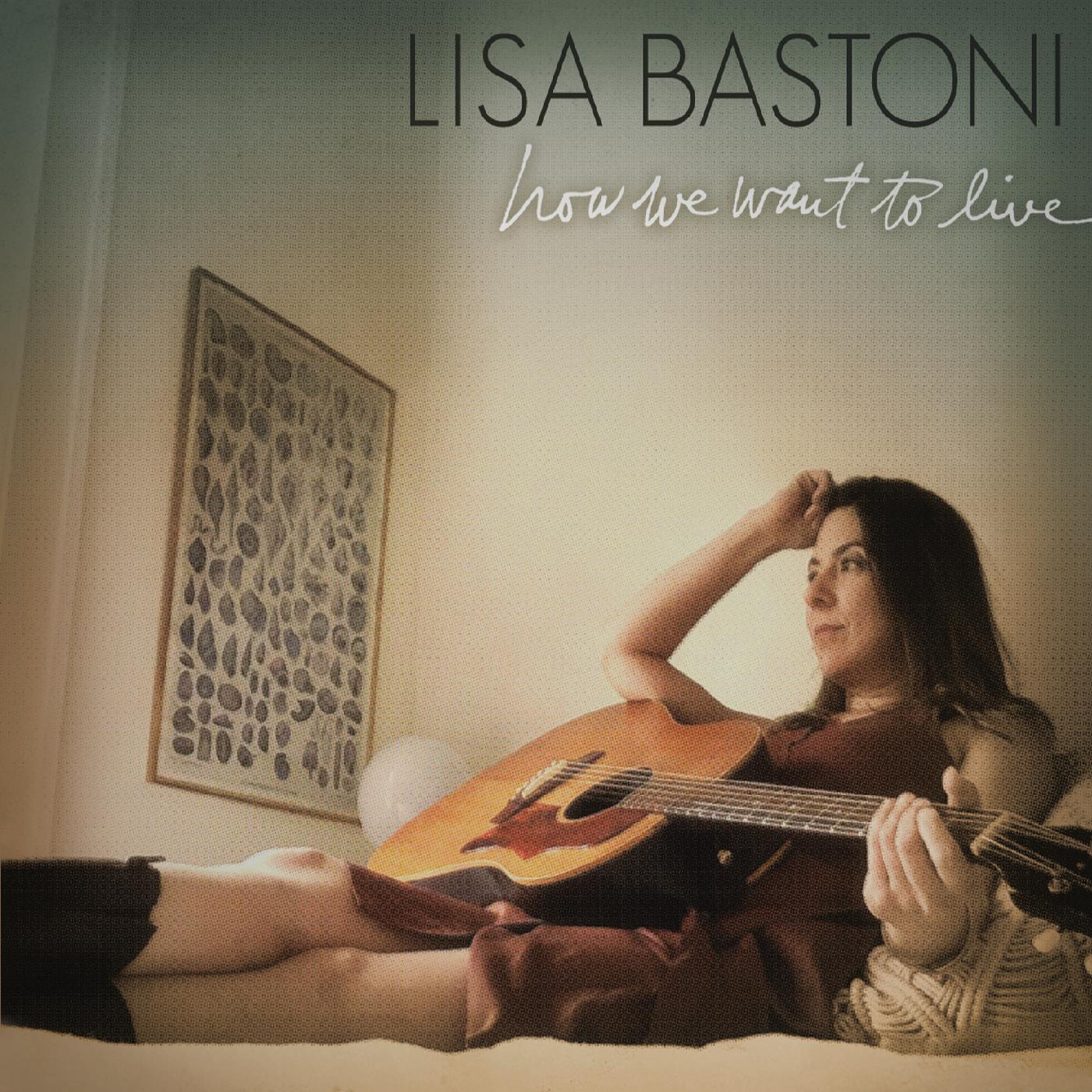
September 2024 Music: Lisa Bastoni Kylie Fox Moira Smiley Surrender Hill Yosef Gutman


Time for more this and that music. In other words, yours truly has fallen behind again!


If, like me, you often crave soothing music from an earnest songwriter who doesn’t do fake drama, check out Lisa Bastoni. I picked up two of her albums, her most recent On the Water and 2019’s How We Want to Live. Each is as soothing as a warm shower–even when she’s singing about painful things. On the Water includes a cover of Dylan’s “Workingman’s Blues” but her own “Pockets Full of Sighs” has a similar languid, phlegmatic vibe in that it’s personal yet sounds detached. Mainly it’s just a good song. Also try the upbeat good earworm “Walk a Little Closer.” That’s the versatile Sean Staples with her and the man is lethal with a mandolin in his mitts! How We Want to Live is practically self-defining. “Right Side of the River” covers topics of self-discovery and it’s a backdoor tribute to where she now lives (says her fellow Northamptonite). “Let’s Look at Houses” is a little bit of country and a cheeky sneak attack on property values. Ironically, though this album is often amusing, she wrote it as her marriage was dissolving. Many of the compositions were inspired by her grandmother’s wisdom–not to mention that she inherited “Nora’s Guitar,” a poignant and lovely song on the album.


Moira Smiley has an Irish name, but is a Vermonter by birth. She does some sean​-​n​ó​s (old style) Irish singing, and has performed with Irish musicians, but she’s also grounded in shape-note, jazz, classical, and Eastern European music, plays numerous instruments, and has a penchant for medieval music. For all that, she’s a folkie at heart, if you accept that any album named The Rhizome Project Album will veer into unexpected places. It’s actually the handle of the string quartet that accompanies her, but also descriptive of melodies that sheer in both lateral and horizontal directions. Smiley sings well known trads such as “Go Dig MyGrave, “Now is the Cool of the Day,” and “John o’ Dreams,” the first suitably haunting and sober, the last introed by a poem (that reappears), and makes us wonder about the significance of a vid featuring a beach and a woman in angel wings. The vocal of “Cool of the Day” is as minimalist as “Dig My Grave” is lush. “My Son David” (with Taylor Ashton) is a dark Child ballad that is somehow warm, yet invites eschatological contemplation. I’m assuming there aren’t many Welsh speakers out there, so listen to “Ar lan y mor” to appreciate Smiley’s considerable vocal chops. Pick any track on the album and you’ll discover that old ballads have more present-day relevance than you might imagine.


Kylie Fox specializes in Canadiana music, which like the Americana handle, is a kitchen sink of folk, folk rock, country, and jazz-pop fusion. On Sequoia Fox celebrates things we take for granted. That song pays tribute to firefighters who battled to save a giant tree from perishing, which she connects to other things her life that are rare. It might be a bit of a forced analogy, but many of the strands of Canadiana appear in it. “Brandi Baby” reveals that Fox leans harder toward the pop side of the mélange. It won’t surprise readers that I much prefer straightforward folk such as “Alberta,” which more clearly reveals the colors of Fox’s voice–its power, control, and high-to-low range. It’s inevitable that when musicians opt for a broad repertoire that some explorations will enthrall more than others, but in all honesty I liked Fox’s earlier repertoire better. To my ear it was less cluttered.


Seems only fair to turn to a “Americana record. River of Tears is the seventh studio release from the married duo of Robin Dean and Afton (Seekins) Salmon who perform as Surrender Hill. As noted, Americana is also a catchall category, though the dominant strain isn’t hard to find. For Surrender Hill it’s the rock-influenced modern country music. Nonetheless, it’s been a twisted road to get there; Robin Dean was born in South Africa and once played heavy rock, and Afton is a native Alaskan from a folk background. As songwriters, hers are often the more emotional contributions. On Valentine’s Day she wrote “Holding Me, ”a straight up love song. whose title says it all despite tinges of hopefulness. His contribution was "River of Tears," a love song for sure, but more in the vein of classic country. “Cry Baby” is basically a rock n’ roll song with vocal twang, but “Get Out of Your Own Way” has a Western flavour, right down to the spaces in the musical phrasing. If you like old-style country, “Angel, The Devil and Me” says it all.


Yosef Gutman Levitt is an observant Jew from Jerusalem, but the man plays a mean standup bass, including a five-string model that he had a hand in developing. Gutman’s music emanates from a spiritual place, but he is also interested in what he calls a “light, bouncy” effect created when classical music and jazz improv are made as accessible as folk music. His new release, The World and Its People, is on his own new label, Soul Song Records, a perfect handle for his intentions. He is joined by guitarist Tal Yahalom, cellist Yoed Nir, and pianist Omri Mor. The quartet might not always make music that you’d normally gravitate toward, but as odd as it might sound, many of the compositions have jam band-like explorations. Try the two tracks “My Soul Thirsts” and “Shifting Sky.” Note how the first has an understated yearning and the second what seems a loosely structured meandering that embodies its title. 


Rob Weir

9/27/24

Lobster Art? Ayup!


Lobster by Donald Oakes. Photo by Rob Weir


Lobster Art

Wells National Estuarine Research Preserve

342 Laudholm Farms Road

Wells, Maine

Through November 4, 2024


Wait! Did I say, “lobster art?” Yes I did. Each summer hordes of people travel north to hit Maine beaches such as York, Ogunquit, Kennebunkport, and Old Orchard. Route 1 is the connective tissue, but most view it as something to endure whilst loading up on fast food, impulse retail purchases, and Congdon’s donuts. Too few venture off to find the Wells Estuarine Research Preserve. I’d be the first to say the name doesn’t sound inviting, but the last to say that it’s not worth visiting.


It truly is a research, educational, and training center for all things environmental, but it’s so filled with wonder that you don’t need to be bookish to enjoy it. It’s 2,250 acres that feature a cluster of buttermilk yellow buildings, barns, a water tower, a graceful home perched upon a hill with amazing views, and seven miles of trails that wend through a salt farm, orchards, woodlands, and the rocky beach of Drake’s Island (which is actually a small peninsula. Being that this is coastal Maine, there’s a lot of emphasis on all things oceanic and not much screams “Maine!” like its official crustacean, the lobster.


It might sound daft, but a small gallery on the compound features Lobster Art. Okay, don’t expect a Van Gogh of bib-wearing diners or a Rembrandt of a Dutch burgher pulling up his traps. Chances are good you’ve never heard of the artists featured in the exhibit, but take my whimsical remarks in the spirit in which most of the pieces were intended. Some are more serious and there’s a baby lobster on view (or not, it’s shy) but hey, it’s lobster art, so let’s have fun shall we?


As for you, next time you’re grabbing a box of donuts, Google the above address. You’ll be sad you ate so many sinkers, but you’ll be happy to walk them off at the preserve. If you get up that way before November, you can think of me and chuckle at the art.


Here are a few photos from famed photographer Rob Moi to introduce the preserve.


Below are some of my favorite pieces from the exhibit.


Catch of the Day, Sue Rioux

Launching, Wade Zaheres

Photo of lobster filled with eggs        


The Creation of Lobster by Peter Shepperd


Altar to lobster creation


9/25/24

The Women is (only) Half of a Great Book


The Women (2024)

By Kristin Hannah

St. Martin’s Publishing, 480 pages

★★★


U.S. troops left Vietnam 51 years ago, yet what the war meant continues to haunt. The debates are so intense I am reminded of what has been said of the Confederacy after Civil War. To paraphrase, if the South had fought with the vigor with which it erected monuments to its “heroes” after the war, it might have won. Like the Civil War, the Vietnam conflict is shrouded in anger, politics, myth, lies, and half-truths.


It takes courage to write about Vietnam and no-win foolishness to review such a book. Kristin Hannah has such a devoted following (me too!) that unexamined praise is a given. Now to jump into the fire. The Women is half of a great book; it’s also half of a mess. I was shocked, though, that many reviewers tagged it “one woman’s struggle to….” It’s nothing if not a paean to intense female friendships.


The Women opens in 1965, when Frances “Frankie” McGrath, a naïve nurse trainee from San Diego, shocks her parents by copying her beloved brother and enlisting to serve in the Vietnam War. As she repeatedly hears–even from military recruiters–women simply don’t go to war; heroism is for men! Frankie’s day one baptism of fire reveals the Army’s desperation, not her qualifications. She’s not ready for anything and no one cares. Hers is on-the-job training in life-and-death scenarios. Hootch mates Ethel and Barbara see her as new “meat” and couldn’t be more different from her. Ethel is a Virginia farm girl with a salty tongue and Barb an often-angry African American with no time for prissiness. That the three will later bond and become Frankie’s support group in numerous crises ought to put to rest any “one woman’s” story nonsense.


Vietnam forced men and women alike to grow up fast. This part of Hannah’s book is stunning. Think M*A*S*H with all the drinking, chauvinism, dark humor, and adrenaline, but with more drugs and little concern with who is winning the war. Doctors, helicopter pilots, grunts, and nurses hold a life-on-fast-forward mindset because death is all around. Hannah vividly answers the question of whether women can be heroes.  You need to read this section of Hannah’s novel to appreciate just how precarious and wrongheaded life and the military mission were in Vietnam. Even a good girl like Frankie ponders whether it’s worthwhile to hang onto her virginity or believe anything officials say after visits to Vietnamese villages, witnessing the Tet Offensive, and withholding treatment from soldiers certain to die.


Alas, the weighty gut-churning sections of life in-country give way to cliches, flag waving, stereotyping the counterculture, and catastrophizing of life outside of ‘Nam. Could we please bury the rant about no parade for Vietnam vets? How could there be? America: (a) left before the war was over, (b) sent new GIs to fight long after others were discharged, (c) lost the war. If Afghanistan vets get a parade it will be a case of more guilt than celebration. There’s no need to celebrate military branches (or politicians) who wasted and/or traumatized young lives with impunity. 


Hannah falls prey to dubious facts and makes curious character choices. She shows little love for the counterculture, yet several of her characters jumped on board. War critics included Vietnam Veterans Against the War whom I echoed in the last sentence of the previous paragraph. It’s also time to lay to rest several other Vietnam myths. Few on the homefront were blissfully unaware of the war, though very few vets (if any) were spat upon by antiwar protestors. It might have happened somewhere, but Jerry Lembcke couldn’t confirm any incidents when he wrote The Spitting Image. Other writers remind us that vets did not come back to the States on civilian aircraft and were not required to wear uniforms when not on base. As Lembcke noted, these myths came from movies; most protestors sided with vets and demanded, “Bring the boys [sic] home.”


Hannah dazzles highlighting the horrors of war and the ineptitude of the VA, but her throw-in-the-kitchen sink approach in part two weakens the connective bonds of her novel. There’s entirely too much one-sided patriotism at play. How about less flag waving and more attention to avoiding needless flag-draped coffins? Like legions of others, Frankie was a foul-mouthed, substance abusing, lovesick, PTSD puddle when she returned home. Luckily she had close female friends to guide her.


Rob Weir

9/23/24

Everyone in My Family Has Killed Someone Messes with Mystery Genre


Everyone in My Family Has Killed Someone (2023) 

By Benjamin Stevenson 

Penguin: Mariner Books, 366 pages. 

★★★★


Everyone in My Family Has Killed Someone is the ultimate meta mystery. In 1930, several prominent British mystery writers–including  G. K. Chesterton, Dorothy Sayers, and Agatha Christie–created a dinner group called the Detection Club. Author Benjamin Stevenson draws upon a lesser-remembered member, Ronald Knox, who developed a 10 Commandments for mystery writers. These are detailed in Stevenson’s foreword and include:  Murder mysteries cannot involve supernatural or preternatural agency or have more than one secret room, and the detective’s clueless sidekick–think Dr. Watson–can only be very slightly less intelligent than the average reader. 


Stevenson has written a very clever and snarky mystery involving the Cunningham family. He complies with Knox’s commandments and frequently breaks the fourth wall by telling us what he will do and what he won't. In other words, he messes with the entire mystery genre. There are no guns on the mantle–and certainly none of Chekhov's. Stevenson is the dominant voice and point of view of the novel, but you can forget about the unreliable narrator convention. Stevenson is so reliable that he seems unreliable! He tosses unexpected curves, but none are unforeseeable or illogical.


The title should be taken both broadly and literally. Stevenson doesn't mean that every Cunningham is a murderer–though some might be–merely that everyone in the family has committed acts in which someone dies. That alone makes them toxic, but they are especially so because paterfamilias Robert killed a policeman. A dead brother haunts the family, but the book's main character is Ernest. He is a candidate for the only “good” Cunningham, though–meta alert­–he does write books about how to write detective books. His mother Audrey doesn’t think he’s good; she blames Ernest for betraying his brother Michael. But everyone in the family seems to have a screw or two loose. Audrey is now married to Marcelo, a snobbish money-obsessed attorney. Sofia, his daughter from a previous marriage, is a surgeon with a lawsuit hanging over her. Katherine, Ernest's aunt, is married to Andy and both are up to something. Maybe. Michael’s ex-wife Lucy has her own agenda, as does Erin, Ernest’s about-to-be ex-wife. 


Does this sound like a group of people game for a family reunion at an Australian ski lodge? There's plenty that could go wrong and does. It begins when Ernest is about to drive up the mountain; policeman Darius Crawford issues him a traffic ticket. Ernest wends his way to a resort operated by Juliet to greet the other Cunninghams, though he’d rather be anywhere else. Crawford also shows up at the mountaintop just in time for a big storm to strand everyone whilst an unknown serial killer with a unique way of dispatching victims might or might not be practicing his art. There’s a competing resort on the other side of the mountain and several Cunninghams take a trail grooming machine to meet the McAuleys, whose  daughter Rebecca was a murder victim. They are being continually extorted to be told of the location of her body, yet they seem content to pay for bad info.


Let's throw in a bag filled with lots of cash, no cell phone reception, false identities, unusual motives, lust, and enough Cunningham family drama to make the Corleone clan seem like Rotarians. Although little is quite what it seems to be, Stevenson guides us through the muck without violating any of Knox’s commandments. But he doesn’t make it easy. For example, when it seems obvious that a killer has been fingered, Stevenson breaks the fourth wall to  direct attention to how much of the book remains, thus it’s way too early for such a revelation. After all, would Agatha Christie reveal a killer before the end of the book?


This is both a compelling mystery and a very funny book­. It retains thrills and tension, despite the humor and in-your-face conventions. The effect of reading Everyone in My Family Has Killed Someone is reminiscent of trying to solve a Rubik's Cube the first time you were handed one. Ironically, though Stevenson does a deep take-down of mysteries, he breathes new life into said genre. I can imagine that both readers and other writers will be equally enthralled by this book.


Rob Weir


9/20/24

Bernie Sanders Warns: Capitalism Doesn't Play Fair


It’s Ok to Be Angry About Capitalism (2023)

By Bernie Sanders (with John Nichols)

Crown Books, 293 pages.

★★★★ ½


With the election nearly upon us, I’m tempted to do what I’m always tempted do: write in Bernie Sanders for president of the United States. I’d do so again except Sanders reminds us that it’s game, set, match if Donald Trump returns to office. Even if Trump loses there are few reasons to like where the nation is heading. Sanders lays it out in It’s Okay to Angry About Capitalism.


This is the part where those weaned on cliches scream that Sanders is a “socialist,” a word they equate with communist. That’s nonsense on par with equating a waffle with a Belgian citizen. Sanders is a democratic socialist, the likes of which we see in Scandinavia and parts of Canada, not Putin’s Russia. Unless you have billions in assets, who’d not want to live in the America Sanders envisions: free health care, rebuilt infrastructure, workers making a living wage, housing rights, and affordable education!


Sanders has spoken of such things in the past, but have you heard him? He does not say that everyone should be forced to share a toothbrush. His “revolution" flips the logic of rapacious trickle-down capitalists who argue that the superrich funnel wealth to the lower ranks of society. That didn’t work under Reagan, George W. Bush, or Trump. That’s because an economic system is a we, not a me. Bernie takes aim at the top 1% of the wealthy. In his chapter “Billionaires Should Not Exist,” Sanders advocates a redistribution of obscene wealth. Anyone reading this want to defend the predatory practices of Jeff Bezos, Elon Musk, the Koch family, or Mark Zuckerberg? Even Warren Buffett, himself a billionaire, agrees that the American social system is askew. But don’t stereotype; Sanders does not say that Americans should abrogate the right to get ahead–he admits that he has done well–he simply doesn’t think wealth and exploitation should go hand in hand. His is a doctrine of fairness. Why, for example, should the minimum wage be capped, but there is no cap at the top?


Sanders doesn’t hate capitalism per se, but he is angry about it. He asserts that health care should be a right, not a condition of golden care for the rich and catch as catch can for the poor. Need I tell you that you don’t even need to be poor to feel the pinch? How many middle-class families with lousy private health care plans are one misfortune away from insolvency? We live in a land in which 29% of Americans have no emergency savings, 100 million workers have no pension assets, and 18% say they rely on winning the lottery to retire! These numbers project to get worse as AI, robots, and outsourcing displace still more workers. 


Sanders’ commonsense approach is the reinstitute something that the uber rich abhor: government regulations. He sees no logic in laws that protect investors, but not the working class, nor can he defend unbridled freedom for the management class but not the right of workers to unionize. He calls this sort of system “class warfare” waged by the haves against the have-nots.


Those indoctrinated to the worst logic of capitalism too easily buy into nostrums used by the elites to keep unfair structures in place. They raise fears of rising taxes without saying it’s their taxes that’s in question. The T-word is made into an American swear that can only be countered by regulating media moguls. Sanders also asks us to consider what we pay that are de facto taxes: outrageous premiums for a broken health care system, high cable and internet bills, lost wages dues to climate change, high grocery prices, money siphoned into expensive election campaigns, expensive (and wasteful) decision-makers who don’t listen to workers who know better, output lost from illicit drug use, etc. In other words, American capitalism becomes a “race to the bottom,” not one that empowers or enriches ordinary Americans.


Can it be fixed? Not without taking down the “oligarchs” that hold all the power. Sanders has lots of numbers in his book that bespeak how unevenly the deck is stacked and what a fair future would look like. For the record, though Sanders caucuses with the Democrats, he isn’t one and is plenty critical of their blindness. Would his America work? Does this one?


Rob Weir