1/26/18

Great Music: Mendilow, Pietrini, Kibel, TMBG, Whitney, Heath, Speed Bumps


Here are a few offerings from last year that got crowded out at holiday time. Think of them as like finding an overlooked chocolate bar, not leftover fruitcake.
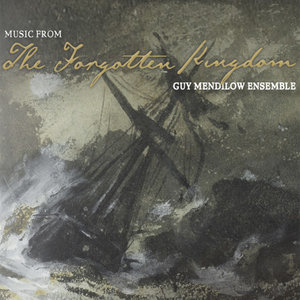
The Guy Mendilow Ensemble devotes itself to Ladino music, that is the songs and traditions of the Sephardic Jews. Mendilow has four shows devoted to Sephardic music, including the recent Music from the Forgotten Kingdom. The music is forgotten because Jews were expelled from Spain and Portugal in 1492, the very year Columbus sailed to the New World. I scarcely have words to tell you what a beautiful album this is—at turns sad and celebratory, formal and joyful, and always mystical, magical, and soaked in the brine of history. The ensemble blurs the lines between classical and folk music in ways that old Nonesuch albums used to place medieval court and village music cheek by jowl. Start with the "Una Noche Al Borde De La Mar" video, which opens with a two-minute real-time animated drawing before cutting to the stunning vocals of Sofia Tosello and truly haunting violin backing. Then try "Hermanas Riena Y Cautiva (Sisters, Queen and Captive)" with its distinct medieval feel. Then sample "La Galana Y La Mar," which is simpler but pure and beautiful, the woodwinds transporting us to an otherworldly place. This is, simply, a transcendent album. ★★★★★ 
 s

Milwaukee Magazine dubbed the Zack Pietrini Band as the city's top ensemble in its 2017 wrap-up. Can't say that I've heard all the bands out there, but Pietrini would turn heads anywhere. Holding onto Ghosts is the quintet's fifth release. File it under Americana and, as readers know, I find that a mighty broad category. Pietrini's blend is part country, part rock, and a splash of folk. Pietrini has a smooth voice, but there's some back of the throat spit in it that adds an edge. The songs also reflect that edge, most of which are musings about misplaced hope, lost love, and trying to make it as an artist. The bring-on-the-weeping pedal steel of "Learning the Hard Way" could be at home in Nashville and the title says it all. Its flipside is "Dance," a slice of rockabilly that sketches one of those moments in which a joyous dancer lets itall go and lives a lifetime in a single evening. For the folksier side, try"Get Out," which is mostly acoustic guitar, melodic keys and a message that's both hopeful and cautionary.★★★★

If you've never before heard Seth Kibel you might think he's a Ragin' Cajun, not a Maryland-based klezmer, swing, and jazz artist. Actually, he's something of a musical polymath with a sense of humor on full display in Seth Kibel Presents: Songs of Snark and Despair. The album's ten songs were written in response to the 2016 election and the title track is a lighthearted musing on (among other things) what people such as John Lennon or Woody Guthrie would have made of our current conundrum, whereas all he "can do is write songs of snark and despair." Kibel plays clarinet, flute, and sax on the album, but he often surrounds himself with wet-lipped robust tubas and trombones that throw off the vibe of a New Orleans street band that's decided to party through the apocalypse. Donald Trump, Paul Ryan, and the GOP in general are the bad guys in most of the songs but in a, well, snarky way. Kibel invites folks from across the spectrum to add their voices and instruments to his offbeat mix. Black Betty (Jenny Langer) gives a soulful no-holds-barred survey of the history of racism on "240 Years," an amazing change-the-frame song with just enough dark humor to blunt its nasty edges. It's gift-wrapped in a sort of "Ride Your Pony"-like funky envelope. Trump takes it on the chin (again) in the klezmer/Dixieland blended "Stalin's Revenge," and Damon Foreman leads the reggae-laced "Misplaced Priorities." White liberals don't get off the hook either. There is, for example, "White Guilt," with its sneaky double satire—lyrical content and an appropriated bossa nova arrangement. For pure snark there's "Unfriend," simple advice for the Facebook generation and its stuck-in-angst luxury problems. Funny stuff and so good-natured you often laugh at the stiletto in your neck. ★★★★

What can I tell you about They Might Be Giants that hasn't already been written? They've been around since 1982, so you know the Lincoln, Massachusetts duo do unconventional things, like mix John Flansburgh's guitar with John Linnell's accordion and saxophone. You probably know they have gold records, a platinum or two, and some Grammys. Depending on your tastes, they are either experimental or just plain zany. To me, zany is a good thing and TMBG is also a hit in children's music of the warp-'em-while-they're-young (and teach 'em cool stuff) school. But maybe you didn't know that since they're dropping a new album this month, they put out a free NoiseTrade sampler in November. It's called Up to Date and contains back catalogue material spotlighting TMBG's signature quirkiness, self-deprecating humor, and sometimes-poignant observations. It's loud, brash, and irreverent in a post-New Wave, post-punk, post folk manner. What else can one say about a sampler whose tracks include "All the LazyBoyfriends," "Let Me Tell You about My Operation," "I LoveYou for Psychological Reasons," and "Say Nice Things about Detroit?" But check out the 2013 song "Black Ops" and you'll see a more serious pink side of Flansburgh and Linnell. ★★★★

The Wild Unrest is a dark and lean folk project from Beth Whitney, who cooked up some of her material in the deep woods of Washington State, where she and her husband lived for a time and where, at her admission, she struggled with postpartum depression. You can hear anguish in "Shadows of a Man," but in songs like "Raven" and its reflections of the Native American past, it's clear she also tapped into some ancient wisdom. "Tides Are forSirens" captures Whitney in a somewhat lighter mood; the song is reflective, but also sweet and pretty. I won't lie, though. This is an album that grows on you rather than grabbing you by collar and making you pay attention. Like many healing albums, it can be so personal that it feels distant. Take your time. Let it breathe. ★★★tides are for sirens


If you're looking for some rock n' roll, here are a few worth investigating. Want it loud and crunchy? Try Jason Heath and the Greedy Souls whose But There's Nowhere to Go takes a highly critical look at all that's gone busted and wrong in the USA: corruption, greed, loss of national identity, the 2016 election…. No punches are pulled in songs like "South of Babylon," in which Heath sings in a voice that's a cross between being soaked in whiskey and gargling with razor blades: John Wayne’s dead, but his guns are drawn/bodies are scattered on the White House lawn. In "In Love with My Gun" he sings: I’m Miss America’s favorite son/I got bloody red hands I was born with a gun/It’s a dirty job honey but it’s gotta be done’/Got stars and stripes in my eyes/And I’m in love with my gun. Yeah, he's a pissed off dude, as you'll also hear on tracks such as "Postcards from the Hanging," "Ballad of the Brown Bomber," and Here Comes My Savior" (and he doesn't mean Jesus). This is where straight up rock meets grunge, punk, and alternative. ★★★★

The Speed Bumps fall into the "indie" rock cubbyhole, which, in their case, is folk-rock with occasional dollops of country. "How Do We Work it Out" is shimmery, despite its theme of a relationship about to supernova. This Ohio Rust Belt quintet makes no bones about its debt to Nick Drake and Paul Simon and the aforementioned song would easily fit into Simon's urbane repertoire. "In the Moment" is gentler and folksier still. Smooth, good harmonies, and changes of pace make their Love is War EP a winner. ★★★★

1/22/18

Ursula Le Guin Blogs and Reflects

-->

NO TIME TO SPARE: THINKING ABOUT WHAT MATTERS (2017)
Ursula K. Le Guin
Houghton Mifflin Harcourt, 240 pages
★★★

Bloggers don't usually get to publish their posts in book form. Then again, not many bloggers are Ursula Le Guin, whose fantasy, science fiction, and children's books have expanded our imaginations and dared us to think of alternative worlds and ways we can make this one better. One suspects she must have had to build on to her Berkeley, California domicile to house all the awards she has garnered in her fifty plus years of publishing. In 2010, Le Guin drew inspiration from Portuguese novelist José Saramago and decided to try her hand at blogging.

Here's where things get a bit tougher to evaluate. On the blog, Le Guin is the main subject, not her characters. In a word, she becomes mortal. At age 88, Le Guin intends that to take her title literally—no time to spare. Blog writing, however, is a decidedly less edited, less censorious, less organized form of writing. One can basically write whatever one wishes. Given a choice between specialized and generalized approaches, Le Guin opts for the latter. No Time to Spare is organized into four themes—ageing, reflections on literature, critiquing society and her place in it, and wistfully musing over the things that have given her pleasure. These themes are, nonetheless, as loose as a kaftan. Le Guin has earned the right to indulge and does so. In practical terms this means her readers are confronted with a literary roundup of thoroughbreds contained in the same corral as plow horses and swaybacks.

At her best, Le Guin charms and beguiles. "The Horsies Upstairs" is a delightful and imaginative piece that invites us to view the world through the eyes of a two-year-old, not the logic of the adults all around her. Le Guin writes, "How does a child arrange a vast world that is always turning out new stuff? She does it the best she can, and doesn't bother with what she can't until she has to." In her observations of a child's question of where the horses sleep, Le Guin challenges us to think about what we mean by the word "real." Equally charming are the various intercalary blogs about her cat Pard. As one of her posts puts it, any feline caretaker needs to be mindful of the difference between "choosing a cat" and being "chosen by a cat." Pard is a rascal and even the most ardent dog person will smile when reading of his various adventures, misadventures, and cat cantankerousness.

How readers will respond to Le Guin's own cantankerousness probably depends upon whether or not you agree or disagree with the opinions she expresses. Do you share her view that Hemingway was a lazy writer? Does first-person writing that blurs the line between fiction and memoir annoy you? (Do you even care about the issue?) Is it a cheap shot to suggest that fantasy writing is as intellectually valid as religious fundamentalism, even if you think she's right (as do I)? Le Guin has long been a critic of unexamined belief, but I can imagine some readers will take deep exception to her takedown of New Age magical thinking, especially the notion of recovering one's Inner Child. She can barely contain her snark when contemplating a Catholic conference on exorcism. Does she go too far when she claims that definitions of demonic possession are so broad that her deep love of Beethoven's 9th Symphony could be so interpreted? To be fair, Le Guin has long championed rationalism. In my view, her post on "Belief in Belief" is utterly brilliant in the simplicity with which she highlights the problems that occur when we use "I think" and "I believe" as synonyms. As she puts it, "I don't believe in" Darwinian evolutionary theory, "I accept it. It isn't a matter of faith, but of evidence."  

In my mind, there are some very wise things in her meditations. She doesn't have a high view of life in contemporary America. Economists and capitalists come under scrutiny of their worship of "uncontrolled, unlimited, unceasing growth as the only recipe for economic health," and she decries the foolishness of ignoring limits and balance. She is equally concerned about the non-reflection of her fellow citizens: "I have watched my country accept, mostly complacently, along with a lower living standard for more and more people, a lower moral standard. A moral standard based on advertising." She's not optimistic the nation can endure "living on spin and illusion, hot air and hogwash."

It must be said that some of the pieces are fluff and others one-trick ponies. Even if you agree that today's bombardment of F-bombs is annoying, you might still find her "Will You Please Fucking Stop?" churlish. She similarly overextends herself in a rather silly piece on "vegempathy." In the end, of course, this is how one must evaluate blog collections. I too am a blogger and as much as I'd like to think everything I write is sensible, correct, and important, such an attitude is what I "believe," not what I "think." Do not read this collection looking for insight into Le Guin's books; Le Guin's blog is about her. She is undoubtedly more gifted than most bloggers, but not even she is immune from the blogger's curse: not every piece is a winner. Call this one a classic mixed bag.

Rob Weir

1/19/18

Art Mystery: Who Was Edwin Elmer


Edwin Elmer as Young Man
{Click on Images to Enlarge}  

I love art, but like many fans I sometimes OD on my favorites. It's always a great joy to discover someone new, or to become immersed in an art mystery. Place Edwin Romanzo Elmer (1850-1923) in the second category. To date I have viewed just six of his works—five oils and a chalk drawing. Though his niece Maud, wrote a small piece about him, we still know only the sketchiest details of his life.

Edwin was born in Ohio, the youngest of twelve children in a farm family that moved to Buckland, Massachusetts when Edwin was six. About all we know is that the family was poor but close-knit and religious. Edwin was particularly fond of his brother Samuel, whose portrait is on display at Smith College. It's a rather handsome picture housed in a neo-medieval frame that one would ordinarily think should hold some pre-Raphaelite offering. But Samuel seems dignified and at home inside the fancy woodwork.


 Insofar as I know, Elmer honed his art in Buckland and did some inventing as well as painting. There is a picture of his wife Mary at work on a machine that sewed silk ends onto a type of twisted horsewhip Edwin developed. It sometimes shows up to illustrate talks and books on rural industry, though that's probably a misreading. In all likelihood we are viewing a domestic scene from the Ashfield home into which the Elmers moved after 1890.


We'd probably not know Edwin Elmer at all were it not for an event from that year. Edwin grew up in a large family, but he and Mary had just one child, Effie Lillian. In 1890, nine-year-old Effie died of appendicitis and Edwin poured out his grief on canvas. His Mourning Picture, which inspired an Adrienne Rich poem of the same name, also hangs at Smith College and is much beloved by visitors. Some don't linger long enough to understand that they are viewing a quintessential late Victorian period grief scene. At first glance the painting is charming—a precious child in the sunlight embracing a lamb. A kitten is at her feet and typical girl toys are on the lawn fronting a handsome frame home. Then we look harder and notice that the parents are in formal black mourning clothing and sitting in shadow. The ovine references Christ, the Lamb of God. All of a sudden the details and tone seem like a marriage of Magritte's surrealism and Edward Hicks' Peaceable Kingdom.

The painting originally hung in a local post office, and then disappeared until Maud showed it to a Smith College curator in the 1950s. Were it not for that, would anyone have bothered to look for more details? As noted, the Elmers moved to Ashfield after Effie's death and lived with Mary's parents. At some point they went to New York City, where Edwin trained at the Academy of Design. Was this his only formal art training? He also invented some stuff there, including an improved butter churn, the whip snap machine in the picture with Mary, and a bracket for shingles.

It is said that Edwin painted landscapes both in Massachusetts and New York, but the only other pictures of his I know are a chalk scene of a Buckland apple orchard (at Smith) dated 1906, and Magic Glasses, an 1891 painting at Vermont's Shelburne Museum that tries to mess with our perception with a magnifying glass sitting in a crystal goblet that reflects a set of windows. We don't know if the windows are in front or in back, but the Shelburne Museum also owns the goblet, which sits beside the painting in a separate display case. Smith College also holds Our Village Carver, which dates
from 1906. It wasn't on display when I was there a few weeks ago

I'm sure there must be other works, but I've not been able to authenticate a few random images I've run across. The only other thing I can tell you is that Edwin was stricken with abdominal cancer and took his own life in 1923. Label this mystery "to be continued."  


1/17/18

House of Names a Superb Retelling of Agamemnon's Hubris

-->


HOUSE OF NAMES (2017)
Colm Tóibín
Scribner, 275 pages
★★★★

It's hard to go wrong writing a novel based on Greek mythology. The ancient Greeks pretty much invented Western drama, which means they were the early masters of its key elements: mayhem, murder, intrigue, betrayal, ghostly visitations, and sex (in all varieties). Not that Colm Tóibín needs to mine the past for inspiration; he's already proved his chops as one of the better fiction writers of our times (The Blackwater Lightship, The Master, Brooklyn). Still, why not put one's literary skills to work with a retelling of Greeks immediately after the Trojan War?

Tóibín draws from various sources—Aeschylus, Euripides, Homer, Sophocles—and has developed a synthesis that is uniquely his own. First, a note on the multilayered meaning of the book's title. Ancient Greeks practiced bisexuality and slept around like springtime rabbits, but its social structure was patriarchal and familial. One of the more famous houses was that of Agamemnon, the Mycenaean king who commanded the combined Greek forces during the Trojan War. In many ways, though, the collective house name was more important than the individual male whose name it bore. History was often orally transmitted, with cycles of tales centering on a particular house of names. In Tóibín's novel, lesser houses also 'survive' only when its tales are told—long after its last descendants have passed. A house of names matters deeply—even to an old woman who is herself never named. 

For those who have forgotten so much mythology that Homer now evokes "Simpson," here is a quick recap of the germane part of the House of Agamemnon story. The winds did not cooperate with Agamemnon's departure for the Trojan Wars. At the behest of a soothsayer, the king agreed to sacrifice his beautiful daughter Iphigenia in exchange for favorable winds. He sails off, is gone for ten years, and returns home victorious, with Cassandra as war booty. (She's doubly imperiled, her other curse being that she can foresee the future but no one believes her prophecies.) Much has happened in the decade in which the king has been gone, including the fact that his wife Clytemnestra has taken a lover, the wily Aegisthus. One thing hasn't changed: Clytemnestra has never forgiven her husband for sacrificing Iphigenia and has been plotting revenge since the day her daughter was killed. Also, her son Orestes is missing. He was sent away as a boy shortly after his father left for war for reasons that vary according to which playwright tells the tale. In Tóibín's story, his sister Electra is suspiciously implicated in what is, in essence, a kidnapping and imprisonment, though it may have all been Aegisthus' doing. Agamemnon's triumph is a short one; he will be murdered by Clytemnestra's hand and she in turn will meet a bloody end.

That's the Greeks for you; there's no drama unless there's more blood than found in the punchbowls of a vampire ball. Tóibín divides his short novel into sections told from the points of view of Clytemnestra, Orestes, and Electra. His is not just a recounting of myths in modern language á la Neil Gaiman's Norse Mythology. There is seldom a single narrative thread in Greek myths, which frees Tóibín to create a new synthesis. I don't know of any tale in which Leander and Orestes appear together; in House of Names we first meet young Orestes in an awful detention camp that's like a Dickens boarding school in chitons. He will eventually befriend a sickly lad called Mitros and Leander, who becomes his soul and bedmate. The three will escape and spend years at the seaside home of a mysterious old woman. In Tóibín, Leander is a much stronger figure than Orestes; both lads (minus Mitros) will return home shortly after Clytemnestra has dispatched Agamemnon. Orestes will avenge his father's death, Leander will lead a revolt, Electra plots, and it's not going to end well for anyone. Hey, that's what makes it a drama, not a fairy tale. That and the fact that spies and treachery abound everywhere—think the "little birds" of Lord Varys in Game of Thrones. Trust me when I tell you that you'd not want to be a member of a prominent ancient Greek family.

House of Names is beautifully written. Consider this small sample in Clytemnestra's voice as she remembers the death of her childhood nurse/nanny: "I went out and looked at the sky. All I had then to help me was the leftover language of prayer. What had once been powerful and added meaning to everything was now desolate, strange, with its own sad, brittle power, with its memory locked in its rhythms, of a vivid past when our words rose up and found completion. Now our words are trapped in time, they are filled with limits, they are mere distractions, they are as fleeting and monotonous as breath. They keep us alive, for which we should be grateful. There is nothing else."

Tóibín's prose is reminiscent of the novels and poems of Robert Graves (1895-1995), who also based many of his works on Greek and Roman mythology. House of Names deserves to be mentioned in the same august company. It is imaginative, well crafted, and eloquent. As you read Tóibín, keep in mind what I said about the importance of the name of the family; it will help you make sense of motives that would otherwise seem illogical. In ancient Greece, reputation is more potent than adoration (or a long life).

Rob Weir

Moonglow Not Chabon's Best, but Holds Intrigue

-->

MOONGLOW: A NOVEL (2016)
Michael Chabon
HarperCollins, 428 pages
★★★

Michael Chabon's Moonglow is a novel. Or is it? The book's narrator is called Mike and two of its major characters have no name other "my grandfather" and "my grandmother." Many have speculated the book is either wholly or partially autobiographical, assertions upon which Chabon coyly refuses to comment. Is it or isn't it; that's not really the question. Better to ask is it a good book, and my assessment is that it's a mixed bag. It is, at turns, eloquent and gripping, but also plodding and self-indulgent.

The book's set up is that Mike is summoned to his grandfather's deathbed and, over the course of ten days, hears tales that are part confessional, part historical, and part familial. As befits such a scenario, the book plays lose with linear time. Our first major incident unfolds in 1957, but the book's core is revealed in a 1944 exchange between grandfather and William Donovan, who headed the Office of Strategic Services—the forerunner of the CIA—during World War II. Donovan was recruiting intelligence officers to go deep into Germany during the war's waning days and unearth information about Nazi rocketry. As a man nicknamed "Wild Bill," he wasted no time with pretense. "You've been looking for trouble your whole life," says he to grandfather. The book's central tension is whether that's literally true, or if our protagonist is simply the sort of chap that trouble always manages to find. He's certainly the sort who marches to a different drummer, a trait we glimpse in his adolescence, the war years, the 1950s, and into old age.

Donovan's task suits grandfather well, as he is an introspective man obsessed with rockets. As a youth, when not hustling pool, he built detailed scale models of missiles and launch facilities, a hobby that took on greater sophistication and continued throughout his life. By 1944, he was also obsessed with Wernher von Braun, whom he wished to eliminate. In the book, he came close to finding his quarry; there is a harrowing showdown between he and Stolzmann, another Nazi scientist failing to pose as a farmer. Of course, we know that he didn't get von Braun. If you think that the morality of government today has problems, consider that Operation Paperclip granted residency and eventual citizenship to at least 1600 Nazi scientists, including von Braun. Many of these individuals became the foundation of both America's nuclear weapons programs and of NASA. This gives poignancy to the grandfather, who has retired to Florida and never misses a rocket launch at Cape Canaveral.    

If only von Braun were his only tension. After the war grandfather acquires a French-born wife who already has a child: Mike's mother. She's exotic, vibrant, wild, a Jewish survivor of Nazi death camps, and as mad as a March hare. Grandmother spends much of Mike's childhood in and out of asylums before dying—often obsessed with images of the "Skinless Horse." To say that grandfather didn't live a conventional life is an understatement. About that 1957 'incident,' Mike's grandparents were living in Philadelphia when grandfather went berserk when he lost his job with a barrette manufacturer who fired him to give a job to a recent parolee: Alger Hiss! Hiss left prison and grandfather went to Wallkill for almost murdering his ex-employer. Add "jail bird" to his checkered résumé.

Moonglow, which takes its name from a Benny Goodman standard, is filled with quirks such as these. There are also offbeat relatives such as his flamboyant rabbi brother and a late-in-life love interest; also amusing incidents involving bad theme parties, a missing cat, Tarot cards, python hunting, and grandfather's propensity for finding himself amidst smart alecks and fast talkers whom he can't decide if likes of loathes. On the more serious side there are questions about Jewish identity, PTSD, and mental illness. A Zippo lighter operates as Chabon's version of Chekov's gun. Some of my favorite parts are of Chabon's descriptions of 1950s culture. You can almost sniff your way through the decade via remembrances of the smells of Lifebuoy soap, Prell, Ban, smoke-filled rooms, and Tom Collins cocktails.

As noted, the structure is non-linear. Although this gives the hook of capturing remembrances verisimilitude, it also makes for ragged reading on occasion. There are also passages that reference and are inspired by Gravity's Rainbow, which isn't necessarily a good thing. That Thomas Pynchon novel also covers World War II and rocketry, but I'm among those who found it overrated, unreadable, and pretentious. Some of those traits rubbed off on Chabon. When he's at his best, Moonglow is like The Things They Carried in the way it blurs fiction and non-fiction. Unlike Tim O'Brien, Chabon isn't consistent within that voice. I'm sure that some readers will find his handling of Nazi death camps—his protagonist helps liberate Nordhausen—oddly matter of fact in tone and ponder over why a Jewish character would allow a rocket obsession to take precedence over the surrounding horrors.

  Whether autobiographical or not, Moonglow is a bit like its namesake title. It mostly glows dimly rather than brightly, thought illumined d by the occasional supermoon. It's certainly worth reading, but it doesn't rank among Chabon gems such as The Mysteries of Pittsburgh, Wonder Boys, Telegraph Avenue, or the Pulitzer-winning Amazing Adventures of Kavalier and Clay.

Rob Weir

1/15/18

Molly's Game Deals Middling Hand


MOLLY'S GAME (2017)
Directed by Aaron Sorkin
STXfilms, 140 minutes, R (language, some violence, drugs)
★★★

The toughest review to write is of a work that neither stinks like rotten fish nor soars like a hawk. Molly's Game falls into that category. One thing is certain, though: its hype is greater than its delivery.  

Jessica Chastain plays the role of Molly Bloom (b. 1978) and most of what you see actually happened. Bloom hails from a high-achieving Colorado family—one brother is a two-time Olympian and former NFL player, the other a surgeon—and her psychologist father really was her ski coach before a devastating back injury destroyed Molly's Olympic dreams. As in the film, Molly was on her way to law school before impulsively moving to Los Angeles for a gap year in the sun. Her family cut her off and she needed to earn her own freight, a journey that took her from waitress to high-stake poker gopher for real estate agent/nightclub owner Darin Feinstein. His name is changed to Dean Keith in the film and is played with abusive creepiness by Jeremy Strong. The film club is called the Cobra Club, but the real one is the Viper Club where River Phoenix overdosed in 1993. Eventually Molly spun off her own game—one with buy-ins routinely in excess of $10,000. Among its clients was a veritable bad boys' celebrity list, among them: Leo DiCaprio, Ben Affleck, Matt Damon, and Macaulay Caulkin. They are thinly veiled in the film, though their names were public before Molly's book hit the stands in 2014. The movie's Player X (Michael Cera) is partly a composite, but he is mostly Tobey Maguire, who—sad to say—is apparently a world-class asshole who gets his kicks from belittling people. Molly's Hollywood game was glitz and glamour that catered to the arrogant, rich, and amoral. As Molly learns, everyone there is running a game of his own—always his—and as smart as she is, hers is not the hand that commands the power grid. Although she gains wealth from running the game, we're talking the kind of stakes in which one player lost $100 million in a single evening.

One of the lessons of the film is that Molly is, in her own way, arrogant as well. When she's shut out of the Hollywood game, she transports it to New York City, whose high roller rubes and regals have even deeper pockets, if less celebrity star power. Molly's game has rules. Gorgeous women in sexy attire abound, but there is no sex or procurement thereof; her Playboy bunnies are chosen for their business savvy as well as their curves. Also, no drugs, no players she doesn't vet, and no rake for Molly as that would constitute an illegal unlicensed casino. Technically, Molly works for tips and hospitality services. All is legal and aboveboard—until it isn't.  Call it a classic case of diving into water too deep and too swift. Three years after she bowed out, ehe FBI raided her apartment, clapped her in irons, froze her accounts, and brought charges of money laundering and illegal sports gambling. She needed a lawyer, but had no way of coming up with a $250,000 retainer fee. In the film, lawyer Charlie Jaffey (Idris Elba) takes her case for reasons unclear even to himself. This is an invention; in actuality she had a team of lawyers—whose future payment was indeed uncertain—and the lead attorney was white, not African American. Molly's book and arrest was tabloid fodder back in 2014, until the next yellow journalism sensation chased her off the front page.

Molly's Game is a tight story, even if parts of it are invented. Molly was true to her word and did not out anyone not already fingered, but she was not as pure as presented on the screen. (There was a plea bargain, despite what the film says). There is much that can be said about the hypocrisy of a society that gives the odds on every sporting event, but declares most betting schemes illegal. There is even more to be said about one that busts a woman who facilitates gambling but doesn't touch the famous male players. Indeed, one might tackle the entire question of "victimless" crimes. Molly's Game infers such issues but in the end, it's a fairly routine film that we've seen before. Replace the cards with billiard balls and you have The Color of Money. Make it stocks and you have The Wolf of Wall Street or Other People's Money. Make it about thoroughbred horses and take your pick. Indeed, the story is much the same with poker itself, from Smart Money (1931) to Owning Mahowny (2003) and beyond.

Jessica Chastain redeems what would otherwise be a stock white hats/black hats film by gendering the story. Still, there are all the usual Hollywood tropes:  the loudmouth, the lovable loser, the tragic loser, the folksy judge, shadowy mobsters, a teary parent/parent confessional, the repentant… . Chastain stuns with her physical presence as well as her acting; she is drop-dead gorgeous and plays Molly as one part sophisticate and one part cocky naïf. It's the kind of role Julia Roberts would play, but with less depth. Chastain's radiance is such that the film feels meatier than it actually is, though I must give a shout out to Kevin Costner's secondary role as her father who is much better than I would have imagined.  But this film is ultimately like the real Molly Bloom—smart, but not smart enough. Both Chastain and the film are being touted for Oscars, but my money's on those smarter films and performances.

Rob Weir

1/12/18

Points North Mosher's Final Love Letter to Vermont

-->

POINTS NORTH (2017)
Howard Frank Mosher
Macmillan, 208 pages
★★★★

One year ago, Howard Frank Mosher of Irasburg, Vermont passed away. Seven weeks before he died, Mosher completed his final novel, Points North. Like most of the things he wrote, Points North is about the most remote part of Vermont, the Northeast Kingdom*—three counties, 2027 square miles and just 65,000 people. A state joke holds that the Northeast Kingdom is where Vermonters go to get away from it all. In Mosher's books, Essex, Orleans, and Caledonia counties are elided into Kingdom County, and the tale is spun that it was an independent republic after the Revolutionary War because it refused to accept the existence of slavery. (That was actually true of all of Vermont from 1777-91, though confusion over the borders between Vermont, New York, and Quebec also had to be settled until Vermont became the 14th state and the first to explicitly ban slavery.)

Mosher authored numerous books made into films by Jay Craven and is probably best known for Stranger in the Kingdom (1989), North Country (1997), and Where Rivers Flow North (1998). You could think of Mosher as the consummate regional writer and place him among company such Wendell Berry, Carolyn Chute, and William Faulkner, though he generally cited Twain and Cervantes as his role models and we can assuredly see in Mosher echoes of their wit, sense of the absurd, and penchant for flawed protagonists. Points North is a seven-generation collection of Kingdom County tales centering on the extended Kinneson family and loosely held together as recollections, discoveries, and retold legends between aging brothers Charlie and Jim Kinneson, the latter the editor of the (fictional) Kingdom Common Monitor.

In Points North, Kingdom County compensates for its paucity of residents with a surplus of colorful characters, among them runaway slaves, a fast-talking huckster evangelist, and a plus-sized heterosexual man who happens also to be a cross dresser and the best fiddler in the region! Mosher, like Chute, shows us both the picture postcard beauty of rural life, but also the struggles, heartbreaks and hardships of people living in a place with more scenery and winter than wealth or opportunity. Life in a region with a short growing season, declining farms, over 100 inches of annual snowfall, and subzero wintertime temperatures requires a delicate mix of steeliness and neighborliness and in Mosher the two traits are not always in balance. Most of his Kingdom locals are down-to-earth and plainspoken; the region is well watered, the humor is dry, and the tongues are often barbed—especially when clucking at outsiders. The Kinneson brothers sometimes speculate that were the area hermetically sealed, it might be better off; modernity and change come to the Kingdom like a knife in the back—a dam project that would flood a fishing camp held by generations of Kinnesons, cross-generational secrets aching to get out, grand old buildings that can't be kept up, historical societies seeking to keep the doors open, meddlesome government officials, and innovators who raise suspicion.  

I am loath to say more lest I spoil the delight of discovering Mosher's cranks, boosters, tragic figures, lovers, cantankerous men, strong women, heroes and heroines yourself. The tales unfold in non-linear fashion, which is, if you think about it, the way we actually learn history rather than how most of us read or write about it. Stories unfold like a cross between a dip into Jim Kinneson's newspaper back files and randomly recalled oral tales of people connected directly and indirectly by blood. A subtheme is the family stories one tells and those one shouldn't. Somewhere along the line Mosher tosses a curveball to the oft-repeated assertion that Vermont is the second whitest state in the Union. 

I have spent time in the Kingdom and can attest that it is, as Mosher presented, a place that feels like a land unto itself. In Points North, Nature is a silent character and that too feels right, especially when one gazes at the sides of the mountains not shredded by ski resort trails, icy lakes stretching into Canada, or down valley roads too far from the beaten path for leaf peepers. There's bitter irony in that Mosher presents much of the Kingdom's uniqueness as a fading way of life just as he was about to exit it.

Rob Weir   

* Former governor and U.S. Senator George Aiken (1892-1984) is credited with coining the phrase "Northeast Kingdom" in a 1949 speech.