12/11/13

Armory Show at 100: When Modernism was New

The Armory Show at 100
New York Historical Society, NYC
Through February 23, 1914

Taylor 1912
Two paintings from American artist Henry Fitch Taylor sum up the impact of the 1913 Armory Show–the first, from 1912, of a girl feeding ducks is saccharine enough to be from Thomas Kincaid. Now check out what Taylor did in 1915, just three years later. To say that the Armory Show rocked his world barely scratches the surface! It doesn’t really matter whether you prefer the first to the second, because there was no turning back the clock. The Armory Show marked the break between Victorianism and Modernism with such finality that, a hundred years later, it’s still the most important art exhibition ever to take place in the United States.

Taylor in 1915
The New York Historical Society gives us a small taste of what audiences saw a century ago. Its hundred sculptures, drawings, and paintings constitute just 7% of the 1400 pieces New Yorkers saw in 1913. Even this is a remarkable achievement given that works that were often ridiculed in the day are now “classic” works valued at many millions of dollars. More ironic still, they are also beloved icons that museums are loath to loan. Nonetheless, the sample is plenty to give us the flavor of 1913 and, because the display is in the NYHS, there’s plenty of accompanying context to consider. The exhibition took place at a crucial moment; among its contemporaries were the Industrial Workers of the World, the social problems images of the Ashcan painters, the suffrage movement, a surge in anarchist activity, labor strikes, and gathering war clouds in Europe that would, four years later, rain on America’s Progressive Era parade.

Augustus John
The Armory Show at 100 is revelatory on several levels, not the least of which is its ability to separate myth from reality. First of all, not everything there was shocking and quite a bit of it was uniformly praised. French Impressionists such as Monet and Renoir, for instance, were already beloved and American counterparts such as John Henry Twachtman and J. Alden Weir attracted kudos. Some works, such as those by Walter Pach, were fairly conventional, and the one that garnered fawning praise–Augustus John’s The Way to the Sea–is objectively an insipid exercise in unfettered sentimentality. On a more elevated level, not everyone could unravel symbolists such as Odilon Redon, but they viewed them as on par with allegorical artists such as Albert Pinkham Ryder and praised their “spiritual” characteristics. Just as long as they didn't get too creepy, like Edvard Munch, whose Madonna and Vampire induced mixed commentary.

Eberle-White Slave Trade
Second, Americans were not total naïfs at the time. Ashcan painters such as George Bellows and John Sloan paved the way for non-decorative painting, Sloan with his ungilded views of working-class life, and Bellows for showing the city’s seemly sides. There is, in fact, striking thematic similarity between the grotesque, zombie-like crowd faces found in a Bellows painting, and the angst-and-danger undertones of Munch. Among the big sensations of the 1913 show was Abasteria St. Leger Eberele’s bronze White Slave Trade and its powerful contrast between a cowering, legs clenched-together nude female and her hulking, legs astride, vulgar auctioneer. His expression is so vivid that we can (metaphorically) see the spit projecting from his open mouth and imagine saliva pooling at the edges. American artists also had familiarity with caricaturists such as Daumier, as evidenced by Guy Pene Du Bois’s Waiter!


Matisse
What did induce shock were the Fauvists and the Cubists, the first because they were viewed as either incomprehensible (Henri Rousseau) or obscene, and the second because classically trained painters viewed it as the death of painting. Two works that illustrate this are both nudes, but cut from different cloth: Henri Matisse’s carnal Blue Nude and Marcel Duchamp’s Nude Descending a Staircase, the latter of which one critic famously panned as “an explosion in a shingle factory.”
Duchamp

The biggest revelation is that none of these works shock us today. We admire them (or not), rejoice for being able to see them, smile at some ‘old’ favorites, or perhaps yawn at their familiarity, but we view them as neither art’s demise nor its future. As you exit the exhibit in your non-agitated state, take a moment to consider that you are not shocked because, a hundred years ago, the Modernists won.

Rob Weir

12/9/13

Lonliest Planet too Boring to Be Gorgeous


The Loneliest Planet (2011/12)
Directed by Julia Loketv
IFC Films, 113 mins. Not rated. In English and Georgian.
*

This independent film did a scant $128,519 at the box office, but was such a sensation at film festivals that Sundance Select decided to distribute it. Reconsideration is definitely in order.

The film putatively follows an engaged couple–Alex (Gael Garcia Bernal) and Nica (Hani Furstenberg)–on a high-adventure backpacking trip across the Caucus Mountains of Georgia. Since neither speaks more than a few words of Georgian, they hire Dato (Bidzina Gujabidze) to guide them. That’s pretty much it. Along the way, Alex screws up by reacting cowardly when a group of mountain locals confront the trio. We think he’s feeling inadequate and unmanly, but given that Bernal only says a few dozen words in the entire movie, it’s hard to know. We also get Dato’s confession of a failed marriage and brief bonding between him and Nica, but very little happens, even less is revealed, and nothing at all is resolved.

So what did festival juries see in this film? Surely not fine acting. Bernal is quickly establishing himself as a one-dimensional bore on the screen who specializes in puppy dog eyes and hangdog expressions, but is incapable of much else. T’is time for him either to stretch or find other employment. It’s hard to say much about Furstenberg, as she’s nearly as silent as Bernal. We first meet her as a soggy nude jumping up and down in the shower. We don’t know why she’s doing that, we don’t find out why, and we never discover much of anything else about her except that she travels a lot and is trying to learn Spanish–perhaps to coax a monosyllabic word from her fiancé. There’s really not much one can say about the film’s script, except that it might have been a good idea to have one. Nor can one commend Lektev’s static direction, which runs the A to B gamut from close-up to long short.  

What is good is the setting. We see the Caucus Mountains in all its guises–rolling pasturelands, cliffs of loose scree, gently folded mounds, sweeping hill-and-valley vistas, easy strolls, and high-elevation oxygen depleting scrambles. It’s also beautiful to see the sunlight streaming through Furstenberg’s fiery red mane. But this isn’t enough and it’s hard to imagine why Sundance decided to promote a film that has bombed with audiences. If you want to see the Caucasians of Georgia, National Geographic is a much better idea. Flipping the pages will provide more movement than you’ll see in this film.

Rob Weir 

12/6/13

Paul Simon Restrospective a Worthy Overview of a Glorious Career

-->
PAUL SIMON
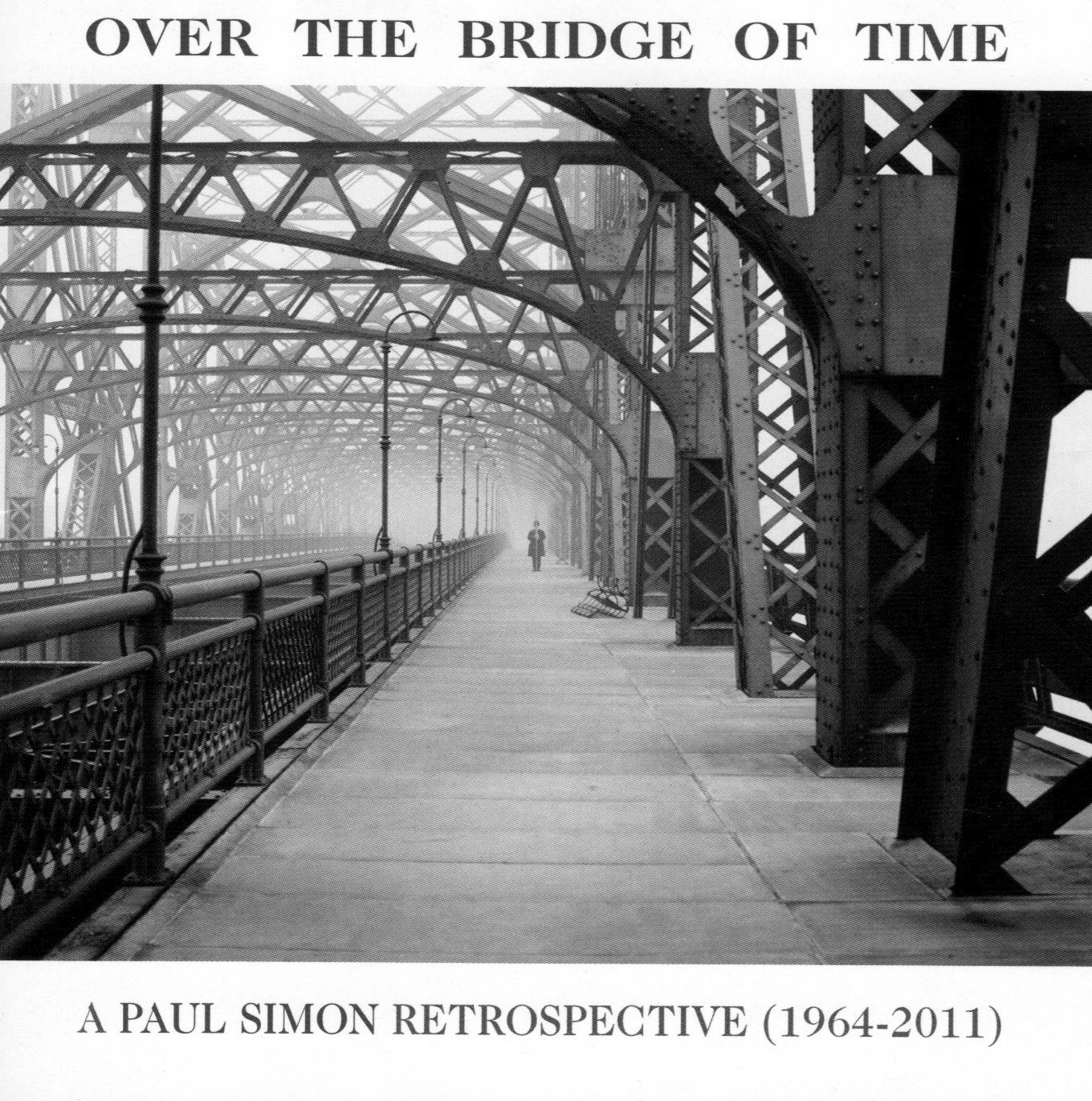
Over the Bridge of Time
Sony Legacy 88883757672
* * * * 

There’s no point to a conversation about the past six decades of songwriting if Paul Simon’s name isn’t invoked. His has been a (decidedly angelic) voice of poetry, wonderment, and explorations of the human condition. The greatest challenge of the 47-year (1962-2011) retrospective Over the Bridge of Time must have been deciding which 20 tracks to use. Producer Steve Berkowitz opted to select songs that hit the pop charts–from Simon and Garfunkel classics such as “The Sounds of Silence” and “The Boxer” straight through to 2011’s “Love and Hard Times,” with a brief stop for some of his Broadway ventures. In between lies another of Simon’s forays into world music on albums such as Graceland and The Rhythm of the Saints. Simon wasn’t the first to go global, but was there ever a timelier album than Graceland (1986), which introduced Ladysmith Black Mambazo to mass audiences just as South Africa was in the thralls of casting off apartheid? (In retrospect, those who accused him of boycott breaking and exploitation seem quite foolish.) Simon’s songs used to be taught in college poetry classes, but most of them bubble forth from the rainbow cosmopolitanism of New York City rather than ancient elegiac wellsprings. Turn a city corner and you leave one world for another–just like a Paul Simon song. Some might say he’s been a pop artist rather than a folk singer, but talk about conversations not worth having….

Rob Weir   

12/4/13

Kill Your Darlings a Fascinatiing Look at Pre-Beats Life

Kill Your Darlings  (2013)
Directed by John Krokidas
Sony Picture Classics, 104 minutes, R (language and sexual situations)
* * * *

William Burroughs… Allen Ginsberg… Jack Kerouac… Can we imagine the Beat movement without them? What became the most significant literary movement of the mid-20th century was almost nipped before it budded and, if justice had been served, it would have been.

No–this isn’t an anti-Beat rant. Like millions who came of age in the 1960s and 1970s, I was weaned on Naked Lunch, Howl, and On the Road. But I wonder if any of those works would have seen the light of day if the truth had been told in August of 1944, when Lucien Carr murdered David Kammerer. The film Kill Your Darlings takes us back to the early 1940s, when the world was at war, clubs served up sizzling hot jazz until the sun came up, gay and drug subcultures thrived in the shadows, and some of the brightest young minds in New York City spent more time dancing on the razor’s edge than studying in the hallowed halls of Columbia.

Ginsberg entered Columbia in 1943, a shy Jew from Paterson, New Jersey with a poet father, a mentally ill mother, and distressed musings over his own sexuality. There he met the brilliant-but-lazy Lucien Carr who shared his contempt for formalist poetry. In the film, Ginsberg’s relationship with Carr parallels that of Arthur Rimbaud and Paul Verlaine–madcap antics, initiation into gay life, free-flowing alcohol and drugs, and a coalescing circle of intellectuals-in-the-making. The latter group included John Clellon Holmes, Gregory Corso, Kerouac, and the older Burroughs, well on his way to a life of addiction and dealing. Through the use of occasional jumpy camera work, skewed angles, dark tones, and quick-spliced sequences, director Krokidas depicts a world that is, in measure, sordid but exciting, and experiences that rocket between surreal and hyper-real.

Krokidas gets superb performances from his cast. Daniel Radcliffe continues to leave Harry Potter far behind in his nuanced portrayal of Ginsberg. He is, in turn, prescient but naïve, lustful but frightened, brilliant but arrogant. Like Carr and Kerouac, he seems one step from success, but just a half step from implosion. Dane DeHaan’s depiction of Carr is reminiscent of that of Anthony Andrews as Sebastian in Brideshead Revisted back in the 1980s–volcanic, charming, infuriating, and androgynous but sexually alluring. The film implies that Carr and Ginsberg were lovers, which most biographers doubt. The same biographers debate Carr’s relationship with David Kammerer (Michael Hall), the older man who saved him from a teenaged suicide attempt and then became–depending on whom you believe–his lover, his stalker, and/or his despoiler. He was, most certainly, Carr’s victim, but one that yielded surprisingly little jail time as Carr used an “honor killing” defense at his trial.

The latter is a reminder of how dangerous it was to wander outside the mainstream in 1944. One could literally get away with murder if, as Carr did, you could convince a jury that your victim intended homosexual molestation. (Until 1961, sodomy was illegal everywhere in the U.S.) Nor is there much doubt that Burroughs (Ben Foster) and Kerouac (Jack Huston) obstructed justice in an attempted cover-up–Burroughs by not reporting it and Kerouac by helping hide evidence. Imagine if the entire truth had come out in 1944–that Ginsberg and Burroughs (and perhaps Carr) were gay, that Kerouac was bisexual, that all of them had used illegal substances, and that several of Carr’s friends conspired to hide a murder.

This is a very good film, though it’s not without its faults. Let’s just say, straight or gay, it’s decidedly a man’s world. You’ll see credits for Elizabeth Olsen, Kyra Sedgwick, and Jennifer Jason Leigh, but even the word cameo is a bit grandiose given how little screen time they have. In real life, Ginsberg was hardly the angelic naïf we see on the screen, nor was he exclusively gay in the 1940s. Moreover, Krokidas simply presumes you know who everyone is; if you don’t, you won’t quite know what role Burroughs plays in the drama. For my taste, Foster plays Burroughs as if he’s channeling Hunter Thompson instead of Burroughs, but I may be nitpicking. And, I suppose if one really wants to nitpick, the film’s implication that Carr cut his ties with the Beats is untrue.

But let’s let the literary biographers argue all of this. I often invoke the late Roger Ebert’s assertion that a really good film has the ability to take us inside a world we couldn’t enter on our own. Enter this one and you’ll see the madness, the junkies, the angelheaded hipsters, jazz cats, agitators, and the queens that led Allen Ginsberg to howl. Do we think Ginsberg might have howled even louder when he contemplated gay bodies sinking into the Hudson?  --Rob Weir

PS: Controversy has emerged because Daniel Radcliffe spends screen time tongue-locked with DeHaan and later has a nude love scene with another man. There is nothing salacious about either scene, though the furor is a distressful reminder that some 1944 attitudes remain.

FYI: For lovers of irony, Lucien Carr fathered three children, one of whom is novelist Caleb Carr.   


12/2/13

James Keelaghan's First Twenty-Five Years

-->
JAMES KEELAGHAN
History: The First 25 Years
Borealis 222

 Describing Saskatchewan-bred James Keelaghan as a “singer/songwriter” is woefully inadequate. For the past quarter century, Keelaghan has been an artisan carefully crafting and burnishing narratives, melodies, memories, and inspirations into something sublime. His songs are personal and universal, touching and provocative, literate and literary. Quite a few are history as it should have been–with the romance put back in, as he insists. And even as the tunes reverberate, Keelaghan’s masterful storytelling transports us across time, borders, and cultures. He commemorates his first twenty-five years of touring with an 18-track CD culled from his eleven albums, and with an accompanying 70-minute DVD in which he exercises his Irish shanachie roots by regaling listeners with the back story of his songs, family, journeys, musical collaborations, and inspirations. It’s a dealer’s choice of songs and the stories, hence a mix of audience favorites such as “Fires of Calais” and “Cold Missouri Waters,” and ones that mean a lot to him, such as “Mi Vida,” a collaboration with surrogate brother Oscar Lopez, and “Captain Torres,” a tale of a doomed vessel which he penned with very specific musical texturing in mind. He also lets us in on the secret that sometimes the song he’s singing isn’t exactly the story he’s telling; “McConnville’s,” for example, is as much about trying to score a bottle of whisky for his ailing father than the lad at the song’s center. Savor both CD and DVD–performers of Keelaghan’s skill, intelligence, and warmth are rare brews.

Rob Weir

11/29/13

How to Opt Out of Christmas Yearly PSA

-->
Ho Ho, No!

Here’s our annual Black Friday “How to Opt Out of Christmas” piece.

We opted out of Christmas years ago. It wasn’t the money; we simply wanted release from the stress, crowds, and mindless consumerism associated with the most intensely crass and secular of all American holidays. Spare us the Babe in the Manger speeches; Christmas in America has more to do with Adam Smith than Baby Jesus. 

We decided to reinvent December as a month of dining with friends, making contact with family, and consuming fun rather than getting caught up in rituals of reciprocity and gluttony. The breaking point came about 15 years ago, when our nieces were still children. One Christmas morning they were literally swamped under a mound of gifts. (Seriously! The wrapping paper debris was piled to twice the height of the youngest.) Our nieces no sooner opened one present than another was thrust in front of them so that every relative under the sun could snap a photo of the bewildered lasses. Soon, they were dazed and numb. As clichéd as it sounds, by mid-afternoon they were having more fun with the wrapping paper and boxes than with the presents. (The boxes made a nice makeshift fort.) And here’s the worst part: the wreckage represented expenditures of hundreds of dollars, much of it from folks that could have used the cash for much better purposes.

Christmas was even more crass when we bought for adults. It had degenerated into a zero sum game–you buy me the item on page 72 of the L.L. Bean catalog and I’ll buy you one from page 104. Christmas shopping sucks for two types of adults: those who can afford to buy things and have all they need (but nonetheless invent things to want “in the spirit of the season”); and those who shouldn’t engage in consumer frenzy, yet are pressured into doing so. If you fall into the second category, for heaven’s sake stop! Consider this sobering statistic–if you rack up $6,000 on your credit card and try to pay it off by making the minimum payment, it will take roughly 54 years to do so even if you never use the card again! Fa, la, la, indeed! In trying to conform to manufactured images of seasonal jollity you have placed yourself in economic thralldom akin to that of 19th-century sharecroppers.

It’s our seasonal prayer that none of you are in that sinking boat. But even if you have plenty of dough, there’s simply no reason to put up with the stress and the madness. Just say no. Here’s a how-to-guide for opting out.

1. Step One: The Power of Guilt. We must ask ourselves how Christmas got to be such a mess in the first place. The answer is simple: We’ve been sold a bill of literal and metaphorical goods on what a “perfect” Christmas is supposed to be like. Don’t underestimated how powerful that imagery is. To counter it, you need to present an equally powerful counter image.

As Christmas approaches, subtly drop remarks to loved ones such as “We have so much and there are others who have so little. What do you think about scaling way back and making donations to charity instead?” My guess is that about three-quarters of your friends and relatives will breathe a sigh of relief and get on board immediately. Your job is to follow up by continuing to drop reminders. Don’t call a week before Christmas and say, “We’re not giving presents this year, right?” Instead, make a plan in the next few days, and follow up in a week by reminding down with the plan that they said they wanted to give to charity. Tell them you are writing a check for a donation in their name and ask which charity they’d like you to support.

2. Step Two: Phasing In the Plan. There will be some people on your list who won’t buy in immediately. One or two may even feel hurt and assume you don’t care enough to buy them something. You need to go gentle with these folks. Start by scaling back instead of going cold turkey. Appeal to their soft side. Do they love animals? In addition to a modest gift, get a really nice card and insert a Heifer International brochure with a note that you’ve given a donation in their name. It may take a few years before these folks stop the gift cycle altogether, but they will.

3. Step Three: Be True to Your Principles. It’s not enough to say you want to spend time with friends and family instead of gift buying; you need to do it! Make sure you schedule dinners out (or potlucks in) with close friends and family. The goal is to make the holidays joyous, not to become the Grinch.

4. Step Four: Replace Consumer Goods with Thoughtful Ones. What people really want during the holidays is a reminder that you care. A plate of home-baked cookies can say this louder than an item plucked from a catalog. So too can cleaning someone’s gutters, fixing a squeaky door, or taking their car for an oil change. Are you craft-oriented? Phoenix makes earrings that cost next to nothing to make, but resonate with friends more than those $50 mass-produced “holiday” earrings you see all over the country. I’ve written a few stories and songs that I’ve shared. Want to do something really simple? Rent “It’s a Wonderful Life” and watch it with someone you care about. Provide the buttered popcorn. The biggest gift you can give is your time!

5. Step Five: Buy Your Kids a Pen Pal. If you have little ones, it’s hard to eliminate gifts totally, but the U.N. and other agencies have programs that allow you to sponsor a child abroad. Do this for your kids and spend part of Christmas with books, pictures, and maps that illustrate where their pen pal lives. Help your kids write a letter to that child. Follow it up in the weeks to come with language lessons, food, and other such items. I had international pen pals as a kid and they made me think about the world. I remember a correspondent from Peru way more than I remember most of my toys.

6. Step Six: Remember the Box Rule. Overindulge children and you run the risk of overwhelming them (or having them grow up to be pampered brats!). Kids need to exercise their imaginations more than they need some toy from China that will be broken by Ground Hog's Day. Buy and make things in which they can participate, not merely consume. The box fort was fun. So too are time-tested things that last: Lincoln logs, blocks, Legos, Slinkies, bikes, fantasy dolls, train sets, interactive books, musical instruments…. Google “top ten toys of all time” and you’ll find none of the glitzy über-expensive “hot” toys of this or any other Christmas. Those things are just ads-of-the-moment that will fade from consciousness as soon as the latest “next big thing” comes along (and proves not to be the next big thing!)

7. Step Seven: Treat Yourself in December. Take some of the dough you’re not spending on prezzies and go out. Take in a concert or a show. Fun is always a good antidote for stress!

8. Step into the Light: If you live in the North, the stretch between Thanksgiving and Ground Hog’s Day is filled with (way too much) darkness. Turn this time into something pagan: festivals of light. Go for hikes in the daylight and gather pinecones, bittersweet, pine boughs, and other such things to make into Christmas decorations. We made an “Electric Forest” one year–an unsightly welter of pine boughs through which we strung dollar-store lights. It was as ugly a hound dog’s fanny, but it’s a memory over which we laugh years later. Other light-themed events include taking short drives to see electric displays, after-sunset window shopping, bonfires, and hitting an after-hours spot (ice cream shop for kids, cafes and bars for adults) in which the darkness is tempered by holiday or atmospheric lights).

9. Step Nine: Replace Old Rituals with New Ones. Okay, I admit that If I hear “Silent Night” at a mall one more time, I may spew. I loathe Christmas carols, plastic reindeer, and blow-up lawn displays. But I’d be the last to say that rituals are bad. If you dislike the old ones, make some new ones. We buy a new tree ornament every year, label it, and try to recall when we bought it when it comes out of storage. We also have some invented holidays, such as Moosemas on December 16, which is celebrated by eating clam chowder and drinking Scotch. A small ritual is walking amidst the downtown lights on Christmas Eve after the stores have closed. Another is a short walk in the woods behind the house on late Christmas morning. Still another is playing CDs of English and Scottish carols that we’ve not heard a billion times. Our most cherished is an annual pre-Christmas dinner at a restaurant with our dearest friends.

10. Step Ten: Make a Wish. Some families may find it impossible to eliminate Christmas presents altogether. Fair enough. But let’s not confuse quantity with quality. Even if you have kids, there’s nothing wrong with limiting their desires. Break out The Rolling Stones and make them listen to “You Can’t Always Get What You Want” until it sinks in. Instead of buying everything under the sun, ask people in your lives to set priorities. If you could only get one thing, what would you really like? (If you have kids, ask for a list of three or four and tell them you’ll ask Santa to bring one of them so that he doesn’t run out of gifts for other children.)

11. Socks are not Stinky! Everyone loves to open presents. It’s horribly environmentally unsound, but a certain degree of debris is part of Christmas. So who says the stuff inside has to cost an arm, a leg, and a kidney? Sock gifts are a lot of fun–dollar store Etch-a-Sketches, crayons, and wind-up toys for kids, inexpensive foodstuffs for adults, card games to share…. You can get very creative about sock gifts; you can also fill one for a fraction of what it costs to provide gifts that will soon be forgotten.

12. Step Twelve: Make Christmas all about the Food. When you ask most people to name their favorite holiday, it’s usually Thanksgiving. Why not? It’s about food, family, and a relaxed pace. So make Christmas into a second Thanksgiving. Prepare foods that take a long time to make. Buy a really, really good bottle of wine. Have a multi-course meal that unfolds over several hours. And, above all, share it with friends and family. Don’t forget to mention how lucky you are to have so much when others have so little.   


11/27/13

Leni Stern Sways to Senegalese Groove

LENI STERN
Jelell
Leni Stern Recordings
***
Leni Stern was a gal playing sizzling electric long before it was sexy to do so. She did mash-ups before any hipster jumped on the jargon bandwagon with the term. World music? Been there, done that. It should therefore come as no surprise to learn that her latest record falls into no hard-fast category. It’s a bit jazzy, a bit of rock and roll, meditative and ambient, but with flashes of gritty rawness. Mostly it dances in to Senegalese groove, courtesy of sidemen Mamadou Ba (bass), Alioune Faye (percussion), and numerous guest musicians. Or, perhaps sways would be a better term. This is a record that takes its time. Stern plays off various drums, and bass lines to allow her liquid notes to flow through the mix in ways in which dancing or contemplation are equally valid. The effect and the crystalline executions of her runs are reminiscent of Jerry Garcia when he was in the zone. Stern and her band mates add vocals, but even these are more overlay than structure. If you must label it, call it West African bass and drum with value-added guitar.

Rob Weir

There are no YouTube selections from this album as of yet, but you can sample a bit of the title track here.