7/26/21

July 2021 Angela Autumn, Annabelle Chovstek, Sol y canto, Surrender Hill and more


Angela Autumn
hails from the small borough of Zelienople, Pennsylvania, which is a bit west of the Allegheny ridge, but you wouldn’t be wrong to think that she’s been baptized in Appalachian streams.  You need but hear a few bars of “Old Time Lovers” to imagine bluegrass stains on the back of her guitar. There is that plaintive voice, the small catches, and the woo-hoos coming at you like a muddy creek. The foot-stompin’ and fiddle-supplemented good ‘ole girl vibe of “Sowin’ Seeds,” the two-step pacing of “God’s Green Earth,” the plucked banjo and lonesome tones of “Western Skies,” and rolling melody of “Back in Line” all owe more to hardscrabble mount than the lights of Nashville, where she now lives. Her idea of a change of pace is to mix a tiny Dylan vibe into “Shooter” or sing about “Texas Blue Jeans.” To be sure, she’s a young singer who could use a tad more variety in her repertoire and depth to her vocals, but you surely can’t go wrong by giving a serious listen to her new LP Frontiers Woman.


Listening to Annabelle Chvostek is like discovering a retro gypsy musician melded with a carefree, bilingual, quirky chanteuse. Sporting a steampunk-inspired album cover, the album title is a throwback: String of Pearls. (For you young’uns, that was the name of a massive 1944 hit for the Glenn Miller Orchestra.) Chovstek is a vet of the Canadian folk- and folk-rock scenes. Though she’s a Toronto native, she attended Concordia University in Montreal and is comfortable enough in French that a quarter of her 12-track recording are sung en français. Chvostek has always been a bit on the cheeky side of things and her cover of the title track is a jumpy little number evocative of how Django Reinhardt might have approached it. Chovstek goes into a jazzy Edith Piaf mode on “Je T’ai Vue HeirSoir,” complete with plinky keys and guitar, and maniacal fiddling. She’s a few shades more serious on “Walls,” a song about who we are and what we leave behind. She gives it an orchestral treatment and ices it with lyrics such as: I'm a holy fool/And a killer too/And I leave it all with you/The light's an open palm/And the branches keep us calm/We don't leave today/But when we do/We won't be gone…. But don’t worry, Chvostek mostly keeps the mood lighter. Check out her live take on “The Fool,” which is like being at a carnival from the comfort of your office chair.


Some recordings review themselves. In 1994, Brian Amador and his Puerto Rican/Argentine wife Rosi formed the Cambridge, MA-based Sol y canto, which is a spinoff of an ensemble they created a decade earlier, Flor de caña. They have been making pan-Latin music since the days when it was niche music that was yet to live up to Sol y canto’s mission: to make music accessible to both Spanish- and non-Spanish-speaking audiences. These days their daughter Alicia often joins them on stage to create glorious three-part harmonies. She’s on the band’s fifth release, En vivo, en familia (Live, as a family). “Amaras” is typical of what Sol y canto does. It’s mostly just Spanish guitar, bongos, and three voices. They sing with sunny joy, even on songs such as “Epidemia de soledad (Epidemic of Loneliness)”. By keeping things simple, our minds can travel to the marketplace to take in “Olor de chiles (Smell of Chilis),” though it’s a rare song in which other things (flute, bass) are as close as the trio gets to being slick. There are even touches for gringos, as in “En vivo (Home Again),” which is in English. As legions already know, Sol y canto’s power comes from being true the music, their hearts, and spirits.


I’ve previously railed against the “Civil Wars Syndrome,” the tendency to compare every energetic country/folk duo to the long-disbanded Grammy Award-winning partnership of Joy Williams and John Paul White. Don’t do that with Surrender Hill, the husband/wife collaboration between Robin Dean Salmon and Afton Seekins Salmon. First of all, Robin was born in South Africa before he surrendered to wanderlust and made numerous ports of call, played in a punk rock band, and eventually drifted to Arizona. For her part, Afton is an Alaskan who studied dance in New York City before landing in the Grand Canyon State. Their latest project, A Whole Lot of Freedom, opens with the title track, a quick nod to Robin’s punk rock days before turning country: Got a little country in my soul/little bit of rock and roll/got a lot of whiskey in my blood. Robin handles most of the lead vocals, but Ashton provides tight harmonies that are really evident in quieter acoustic-led pieces such as “Healing Song” and “Beautiful Wren,the latter which is about their daughter. They draw on a lot of inspirations, including outlaw country, family tales, life experiences, and their “road-dog status.” You’ll hear echoes of Guy Clark on “Turn This Train Around,” but don’t be deceived by the title “Badge of a Punk Rock Band;” if you can believe it, it was inspired by a bad trade of a saddle, an electric guitar, and car restoration! I’d like to hear more Afton leads on an 18-track album that sometimes feels like Robin is trying too hard to sound like the boy from Texas he isn’t, but this is a very solid country album that takes interesting turns. 


Jazz lovers will appreciate Refuges Mouvant by rising Québéçeois star Mireille Boily. Her new project is a collection of cool jazz song, poetry, and spoken word that pays homage to signs of heaven and earth. It is combo jazz in which she’s accompanied by saxophone, piano, standup bass, and percussion. She is a gifted songstress though, to be honest, this genre of music simply doesn’t move me. This, of course, is a personal statement and not a critique of Boily’s obvious gifts. Try tracks such as “Crépuscule” or “Nouvelle Lune,” as she might be your cup of tea. 


If I could give young singers one piece of advice, it would be: We want don’t want to hear anything else until we’ve heard you. I think that Sarah Cicero has a nice voice, but her EP Cold Immaculate Opposite doesn’t let me know for certain. PR material describes her voice as “incandescent,” but the thing about light-emitting rays is that they are encased in a shell. There are so many layers and drifting departures that Cicero only emerges as refracted light. The overproduction is such that a rough video of her singing “Atticus” while sitting on stairs warbling against street noise is better than the studio version. The same issues turn her single “Letter to the Editor” into something approaching aural wallpaper. Cicero should simplify and add where needed, not just because she can.


Rob Weir

7/23/21

NBA Season Longer than a lot of Marriages

Credit to the cartoonist for nailing it!


The National Basketball Association is now the second most-popular sport in the United States and the favorite North American pastime abroad. That’s not as good as it sounds. Increasing numbers of fans complain it has become unwatchable because of poor lower-level coaching, too much showboating, and too many marginal players. The two-minute warning has sounded, and many disgruntled fans say that’s the only part of the game worth watching.


The NBA should:


·      First and foremost, SHORTEN THE BLOODY SEASON! The finals didn’t end until July 20, for heaven’s sake.  

·      Open the new season in mid-October, keep the Covid-induced 72-game season, and stop coddling millionaires. Other people work more than 2-3 times a week! End the regular season in March and accelerate the playoff schedule so that the championship round is settled in late April or the first week of May.

·       As with the NHL, no NBA players in the Olympics. That whole Dream Team thing is a Cold War relic. Plus, it damages the league’s reputation when an NBA squad loses, which it does with increasing frequency.

·      Make 21 (or college graduation) the minimum age for playing in the NBA. Sure, LeBron and Kobe played right out high school, but can you say “outliers?” What could possibly go wrong with handing 19-year-olds millions of bucks when they can’t legally drink?

·      Make college ball and the NBADL where fundamentals are taught. There are too many players who get drafted simply because they have “NBA bodies.” A lot of them wouldn’t know a zone defense from AutoZone. Is the NBA a “professional” league, or a pickup game at the playground?

·      Trash the three-point basket. Wouldn’t it be nice to see some ball movement for high-percentage shots rather than gunners firing away and missing 65% of the time?  Make assists sexier than poor shooting. Do you really think a sport with a 24-second shot clock should end with scores in the 80s?

·      Dunking has become boring, given that even point guards are so tall they can jam without jumping any higher than you can.

·      An alternative to abolishing the dunk is widening the lanes and creating a forbidden zone in front of the basket.

·      Still another idea—stolen from a friend–is to make the dunk a one-point play. It’s the least challenging play in basketball.

·      Bring back technical fouls for hanging on the rim. Enough with mugging for the camera.

·      While I’m on the subject of violations, I think it was sometime in the 1970s the last time a ref called a traveling violation. If you take more than two while not dribbling, you are traveling!

·      Reduce the foul limit from 6 to 5. Good coaches can exploit that, plus it means every team has to have a deeper bench of NBA-ready players.

·      Do not allow more than one designated player to “rest” by sitting out a game. How about better conditioning?

·      Reduce the timeout limit from seven to five to speed the game along. A 48-minute game shouldn’t take more than 2 hours to complete.

·      Enough with thugs posing as ballers. Insert moral turpitude clauses in every contract. These can be restricted to serious offenses. Smoking pot isn’t one, but gunplay in nightclubs and domestic violence are. Any player who violates the clause can be released from his contract and forfeits his pay. He also forfeits free agency for the length of his original contract, cannot be resigned–for a negotiated lower contract– until one year after his first suspension (assuming he’s not in jail) runs out, and is then on a three-year probation. Two strikes and you’re out. Punishment is meted out by an independent board, not the club, league, agent, or players association.


Random Thoughts:


­–– Luka Doncic is the likely MVP for this season, but let’s be honest: Giannis Antetokounmpo is the best player in the NBA by a wide margin. LeBron’s star has faded and the “Greek Freak” rises.


––I seldom take management’s side, but there’s a decided imbalance right now. Players are fond of justifying everything they do as, “It’s just business,” but management is excoriated when it unloads broken-down point guards–looking at you Isaiah Thomas and Kemba Walker. Why is it okay for players to “demand” trades? A lot of them have cash compensation clauses if they are traded during a long-term contract. How about this? If a player demands a trade, he has to shell out dough to the team trading him. Otherwise, just STFU and play out the contract. That’s what free agency is all about.


––African American players should bolt voter suppression states when they become free agents and sign for teams in places where their suffrage is protected. Drafted college players should also force the issue. I’m betting FL, GA, IN, NC, TX, and UT won’t be able to cobble together a competitive team of white boys.


––The sooner the Brooklyn Nets unload “I’ll-bail-whenever-I-feel-like-it” Kyrie Irving, the sooner they will win a championship. Kyrie is gifted, but he’s a prima donna who doesn’t back his swagger. Send him somewhere nobody cares, like Sacramento or Orlando.


––Not sure about Brad Stevens as the new GM of the Celtics. I am sure, though, that that franchise has work to do before it raises another banner–like learning those fundamentals I mentioned above. Too much isolation ball.  


Rob Weir

7/21/21

Mystic Seaport Captured by Bean Counters


Tom Leiws


 Have you heard the expression, “He knows the cost everything but the value of nothing?” That's the theme of this post. First, a small digression.


One of the most magical days of my life was spent on an outcrop on Nova Scotia’s Cape Breton Island. There, I visited Louisbourg Fortress, one of the final outposts of French Canada before the English took over in 1759. Louisbourg has the distinction of being the very best reenactment of history I have ever experienced. Visitors can't even drive to the site; they must park in remote lots and are dropped off at the gates. Once inside, the reenactors take visitors back in time by staying in character so well that they feign ignorance of all events that occurred after 1758, including vocabulary and expressions that postdate the lives of those who lived there in the 1750s. I learned a lot about 18th century soldier life beyond military regimens, including laboratory habits, foodways, the isolation of being many thousands of miles from France, and lingering fears of invasion. It was magical in ways that no static museum can touch.


Louisbourg’s the gold standard, but perhaps some of you have been to Plimouth Plantation, Old Sturbridge Village, or Hancock Shaker Village. I’ll stay in the Northeast, though I’ve seen other wonderful sites. Let's be blunt:  Without the talents of researchers and staff with the skills to jumpstart our historical imaginations, here's what we have at Louisbourg, Plimouth, Old Sturbridge, and Hancock: a pile of gray, moss-covered stones in a fog-shrouded part of Nova Scotia no one would visit; a reconstructed wooden fort and faux cabins on the southeastern shore of Massachusetts; a bunch of old buildings that never actually stood in 19th century Sturbridge; and an assemblage of meaning-deprived farm houses and structures that Berkshires developers would have long-ago leveled.


This brings me to the villains of this piece: the administration of Mystic Seaport and its sanctimonious, money-driven president Pete Armstrong. Mystic recently fired its living history interpreters, canceled its renowned sea music gathering, and told festival organizers that in the future they can have no access to museum funds or staff. In Armstrong's words, “Sea music and sea chanteys are not a priority for this museum at this time and continued requests made by social media and telephone will not alter that fact.” He went on to mention that director of development Chris Freeman is looking to get "the best bang for… limited bucks.” 


Endangered activity at Mystic


Whose bucks, one wonders?  It costs $27 per person to visit Mystic Seaport and I'm not seeing much bang. Here’s what used to happen at Mystic. You could find costumed guides in character aboard its wooden ships like the Charles W. Morgan, where people like Stan Hugill, Tom Lewis, Cliff Haslam, and Louis Killen* sang from the rigging and told tales Armstrong or Freeman surely cannot. I doubt either of them know about being a mate on the last wooden ship to round Cape Horn. Somehow, though, Armstrong thinks car shows and destination weddings are bigger bucks for a seaport museum. Perhaps they do generate more revenue, but what's being sold here is Yuppy indulgence, not maritime history.


I should confess that I am no sailor either. I grew up in farm country and used to know my way around an old tractor and cows, but until I moved to New England, I thought a capstan was where you hung hats and a schooner was just a beer glass. Then again, I was not the president of a museum devoted to seafaring. What I know, I learned from places like Mystic and whaling museums in New Bedford and on Nantucket.


Let me break it down for the obtuse and tone-deaf administration at Mystic. Take away the reenactors, singers, and actual sailors and here's what you've got: a collection of old ships for diehard aficionados and wealthy New York yachtsman who think they’re sailors when they turn a wheel while wearing topsiders. You've also got a bunch of rusty chains lying on docks, some outbuildings lacking enough staff to bring to life what those structures purport to represent, and text-heavy displays. How many pieces of scrimshaw will visitors take it before they think, “Yeah, yeah, more scratching on shark/whale teeth?” How many oil paintings will they take in of ships they've never heard of? How many faces of long-dead sea captains? Exhibits of whaling voyages without dynamic guides will simply remind of a lot of people of being forced to read Moby Dick in high school.


Another fiction: This section of the Long Island Sound shoreline is more associated with Coast Guard cutters and submarines than spermaceti and blubber. Mystic’s pride, the Charles W. Morgan sailed out of New Bedford; Mystic was never a center of the whaling trade. Without colorful guides, song, and stories to help us suspend disbelief, we are left with a repository of old boats­–Disneyland without the rides. Blubber has given way to bluster, and history is in the hands of those who know its cost but not its value. Is this worth $27 of your money? It’s not enough bang for me.


Rob Weir


* Hugill and Killen are now deceased. Before Killen died, he underwent reassignment surgery and was known as Louise.

7/19/21

Innocence a Gem Worth Resurrecting


INNOCENCE  (2000/01)

Directed by Paul Cox

Pranayam/MGM, 95 minutes, R (for absolutely no good reason!)

★★★★★


There are numerous films named Innocence, a title that’s usually an irony alert as they are seldom actually “innocent.” This one is and it's the one you want to see. The late, great Roger Ebert summed it with this remark: “Here is the most passionate and tender love story in many years because it is not about the story, not about stars, not about plot, not about sex, not about nudity, but about love itself.”


It's set up is deceptively simple. Two young people, Claire and Andreas, met in Belgium and fell passionately in love. (They are played by Kristine Van Pellicorn and Kenny Aernouts.) Theirs was a storybook kind of love, but because they were young, neither was able to recognize that it was supposed to be a tome, not a novella. They parted with sadness, but with the expectation that comes with youth – that they would eventually move on.


And so they did. Forty years later they unexpectedly meet again in Adelaide, Australia. Both had married and have adult children, though Andreas (Bud Tingwell) is now a widower. Claire (Julia Blake) remains married to John (Terry Norris), a no-nonsense stiff upper lip British type who is deeply practical and rather dull. What begins as an innocent round of coffee and gab between Claire and Andreas quickly evolves into coming to grips with the fact that neither really “moved on,” and they remained spiritually in love in ways their younger selves could not have understood. Call it a soulmate kind of understanding that goes beyond what John or most of their respective offspring can grasp. How does one explain destiny to those who see only the pragmatic? Or Claire's insistence that she's too old not to take a risk?


This is one of the finest looks at mature passion you will ever see. Paul Cox won several prizes abroad for sensitive direction on Innocence. Although he's not very well-known in North America, he is considered one of Australia’s premier directors. (His 1983 film Man of Flowers is another small gym.)


Ebert was correct to note that Innocence isn't about stars, but don't confuse that observation with an assumption that the actors are a bunch of nobodies. Julia Blake is highly regarded in both Australia and Britain and her turn in Innocence will show you why. Hers is a nuanced balance of vacillation and determination, a sort of quiet feminism that blossoms in time to save her from herself.


Bud Tingwell is also a veteran of the Australian screen, whom some North Americans may have seen an offbeat offerings such as Malcolm, Murder Most Foul, and The Castle. He has been one of Paul Cox’s go-to actors for many years because of his plasticity. In Innocence, he is a hangdog Everyman wracked by remorse that's leavened with desire to do the right thing.


Ah, the right thing. That's the crux of Innocence. What does “right” mean? For that matter, how do we define innocence? Is it an objective standard, or is it all a matter of perspective? Cox’s use of flashback interludes raises the bar on how we must consider such questions. But no matter how you resolve such conundrums, you will come away having experienced a love story likes of which Hollywood can't touch. Innocence is an intelligent, deeply moving film that, at the very least, will help you clarify the differences between lust, love, impetuousness, and deep reflection. Innocence does nothing less than dissect love’s connective tissues.


Rob Weir

7/16/21

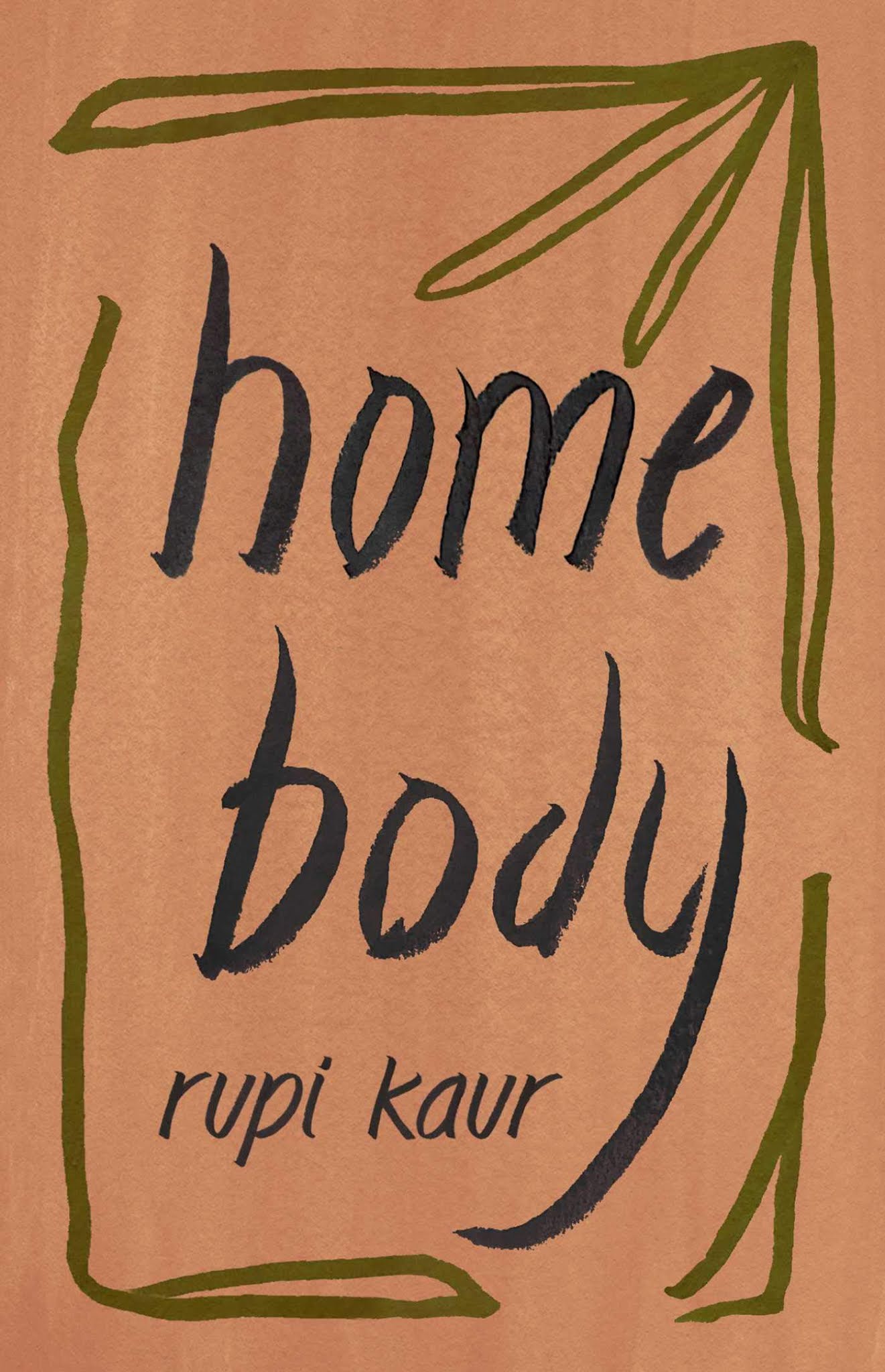
Home Body is Unfinished Verse


Home Body (2020)

By Rupi Kaur

Andrews McNeel Publishing, 194 pages.

★★


When all I was in my early 20s, I wrote reams of heartfelt but horrible prose poetry. Most of it tumbled into four boxes: I am depressed, I'm in love, I'm not in love, I’m depressed again. Rinse and repeat. Life is nothing if not a teacher and I came to learn that reducing all experience to just a few categories was naïve.


I mention this because Rupi Kaur’s Home Body reminds me of my younger self, and not in a good way. She fills a few more boxes than I–abuse memories, ethnic identity, production anxiety, masturbation–but she doesn't escape the young poet’s trap of placing herself at the center of a very constricted universe. Even her stick figure doodles bespeak a 20-something mind that has not yet come to grips with the reality that most of us find ways to muddle through life’s downturns so that the sublime moments seem even more special.


Kaur, an India-born Sikh-Canadian, divides her collection into four parts–Mind, Heart, Rest, Awake – and the very best way to approach it is to not think of as poetry at all. The overarching theme is it she refuses to be broken, and that’s a fine approach to healing but a long way from being finished verse. What stands out is not entire compositions–even though most are very short–but lines such as these:


you are lonely/but you're not alone/– there is a difference


i am not my worst days/i am not what happened to me


your voice is your sovereignty


i'm not interested/in a feminism that thinks/simply placing a woman on top/of oppressive systems is progress


You can probably see the inherent problem in all of this. Simply using the lower case doesn’t make her into e e cummings. (I tried that as well!) We learn a lot about Kaur’s views on capitalism –she's not a fan–depression, commercialization, manufactured desire, and balance. Her short punchy observations play well on Instagram, but hers are talking points, not poems. As readers we feel her pain and, at resolute moments, sigh with relief but we are also anonymous and faceless. What we cannot be is her therapy group, cheerleading squad, personal sounding board, or writing coach.


I don't mean to sound heartless. I'd love to know what Kaur thinks of this work a decade from now. After all, I confessed she reminded me of my younger self. In retrospect, though, I'm glad only a few people ever read what I wrote back then. 


Rob Weir

7/14/21

Lady from Shanghai Seems Naff in Hindsight


The Lady from Shanghai (1947)

Directed, produced, and screenplay by Orson Welles

Columbia, 88 minutes, not-rated


It has been said that in his prime, Orson Welles never made a bad movie. Yes, he did; it's called The Lady from Shanghai. The title means less than you might imagine. It is set in Mexico, the Caribbean, and San Francisco, the latter’s Chinatown being the closest we get to the Celestial Kingdom other than a bit of travel story babble.


Welles directed, wrote the screenplay, produced, and starred in the film and he didn't do a particularly great job in any of these roles. He plays a free-spirited roustabout known as “Black Irish” Michael O'Hara. The “black” part is it backhanded allusion the legend that survivors of the Spanish Armada washed ashore on Ireland and cohabitated with some of Erin’s lasses–an explanation for why some Irish have darker features. I suppose this helps explain why Welles doesn't look the slightest bit Irish. He doesn't sound Irish either, though he labors through a lousy brogue. I am of Scottish and German ancestry but I'm pretty sure that with a little practice, I'd sound more Irish than Welles. Black also refers to Michael's temperament. He killed a Franco spy during the Spanish Civil War, and though he is well spoken and formal for a sailor, he lets it slip that he could kill again under the right circumstances.


Hubris comes in the form of pursuing a beautiful woman named Elsa, whom he calls “Rosalie” (Rita Hayworth). Too bad she's married, and to a famous trial lawyer Arthur Bannister (Everett Sloane) to boot. Against his better judgment, Michael takes a job on Bannisters’ yacht. Given that Bannister is crippled and a contemptible, amoral creep, it’s not hard to see why Elsa might desire someone more robust and kinder. The film is overly seasoned with references to how Michael is attractive, strong, and tough. Too bad he doesn't have a brain to go with the physical package.


The Lady from Shanghai. Hmmm…. Another meaning of “shanghai” is being coerced or tricked into doing some unfavorable task. That's metaphorically true for Michael. All of this movie’s dealings require the adjective “double” to make sense of them. Even then we are not entirely sure we are viewing a WYSIWYG situation. Is Elsa in love Michael? Maybe. Or is it George Grisby (Glenn Anders), her husband’s law partner? Do either of the two Bannisters give a potato for the dense Michael, or is one of them trying to save him?


Sharks are discussed and appear in the film, and it's another ham-handed metaphor. Suffice it to say that no credit accrues to the legal profession in this movie. Bannister is filthy rich and is part of the subspecies of that small class that invites adjectives such as: self-indulgent, misanthropic, sexist, classist, judgmental, and cold- hearted. Michael finds himself a patsy in several schemes. By the time he figures out he's being used, viewers wonder what breed of fool is so deprived of brain cells that he couldn't see that plans presented to him have more holes than a $600 pair of distressed designer jeans. You need not have majored in philosophy to determine that Welles’ screenplay is severely logic impaired.


The Lady from Shanghai is famous for its climactic scene inside a mirrored funhouse at a closed-for-the-season amusement park. It is only here that Welles shines. It may be because he isn't on the screen much during pivotal moments and could pay attention to the sort of detail that won renown: unconventional camera angles, narrative bleeding into surrealism, and shadows so dark you could slice them with a knife.


Cool stuff, but not enough to redeem this badly aged dud. Wells was a consummate mannered actor who sought psychological impact over realistic human actions but with the right script, his flair for melodrama melded with straight drama Not here. “Hokey” is a descriptor that springs to mind. Rita Hayworth is a gorgeous presence, but one with little depth. There are scenes of her and Sloane wearing faux seafaring garb that makes them look like Lovey and Thurston Howell from Gilligan’s Island. In this film, I'd liken Hayworth to a classier version of Marilyn Monroe, but with comparable (non-)acting chops.


The Lady from Shanghai is hailed as a vintage Orson Welles film. Sorry, but the calendar has flipped and it now seems an implausible mess. It should be moved out of the classics file, but cue it the next time you plan a weekend slate of campy movies.


Rob Weir


7/12/21

All-Star Game, Norman Rockwell, and Nostalgia


Tomorrow is Major League Baseball’s All-Star Game. Southern outrage over shifting the game out of Atlanta has died down, and most people–including diehard baseball fans–yawn at the misnamed Midsummer Classic. All-star games of all sports are passé, but baseball’s is particularly meaningless.  


Baseball players used to go all out because they were heroic to millions of Americans. Gone are the days in which Pete Rose barreled over the catcher to score the winning run, Stan Musial homered in the 12th to give the NL a victory, and Ted Williams did the same for the AL. Gone also is what was a good idea: the champion of the league that won the All-Star Game got home field advantage if the World Series went seven games.


The game is now of such low importance that some selected All Stars feign injuries or “family emergencies” to get out of it. After all, the biggest reason to be named an All Star is that it activates escalator clauses in player contracts. A few innings of the game gets an average payout of $18,500, but be called an All Star activates contract bonus clauses of $100,000 or more. Why not just cash the big check and stay home? That’s what Jose Altuve, Carlos Correa, and three other Astros plan to do. (Leave to the Astros to bring the game down another notch.)


So, let’s forget the game and talk about nostalgia differently. At my last visit to the Norman Rockwell Museum, I ducked down to the basement to see some of Rockwell’s Saturday Evening Post covers. Few Americans were as good at nostalgia as Rockwell and it’s hardly surprising that he often used baseball as a metaphor for values and activities that helped define a distinctly American character.


Rockwell (1894-1978) grew up in a devout Christian home. His father managed a Philadelphia textile firm, though young Norman spent summers on New England farms. When he was eight, the family moved to New York City and Norman’s schools stressed physical education and team sports. He wasn’t very good at them and was destined to make his mark in art, but Rockwell’s boyhood was one in which Victorianism was giving way to a movement known as muscular Christianity, as exemplified by the Boy Scouts, the YMCA, outdoor life, and the national pastime of baseball. 


Rockwell grew to be a skinny beanpole (6’ 140 pounds) but he also became suspicious of dandies. Some worried that Americans were becoming soft and effete. A 1916 Saturday Evening Post cover captures it. The upper-class toff pushing the baby carriage is dressed as a miniature adult: suit, leather gloves, derby hat, and carnation in his lapel buttonhole. We can easily imagine ta banker father. Two scruffier and happier boys are having a laugh at his expense. Of course, they are decked out in their baseball uniforms. Rockwell suggests that baseball is a class leveler.


Six years later, a cover of a gangly, nerdy boy could very well be Rockwell himself. Everything about the boy is amusingly ironic: a shirt that says “Champ,” arms only slightly thicker than his glasses, and feet way too big to balance his frame. Somehow, we don’t think the small barbells he grips will transform him into the poster image at which he stares.


Some of Rockwell’s best covers, though, refracted baseball through lenses of whimsy and nostalgia. Here are two personal favorites. Rockwell’s 1939 cover for baseball’s 100th anniversary–if you believe the hoary Abner Doubleday myth–is pure nostalgia. It appears to be a game from either from the late 19th or early 20th century. Note the hurler’s uniform and mustache, and the fact that the formally attired umpire is crouching behind the pitcher rather than the catcher. How different the pitcher looks from mound heroes of 1935 such as Dizzy Dean, Lefty Grove, Carl Hubbell, or Red Ruffing.


A 1949 illustration often titled “Rained Out” is just great fun. Gaze upon the umpires’ gurning faces and notice that they now wear uniforms. The rain bounces and puddles in the Homeplate ump’s hand. Behind two managers are having a funny conversation. Rockwell took some liberties, but this is Ebbetts Field, which we know because Brooklyn is the home team on the scoreboard. The sourpuss manager certainly isn’t Dodgers skipper Burt Shotton. We might be looking at a caricature of Pirates manager Billy Meyer, who had a bulbous nose. The scoreboard tells us that Pittsburgh is the visiting team.


Norman Rockwell captured things in baseball now sorely lacking: the joy of the game, ways it evoked the American spirit, and imagining simpler times. The 2021 All-Star Game evinces a different America. Escalator clauses for millionaires are not nostalgic or pure. Alas, they are too much like an America dominated by materialism, cutthroat business, and narcissism.


Rob Weir