1/2/15

Reel Trouble in Movie Land: 2014 as an Art Sinkhole

-->


Okay, I know film is digital now and that my title is anachronistic, but you know what I mean. It's a new year and something all culture bloggers are supposed to do is weigh in on the ten best films of the year past. I can't do it. Unless the late-arriving Oscar contenders are absolute dynamite, 2014 will go down as one of the worst years in cinema history. Does this portend the end? Maybe.

I suppose if you live in London or near a little art cinema in Tribeca, you might be able to find ten great films, but these days most of us live in the Land of Limited Options. Art houses have folded like a poker player down to his last buck and that doesn't portend well for the future of cinema.  Low-budget indie films, foreign offerings, and below-the-radar "small" pictures don't get a lot of love from Hollywood, but the latter sucks from their buzz like a blood-deprived leech. What non-industry films have always done is instill a love of movies among those looking for more than a cheap date venue. Hollywood blockbusters lure young folks to mall cinemas, but they don't create lifelong moviegoers. Look around your town. How many flicks are on offer that appeal to someone over the age of 25? In the short-term feeding frenzy known as advanced capitalism that's fine, but I'm not seeing a lot of long-term viability. Hollywood has been riding a baby boomlet that's already crested; very soon, it will run low on 15-25 year olds. Reckoning Day will comes when today's moviegoers –gasp!–turn 30, look at what's playing at the local theater, and announce themselves as disinterested as I felt in 2014.

Here is my very short list of exceptional films for 2014–the ones that make you think movies are art. It includes some that were, technically, 2013 releases–those that opened in New York of LA, but nowhere else until early March of 2014. In order of preference:


Birdman (Directed by Alejandro Gonzalez Inarritu, 2014)

This one takes the piss out of the very Hollywood blockbuster problem noted above. Riggan (Michael Keaton) is a superhero matinee idol too old for the part, bored with its lowbrow caché, and filled with remorse for the muck he's made of his life. He seeks respectability as a Broadway director and seeks to keep his demons at bay long enough to salvage respect. Among his obstacles is a caustic actor (Ed Norton) whose ego and cynicism surpass his own, and a troubled daughter (Emma Stone) who reminds him of his past inequities. Will life again imitate art? Will Riggan achieve an epiphany? Disappear down a magical realism hole? Find redemption? Little is what it seems in this inventive and deliciously weird film.


Locke (Directed by Steven Knight, 2013)

The most taut and anxious 85 minutes imaginable and all that happens is that Ivan Locke (Tim Hardy) takes a nighttime drive from Birmingham to London while chatting incessantly on his car phone. All he has to do in that 85 minutes–filmed in real time–is save a construction project, his marriage, his sense of honor, and calm the hysterical one-night stand about to birth his child. Is Ivan a god-like puppet master, or a knave about to take the fall for the one time in his life in which he strayed from the straight and narrow?


The Great Beauty ("La grande bellezza," Directed by Paulo Sorrentino, 2013)

Beloved playboy journalist Jep (Toni Servillo) has spent decades cavorting among Rome's rich and beautiful in round after round of partying and debauchery. He cleanses his soul by immersing himself in the Eternal City's art and culture. Jep awakes on his 65th birthday to the realization that, even were he not too old to persist in his libertine ways, he is bored by its ephemerality and dull sameness. Can eternal beauty save him? And can he, in turn, save other troubled souls through art? Call this one Fellini for a new generation.

The Past (Directed by Asghar Farhadi, 2013)

This superb telling of William Faulkner's adage that "the past is never dead" takes us to Paris, where an Iranian man, Ahmad (Ali Mosfta), has returned to visit the wife, Marie, and step-child he abandoned four years earlier when he chose to live in theocratic Iran rather than the materialist West. Ahmad is there to grant Marie the divorce she seeks, though in her (Bérénice Bejo, The Artist) he experiences anew all that led him to and away from the West. Moreover, he sees the turmoil swirling around Marie and her daughter and must decide anew whether to act or flee. This is a subtle but powerful tale of what happens to a man of conscience when right and wrong blur.   

That's it, folks. If pressed to add a few also-rans of good-but-flawed films, I'd offer these (in alphabetical order): Captain Phillips; Deceptive Practice: Ricky Jay; Finding Vivian Maier; Ida; Jodorsky's Dune; Life Itself; Theory of Everything; and Tim'sVermeer. Notice how absent Hollywood is from my list?

Rob Weir

12/31/14

Broken Harbour and The Story of Land and Sea: The Skinny on Two Novels


Broken Harbour (Penguin, 452 pp.) is an older mystery (2012), but I decided to read it because I'm bored with Robert Parker, Dennis Lehane, and the entire Boston wise guys genre. Thank goodness I ran into the talented Tana French. Broken Harbour is a long novel, but every page is so beautifully written and gripping that I never even tempted to peek to the ending.

Make sure you read this one!
The setting is Brianstown, an instant seaside community hastily and shoddily constructed during Ireland's brief flirtation with prosperity (2001-03). The views are terrific, but it's 45 minutes from Dublin and feels a million miles from nowhere—a place that was supposed to teem with middle class life but collapsed with the Irish economy and is so thinly populated its feel is analogous to the abandoned mall in Gillian Flynn's Gone Girl. One of its families, though, is the Spains—Pat, Jenny, and two adorable children. Pat and Jenny–always mentioned as a twin set–are such the dream couple that years later childhood and college friends continue to invoke them as all that life and love should be. So when Pat and the kids are brutally murdered and Jenny is left in a pool of blood barely clinging to life, detective Mike Kennedy and novice Richie Curren are off to solve the case. Kennedy's sent because he's the best—he's nicknamed "Scorcher" because of the speed in which he solves difficult cases. This time, though, he has both a rookie sidekick and quite a few personal demons to exorcise, not the least of which is that Brianstown sits on the harbor where his mother drowned herself.

Salon dubbed this novel "suburban Gothic," and that's an excellent handle. Everything about this novel is well done—the forensics, the psychological profiles, the build up, and the pay off. It's one of those books that throws a curve just when you think you've got it parsed. I figured out whodunnit, but French's solution still surprised me. I'll also say that this book made me so nervous about attics that I'm glad my house doesn't have one. And, no, the Celtic Tiger wasn't up there, though metaphorically speaking, it could have been.

You can give this one a miss.
Katy Simpson Smith's debut novel The Story of Land and Sea (2014, Harper, 256 pp.) has garnered high praise, but it gets little love from me. It's set in the region of Beaufort, South Carolina just before and after the American Revolution and revolves around the courtship and marriage of John and Helen. He is an ex-pirate and Revolutionary War soldier, and she the daughter of plantation privilege and a stern religious father.

The Story of Land and Sea is a nicely written book, but for me its taste was treacly   sweet, even when one of the plot's numerous tragedies was being played out. It unfolds out of chronological time and one of my problems with the book is young Helen's relationship with her slave, Molly—one that struck me as more white Southern wish fulfillment than plausible. In similar fashion, John's character seemed too modern—a former privateer turned SNAG (Sensitive New Age Guy). Maybe all of these things resolved and The Story of Land and Sea took a dark turn. I wouldn't know. I lost interest in the book's languid palmetto pacing and gave up half way through. –Rob Weir

12/29/14

Clark Art Institue Renovations a Waste of Space and Money


I first visited the Clark Art Institute in Williamstown, MA in 1975 and never stopped going back. Until 2011, that is, when the Clark closed most of its galleries to embark upon a three-rear expansion plan. The venerable Clark reopened in July 2014 to showcase its new digs, improved gallery spaces, and astronomical new admission price ($25). The Wall Street Journal raved over the new building, one designed by leading Japanese architect Tadao Ando, and it even won a few prizes. On the other hand, because most of the reviews of the new Clark have been mixed or scathingly negative, I waited until the free admission month of December to check it out.  
Lawrence Alma-Tadema, Women of Amphissa

It was exhilarating to see old favorites back in the Clark after a three-year hiatus but, alas, I must concur with the new wing's naysayers–it is awful and inappropriate in just every way bad architecture can be. The Clark certainly needed updating–its main galleries date to 1955, the year the museum opened. Ando's wing increased the Clark's gallery space by 15% and provided a much-needed separate gallery for special exhibits. Also to be praised are improved lighting and internal renovations that add luster to the Clark's luminous treasures.

A little history, though, reveals why everything else about the new wing is a dud. The Sterling & Francine Clark Art Institute houses the couple's private art collection. (Robert) Sterling Clark was among the heirs to the Singer Sewing Machine fortune and he began making trips to Paris in 1911 to purchase art. He married Francine Clary in 1919 and, thereafter, the New York power couple maintained a home in Paris to facilitate art buying. Sterling Clark was so deeply conservative that his name surfaces in a 1930s plot to overthrow President Roosevelt, but World War Two shook him to his core. By most accounts he remained conservative, but the war's destruction, the atomic bomb, and Cold War tension led him to fear that a nuclear exchange would destroy his beloved art. Why move it to Williamstown, a village in Massachusetts' northwest corner? Because one could get there from New York, but mostly because prevailing projections claimed that fallout from a nuclear exchange would not harm the area.

The first thing wrong with the Ando reboot is that it is unfaithful to Clark's conservative instincts. Of course, a modern museum cannot remain anchored to one man's 1930s style politics, but it should do things that enhance the collection. Ando has designed space for a contemporary art collections, something the Clark doesn't have and never will. Like the Lawrence Alma-Tadema painting above, the Clark's collection is often playful and sometimes even lustful–such as its sensual Bouguereaus–but nearly all of it reflects the Clarks' haute bourgeois tastes: Old Masters, European Realism, Homer, Remington, Rodin, and one of the finest Impressionist collections in North America. So why build an envelope that, from the outside, is more suggestive of a Holocaust memorial than a Monet water lily? 

I do not exaggerate. One now drives into the Clark past severe unadorned polished granite slabs. One then walks along walls suggestive of Maya Lin's Vietnam memorial sans names, and enters a metal tube and glass foyer that's massive and largely empty:  the main desk, a staircase, and–peeking behind a slab–one of the most barren gift shops I've ever seen in a major museum. Looking for signs to tell you what's downstairs or how to get to the galleries? Keep looking.

A welcoming space, or cafe of the damned?
Downstairs is where one finds the special exhibits gallery and what is being touted as the Clark's first true café, a few tables with a raw reinforced concrete back wall and a fronting wall of glass. Maybe the Clark's board found this innovative, but it's distressingly akin to cafés in the University of Massachusetts Campus Center, a building beloved by no one. The space is underground; hence the glass faces more blank slabs. In the summer, the entryway is silhouetted by shallow reflective ponds, one of which cascades down to café level. That, I suppose, is mildly interesting and the pools lend gravitas to an otherwise boring slice of neo-Brutalism, but let's return to Monet to discuss a more gracious path not taken.

There was no reason to construct ponds because—as anyone who has been to the Clark knows–there is already a lovely natural pond on the premises. At the height of summer it teems with (you guessed it) water lilies. It's easy to envision flattening the sterile and empty entryway, reorienting it, and making the real pond the museum's outdoor centerpiece. Mother Nature nearly always trumps landscaping.

Let me beat the tired horse: the new entry is a waste of space whose spartan voids evoke yawns, not Zen. There's plenty of room to display the missing instructions that one gets to the galleries by traversing the void, making a right, and then walking up a slight incline to get to the second floor of the original 1955 building. That's where the fun really begins. We walk out of Ando's postmodernist boredom and into the twenty galleries housing old friends.  

Drained pools and lots of emptiness.
I'm glad the Clark has more space, I'm thrilled by the gallery upgrades, and I'm glad it's back to full strength. But it will be a while before I renew my membership. The trustees spent $145 million on the renovations and spent it foolishly. They built a space to display Ellsworth Kelly, not Lawrence Alma-Tadema. Need 15% more space so you can do a Kelly loaner show? Do what any sensible contractor would do and add a room off the back. Make it blend and, by all means, don't waste money on empty space. Take the savings and buy some good art to furnish the new addition.  Rob Weir


12/26/14

Wired for Sound: Contemporary Music from Mozambique

-->
VARIOUS ARTISTS
Wired for Sound: Mocambique
* * *

Wired for Sound is a seventeen-track sampler of what's going on in the contemporary music world of Mozambique. For those who need to get maps out, Mozambique is on Africa's southeast coast–the island of Madagascar lies in the Indian Ocean to its east. Although Bantu peoples and languages are indigenous to Mozambique, it was a colony of Portugal until 1975 and Portuguese remains its official language. As you will hear, Western influences are embedded in some of the music. In its externals, Wired for Sound feels similar to a lot of Afropop––lots of bright guitar cascades, solid framing percussion, and lead voices supplemented by texturing harmonies.  As the title suggests, most of what you hear is plugged in. Mozambican lead vocals tend to be smoother and sunnier than what we associate with West African music. In fact, tracks such as Million Issac Junior's "Thikukola" or Academico and Pimento's "Marry Very Well" are faintly reminiscent of calypso songs. There is also a blues tradition; change the language and "Takunha Dilani" would be at home in a club in Chicago's Southside. Still another style, heard in "Atija" by Palopes and "Ihepo Mama" by Liquissone Juliasse Nhamataira, uses repeated words to induce a meditative quality. Another departure is that Mozambican music contains more horns than a lot of other African music, South Africa being the exception. Much of the brass melds into the mix, but one will certainly hear bright sax in the Sozhinho Ernesto K. Banda song "Ku Pupuluma," and the ethereal jazzy flair of Nhamataira on "Chuva" is evocative of midwinter projects from Paul Winter.

As on all samplers, some tracks stand out more than others and a few seem out of place. I personally enjoyed a traditional song from Josefina Zacharias, but could have done without the final two tracks altogether–a rap in an African language I don't speak by MDK and Flay C has no emotional impact on me, and Nelito and Armando's attempt at some Mozambican hip hop sounds like a sloppy mess. Rap and hip-hop are now universal (which means they may be on the wane as pop music) and they never have been genres I found interesting, but these two tracks violate the standard I use to gauge world music: if you're performing something that's vibrant and new, I'm intrigued; if you're recycling pop clichés, I'm unimpressed. Luckily there are 15 really solid tracks to make up for the two misfires.  Rob Weir

12/24/14

Americanah a Good Read, though Beware of the Hype


AMERICANAH  (2013)
By Chimamanda Ngozi Adichie
Knopf  ISBN: 978-0307462126, 496 pp.
* * *

Nigerian-born novelist Chimamanda Ngozi Adichie certainly isn’t afraid to take on the big issues: race, immigration, gender, sex…. Hers is a book about liminality and identity formation. Its central characters are Ifemelu and Obinze, who grow up and fall in love during Nigeria’s military dictatorship. It’s a land where corruption is rampant, women sleep with married generals to get ahead, but tensions are so tight that one misplaced word can take you from the top of the hill to obscurity (or worse) in the wink of an eye. Anyone with intelligence, connections, and resources seeks to get out.

Ifemelu has all three and bolts to study in the United States. Obinze plans to follow, but 9/11 puts the kibosh to his plan to join Ifemelu in America. Instead he illegally enters England, struggles, and is eventually arrested and deported. Luckily for him, Nigeria’s government has changed and he is able to rise in the world as a real estate developer via some don’t-ask-questions contacts. He acquires wealth and fine things: flashy cars, a luxurious home, a glamorous wife, a child.

But this novel is really about Ife. On one hand, she undergoes the classic immigrant story in that she’s caught between two worlds. The book’s title says it all; she is an “Americanah,” neither Nigerian nor completely American. As such, her anguish comes from trying to figure out which side of her is winning at various stages of her young adulthood. In addition, life in America and her experiences with various lovers also expose her to new ideas and new dilemmas. America teaches her about feminism, though some of the black men she meets fail to practice it. And, of course, she begins to refract her experience through the lens of race. Through her experiences (and Obinze’s), we see race in three contexts: the United States, Britain, and Nigeria (where lighter-hued Africans are seen as more attractive than darker-skinned ones).

Many of Ife’s musings are expressed in a blog she keeps that goes viral: “Raceteenth or Various Observations about American Blacks (Those Formerly Known as Negroes) by a Non-American Black.” She writes frankly about problems ranging from overt racism to the exoticism she suspects motivates a white lover. And, as becomes increasingly clear, she just doesn’t get American men—no matter what their color. There’s a wonderful scene in a Trenton braiding shop in which we witness Ife coming to grips with an existential crisis, the gist of which is whether it’s even possible to go “home.” (Maybe she’s already there.)

So far, so good. The book is certainly provocative. It also won the 2013 National Book Critics Circle Award and has been nominated for many other prizes. I take issues with the acclaim.  I enjoyed Americanah  in the end, but I must caution that it’s a slow-to-develop book and one I nearly stopped reading on several occasions. There is an emerging standard in literature to honor as “important” any book that deals with significant social issues.  I reject that standard in favor of one that also includes skillful and compelling writing. Adichie passes that standard, but not with distinction. The cumbersome title of Ife’s blog is indicative of some of the book’s shortcomings. There are deeply moving passages, but also leaden prose. Many of the blog entries, for example, seem—and there’s no polite way to put this—trite. Maybe Adichie (age 37) captures the vacuous style of blogs written by 30-somethings, or maybe she’s cheapening the very ideas upon which she wishes us to muse. You decide, but I often found myself annoyed by the tone (not the content). I can say, without reservation, that Adichie telegraphs her plot from miles away. She spins the frisson between Ife and Obinze in such a way that it’s like watching someone paint herself into a corner: there is but one conceivable outcome.

For a book about identity, it suffers from a crisis of identity. Is it about the immigrant experience? Is it about racial and gender identity? About love unrequited and requited? It seems to be about all of these things, but for me the love story simply gets in the way. I liked this book, but the awards strike me as the triumph of good intentions over sterling prose. It’s worth a read, but ignore the buzz.--  Rob Weir


12/22/14

"Lost" on the River Indeed

-->
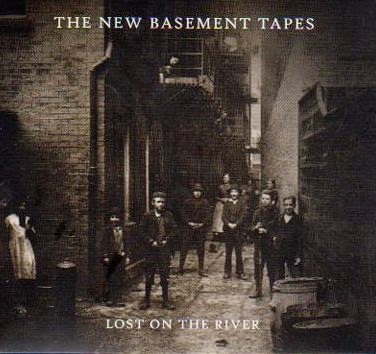
 THE NEW BASEMENT TAPES
Lost on the River
Harvest Records Deluxe Edition
* *

It sounded like a match made in heaven–a trove of unfinished Bob Dylan songs from the fecund writing period between his motorcycle accident in 1966 and his return to the stage in 1967. Dylan was so on fire during this time that he must've gone through Bic pens and tablets like flames raging through a barn of dry hay. So why not hand off the song fragments to producer T Bone Burnett and let others write music for them? Best of all, let others sing 'em! Dylan's poetic credentials are not in dispute–as a wordsmith he ranks with the man whose ID he appropriated when he busted out of Minnesota: Dylan Thomas. As a singer though, the adjective "unique" is about the nicest thing one can say of his voice. Most people sing better than Dylan; hell, even I sing better and that's no endorsement of my vocal prowess.

As the old cliché goes, be careful what you wish for, you might get it.  Lost on the River is surely one of the year's most disappointing albums-a muddy, meandering journey to nowhere in particular. We learn several things right away. First, not every word Dylan spun was lyrical gold. (Check out the words for "Duncan and Jimmy" and keep an airsickness bag handy.) Second, there is an enormous difference between singing Bob Dylan songs and getting Dylan. The artists who collectively call themselves The New Basement Tapes flesh out the Dylan fragments within a range that extends from semi-successful to utter flops. By far, the best efforts come from Lewis Mumford and Elvis Costello–Mumford, because he has the wisdom to keep arrangements simple so that one can actually hear Dylan's lyrics, and Costello because he's old enough to understand the Boho sensibilities that inspired Dylan. Mumford is especially sharp on "Kansas City" and "The Whistle is Blowing," which come closest to sounding like the way Dylan might have fashioned the tunes. Costello shines on "Married to My Hack," whose Beat-poet cadences he nails. Jim James (My Morning Jacket) also has a few nice turns, though he has a tendency to overdue the production values by half. Aside from his opening track, "Down on the Bottom," most of his other mixes blur the lyrics in and render them irrelevant as Dylan compositions.

On the disappointing side are selections from Rhiannon Giddens of the Carolina Chocolate Drops. I'm a huge fan of Giddens, but a big voice like hers is a drawback on this project. Her take on "Hidee Hidee Ho # 16" comes off like a histrionic outtake from a Jazz Age stage show. And I've no idea what Taylor Goldsmith (Dawes) is doing on this record. There's no nice way to say this—he's so bad that he makes "Card Shark" sound like it should be on a children's music CD. G-rated Dylan? Please!!! Even Mumford and Costello drop the ball on occasion. Mumford's "When I Get My Hands on You" is a brilliant interpretation--of Paul Simon, not Dylan; Costello's take on the title track has less shape than a mu-mu.

Maybe the next time someone finds a Dylan cache they ought to ask the man himself what he had in mind. The fact that several of the tracks on Lost on the River are reworked previous versions might indicate Dylan just forgot to take out the trash. 
Rob Weir

12/19/14

M.C. Escher Worth the Trip of Your Choice

M. C. ESHER
M. C. Escher: Reality and Illusion
Currier Museum of Art, Manchester, NH
Through January 5, 2015

Impossible staircases, strange insect-like creatures furling and unfurling, a set of disembodied hands drawing each other into existence…. It was all so trippy and off-kilter that those of us who first saw the work of M. C. Esher in the 1960s and ‘70s simply assumed he was one of us—perhaps some acid-fueled poster artist from the Bay area.

He was actually a Dutchman, Mauritis Cornelius Escher, who was born in 1898 and checked off the planet in 1972, just about the time Baby Boomers were checking him out. Moreover, he was more Straight Arrow than Acid Rocker and he drew his inspirations from Tuscan architecture and Moorish designers, not countercultural ideals. He blew his mind in San Gimignano, not San Francisco, and with mathematics, not controlled substances.

The Currier Museum of Art in Manchester, New Hampshire, a small jewel, showcases Escher’s biography and work. It’s a perfect setting as, like Escher’s work, Manchester isn’t quite what first-time visitors expect. Once the world’s largest textile manufacturing center, Manchester is a gritty postindustrial city, whose red- brick factories stretch along the Merrimack River as far as the eye can see. Yet scattered among the decline are the remnants of the past wealth that endowed the Currier, and tenuous gentrification projects as fanciful as some of Escher’s works and might just fuel a brighter future.

The Currier exhibit on Escher is exhaustive. It opens with Escher’s earliest commercial graphic works, nature studies, landscapes, and prints. Escher gained such renown for his later mind-bending works that it’s easy to overlook his considerable printmaking skills. He excelled in all forms of printmaking—lithography, woodcuts, linoleum blocks, mezzotints, and several others that were unfamiliar to me. His artistic life took a dramatic turn when he toured Italy in 1922, the beginning of a journey that took him across Europe to study and work, but also to escape war. Italy’s medieval and Spain’s Moorish pasts precipitated a shift from pure to imaginative design. Escher had no formal training in mathematics, but non-representational geometry such as Möbius strips and ambiguous triangles became a staple of Escher’s works.

A tesselation and Mobius strip
The Currier exhibit highlights Escher’s draftsmanship and his intuitive grasp of both practical and improbable geometry. From Spanish tile makers he learned tessellation, patterns without overlap in which one design bleeds seamlessly into the next. A famed Escher technique was to begin with an abstract line of forms that slowly evolve into recognizable birds or insects. But look closely, as Escher liked to mess with our perceptions. Some of his tessellations construct, then deconstruct; others shift our focus in ways that we accept subconsciously before our reason centers alert us that we’ve been visually hoodwinked. Escher often did this in the simplest possible manner, such as changing the flight patterns of a flock of birds by slowly adding one color while deemphasizing the previously dominant hue.

Relativity
Famed Escher works such as Relativity (1953) relied upon Necker cubes and Penrose triangles. Remember how you first learned how to draw a cube that appears as three-dimensional by sketching two squares whose points you connected? Do the same thing with top and bottom trapezoids and your Necker cube looks quite different. Hide some of these in a composition with some Penrose triangles whose sides are drawn in such a way as to create an architecturally impossible figure. That’s how Escher gave us pillars that support nothing, interlaced staircases that do not interconnect, and spatial planes whose dimensionality is both everywhere and nowhere. As we used to say, “Far out!”

Check out the columns!
Escher was neither a bohemian nor a child of the 60s, but his art anticipated the altered states of William Burroughs and it flung open wide Aldous Huxley’s doors of perception. You have just weeks left to get to Manchester. If you can’t make it, at least upload some of Escher’s work and study it. Don’t surf—look hard and deep. Prepare to have your mind blown.  Rob Weir