2/2/18

Darkest Hour: Overrated


DARKEST HOUR (2017)
Directed by Joe Wright
Perfect World Pictures, 125 minutes, PG-13
★★


Back in 2002, the BBC declared Winston Churchill (1874-1965) the greatest Briton of all time. He was certainly omnipresent—famed orator, Nobel Prize winning author, military man, and the holder of just about every governmental office imaginable, including two stints as Prime Minister (1940-45; 1951-55). Maybe that's why several British audiences gave a standing ovation to Darkest Hour. I, like many others, have reservations about such unbridled hero worship, but I have none about Darkest Hour. It is like Churchill himself—puffed up on its own perceived importance. I say this even though Gary Oldman won the Golden Globe's Best Actor honors for portraying Churchill, and even though some consider this film to be a potential dark horse to win the Best Picture Oscar.

Fiddlesticks, say I! But let's give the film credit for doing a decent job with the situation that gives the film its title. (Churchill never actually uttered that phrase.) It covers just 2 ½ weeks of Churchill's time as Prime Minister—from Neville Chamberlain's resignation following Hitler's invasion of the Low Countries on May 10, 1940, to the successful evacuation of British troops from Dunkirk, France on June 4. It was an extraordinary moment in history, one in which many British leaders thought the nation's only chance for survival was to sue for peace. Churchill emerged as the perfect wartime leader. He was prescient in warning the government of Hitler's evil intentions, dogged in his resolve, and brilliant in his ability to craft inspirational speeches. As Lord Halifax (Stephen Dillane) says near the end of Darkest Hour, "He mobilized the English language and sent it into battle."

This film also looks good. Scenes in the underground war rooms, Parliament, and London streets are bathed in sufficiently drab English hues that enhance the possibility of impending apocalypse, and the film's closing sequence—though cinematic hyperbole—is a stunner. Director Joe Wright also uses effective slow motion street tableaux to capture emotions ranging from fear and dread to resolve and defiance. The overall gloom is further deepened by physical allusions to Churchill's personal financial woes and by the deep-furrowed petty wrangling of Parliamentarians engaged much in political jockeying as dealing the dangers of the moment. I also credit the film for not dodging the possibility that Churchill was an alcoholic. (Franklin Roosevelt certainly thought so and used advisor Harry Hopkins to keep Churchill at arm's length.) It even invites us to question Churchill's past judgment (the bungled World War One Gallipoli campaign) and present (the decision to sacrifice men deployed a Calais).

For all of that, Darkest Hour is at heart a cinematic look at the Great Man Theory of history. Exaggeration, invention, a histrionic musical score, and the dumbed-down fawning of those who sense they are in the presence of a demigod ultimately undermine the power of the visuals. The fawners include Churchill's deputy, Anthony Eden (Samuel West), his young secretary Elizabeth Layton (Lily James), and his long-sacrificing wife Clementine (Kristin Scott-Thomas doing a Sian Phillips imitation). Never mind that Eden was actually among those who thought Britain needed to consider throwing in the towel, that Layton didn't have a brother at Dunkirk and wouldn't be Churchill's secretary until 1941, or that Clementine was equally invested in Winston's legacy. Nor is there evidence that Chamberlain (Ronald Pickup) or Halifax were plotting a party coup against Churchill. There is one scene so preposterous that it's Disneyesque on the fantasy scale. Churchill was many things, but a man of the people he was not. He did not, as the film would have it, bolt from his limousine and jump on the Underground to solicit the views of ordinary Brits, trade Macaulay passages with a black passenger, and whip the subway car into bellicose resolve. This is ahistorical nonsense served with a PC twist.

Just to be clear, my brief against Darkest Hour isn't rooted in anti-Churchill views. To repeat an earlier point, Churchill was a valiant wartime leader. Faced with the specter of fascism, better that the leader be a tiger than a Teddy bear. The film works best when Churchill is self-assured, arrogant, even  crude (though Oldman seemed too much like LBJ with a cigar in those scenes). I was not enamored of attempts to soften Churchill's gruffness with avuncular interludes in his dealings with Layton. At times, you might also think that Churchill was the one with a stammer, not King George VI (Ben Mendelsohn).

Mainly I don't see what all the fuss is about. If you've seen Season One of The Crown, you have witnessed a far superior portrayal of Churchill—that of John Lithgow. Indeed, Jeremy Northam's Eden was also a better performance, as was Jared Harris of George VI and Harriet Walker's Clementine. Joe Wright's Darkest Hour looks good, but it tries so hard to cover all the bases that it often feels like it's more about 21st century concerns than mid-20th century perils.

Rob Weir


2/1/18

Half Holidays and Groundhogs


-->


Tomorrow is Groundhog's Day: the one day of the year Bill Murray is relevant. Just kidding. I like Bill Murray. But there's no doubt that watching that film he made in 1993 has become almost as big a ritual as waiting for the news from Punxsutawney, Pennsylvania, as to whether or not Phil, the resident rodent, has seen his shadow.

It's all a great bit of fun—so much so that other towns across the country have tried to steal Punxsutawney's thunder by appointing prognosticating marmots of their own. (I lied above; groundhogs aren't really rodents; they're marmots, which are little more than tubby squirrels. For real. You can look it up.) Punxsutawney reigns supreme though—thanks to Bill Murray. Few of us take the day seriously and tend to rely more on the National Weather Service than Marmot Meteorological Inc. Plus, it hardly matters to New Englanders if Phil sees his shadow. We just do the math and yell "Wahoo!" if he does and a longer winter is forecast. Winter will be over in six weeks? Wahoo! For those who don't know, "Wahoo!" is an olde New England term that roughly translates: "Throw the rest of them quashes and tofus out the back for the hippies, Maudie. Bust out them steaks in the freezer, and fire up the grill." That's a mouthful, so Wahoo is more compact.

Perhaps I exaggerate. What would you say, though, if I told you that Groundhog's Day is actually an important day on the calendar? The day didn't start out being about marmots. Scots and Germans once started looking for animals emerging from their holes around February 2, especially rabbits, snakes, and badgers—a folkloristic way of gauging the weather. Christians used to celebrate Candlemas on February 2 because it was 40 days from Christmas and Mary could go to the temple to be purified after giving birth, and wouldn't have to live outside the encampment anymore. (Hey, I'm just reporting here.)

But February 2 isn't important for those reasons either. Its significance lies with our Scots, Irish, Welsh, and other Celtic ancestors. Today, Westerners have just four seasonal markers: the spring equinox (March 20), the summer solstice (June 21), the fall equinox (September 22), and the winter solstice (December 21). The Celts knew a lesson every child knows: the anticipation of an event is often better than the event itself. To that end, Celts had eight calendrical markers, the four just mentioned, plus dates between them, which were more worthy of celebration.


Think about it. Long before the spring equinox we notice the days getting longer and it's sort of a bummer when it comes, because it really isn't spring anywhere except places where they don't have seasons. Likewise, as much as I love long days, the summer solstice is depressing as it means the light will slowly drain from the sky starting the very next day. So the Celts add four fire holidays in between the equinoxes and solstices, two associated with women and two with men.

Tomorrow is actually the female fire day of Imbolc (ĭhm-ōlk), which is probably how it got associated with Mary in the first place. Europeans used to burn leftover parts of their Yule logs that day and, yep, Yule was a pagan holiday that was celebrated with (ahem!) mistletoe, wreaths, and decorated trees. For me, though, by Groundhog's Day I begin to see how much lighter the days are becoming and I can feel the sun's rays beating upon me with greater strength—even on a cold day.

After the spring equinox—which Celts called Ostara—comes the next Celtic Half Holiday—the one many of us celebrate as May Day. The Celtic is Beltane. The fires are said to be male and it's a phallic fertility celebration. Every wonder why we dance around a pole on May 1? Or why there are a lot of June weddings? (You might want to consider some of these "shotgun" matches!)

The summer solstice—Celtic Litha—occurs in June and round about August 1 comes the early "harvest," an event called Lughnasadh, which looks more imposing to say than it is (Lew'-năh-săh). Harvest festivals are almost always female. Some of the fires go toward baking bread or harvest feast foods in the hearth.

The fall equinox—Mabon—sneaks up on us in September, but before we settle in for the winter to eat squash and tofu, there's that event we call Halloween. The Celts called it Samhain (Să'-wēēn) and it's actually such a big deal that it lasts two days; that is, through November 1, which we call "All Saints Day."  Saints? Nope! The fires went hand in hand with gifts left in the woods for spirits. All the small fires were put out and embers were used to ignite a massive bonfire to illuminate a blowout feast and to appease the spirits so they'll make winter a mild one.

Next is winter itself; call it solstice or call it Yule. Then comes the dark and cold. By February, we need a warm marmot with which to cuddle. Or maybe just a roaring fire instead! The Scot in me notes that Imbolc is just one week after Robert Burns Day (January 25), traditionally celebrated by having a dram or two or three. Time for some fire as that warmth has worn off. 

Rob Weir

1/31/18

Graham Stone Music: Album of the Month


GRAHAM STONE MUSIC
Until the Day
★★★★★

I can't remember the last time I was so bowled over a by a debut release. Graham Stone Music is the performing nom de guerre of Graham McCune Stoll, a young man who hails from Virginia and dispenses insights and wisdom like an old sage. Until the Day is one of those rare albums where you listen to a track and exclaim, "Man, that's one helluva song," and the next one makes you repeat yourself. And the one after that, and….

Stoll's husky baritone immediately puts one in mind of Ari Heist, but Stoll's songs come from the road, not the urban canyons of New York City. "Flowers of Montana" is a gorgeous song. Stool is named for Gram Parsons, who would have been proud to have penned lines like But the flowers in Montana all are bloomin'/And the river by the mountain/is clear and cold/And the flower on my arm will stay forever/ I’m not a young man, but I’ve never felt so old. If it doesn't look like much on the page, listen to the song and ask yourself how a guy barely 30 can write such a line and sing it with such wizened grace. Next, take Stoll's folk persona, add some buzzy electric, head for the open Big Sky lands, and check out "Canyonlands." Pack some sweet country and hop a "Midnight Train" bound for Boston, once the lost rambling is over. Lace the song with thoughts of a woman somewhere along the line. If "Strong Constitution" is to be believed, Stoll likes his women strong and independent. The heroine of this folk country tale shows no fear: She's got a strong constitution/steel in her spine/A spirit more precious than jewels/ She's got a strong constitution/She's made up her mind/She won't take no shit from a fool. "Kathleen Jean" is a sweeter Virginia "queen," but she too knows what she believes. 

Stoll's songs move us in many ways. "Free and Homeward" places us in the middle of John Brown's Raid and recounts events from the perspective of a doomed slave. It's dark and tragic and builds to a loud growly moment, yet offers final redemption: …I am free/and I am home. "On the Run" is a rocker with boot kicking grit; "Richmond City Blues" also rocks, but in the vein of songs that get the honky tonkers off their stools and onto the dance floor. "Until the Day" touches things deeply human—livin' alone with all my fears and I defy you to remain stoic during "Meaningless," a dying rich man's gift and dispensation to a young servant.

What a record! Buy it. You'll have a hard time moving it down your playlist.

Rob Weir

1/30/18

Uncommon Visions at Forbes Library


UNCOMMON VISIONS
Susan Boss, Mark Brown, and Michael Tillyer
Forbes Library

You only have a few days left to catch a fine show of three Western Massachusetts artists, whose work is on display on the second floor library. I like local art shows for precisely what this one does; it provides new ways of thinking about things in contexts we've not see many times before.  So here are some pictures to whet your appetite: surreal paintings from Mark Brown, contemplate textiles from Susan Boss, and—a personal favorite—the whimsical sculptures of Michael Tillyer.

If you can't make the show before it closes at the end of the month, check out Websites. They may not be household names (yet), but they are worth discovering.
Brown: Harvest. Isn't the late summer garden explosion just like this?

Boss: Our Heads are Round. Take that, blockheads!
Tillyer: The Simmerer


Tillyer: The Artist's Wife

Tillyer: Bird on a Branch

Tillyer: Five Unopened Things (box, package, book, letter, apple!)


Tillyer: Rex (Some might recognize Rex from installations at Art in the Orchard)

1/29/18

Vonnegut Undiscovered: For a Reason


LOOK AT THE BIRDIE (2009/17)
Kurt Vonnegut Jr.
Dial Press, 297 pages
★★ ½

Readers and writers both have their salad days—readers when they fall hard for a writer and work their way through that writer's oeuvre, and writers when they reach the height of their powers. Back in the 1970s I devoured Kurt Vonnegut Jr. (1922-2007) like a starving man who crashed a Roman banquet. Forget Cat's Cradle; back then, all Vonnegut was the cat's meow. Well before he died in 2007, I prided myself with having read all of his novels, short stories, and important essays. Since then, however, unpublished Vonnegut short stories have been discovered, so I guess that makes me the fool for thinking myself a completist, right?

Maybe not if we go back to the adjective "important." Look at the Birdie first came out in 2009 and I didn't rush to read these 14 previously unpublished short stories because other such stories disappointed me. But when Amazon reissued them and briefly offered them for $1.99, I took the bait. The verdict? I'm glad I didn't spend more. Look at the Birdie isn't terrible, but there's not much to recommend it unless you are new to Vonnegut's work, in which case let me envy the treat you have in store when you finally bite into masterpieces such as Mother Night (1961), Slaughterhouse Five (1969), and Breakfast of Champions (1973).

As for Look at the Birdie, a few things must be said. The most obvious is that Vonnegut was not yet the writer of the aforementioned classics. Most of the tales were written in the 1950s before he found his voice. Mostly they were a young writer's attempt to earn money by getting magazines to publish him. These offerings weren't "unpublished" because he stuck them in the back of his sock drawer and forgot they were there; they were rejected in an era in which there were many outlets for aspiring fiction writers. Righty so; they're at best mediocre. Like many creative people—artists, musicians, poets, playwrights—Vonnegut tried (too) hard to emulate his heroes: O Henry, Twain, Orwell, Shaw, Swift, Wells…. Once he became the Vonnegut we know, he cast out most of the other voices in his head. (There was always a bit of Twain and Swift.) Second, these are pieces from the 1950s that are time bound, not unstuck in time.

Does a story about finding what looks to be a butter knife but is actually the spaceship of tiny beings entice you? There's no reason "The Nice Little People" should, given that all the aliens do is be tiny—and nice. Smallness also gets a workout in "Petrified Ants," which is actually veiled commentary of Soviet bureaucracy. It won't mean much if you're too young to remember the USSR!

We see Vonnegut trying on genres to see if they fit. "Ed Luby's Key Club" tells of a humble working-class couple that save their money and drive to an expensive out-of-state restaurant each year for their anniversary. On this particular occasion they arrive to find it has become a members-only dinner club, and Luby transformed into an arrogant mobster who tries to frame them for a murder. At best this is a mild social class drama, but mostly it's a mash of The Fugitive and third-rate mysteries. Its contrived ending is testament that Vonnegut was thinking within genres rather than trusting his imagination.

Equally weak is "King and Queen of the Universe" in which a well-heeled and naïve couple get talked into a flawed good deed that turns into a caper. "Hello Red" is a darker version of "The Farkle Family," a future Laugh-In gag. I was also baffled by the choice to name the collection after a particularly contrived tale of a disbarred psychiatrist-turned-extortionist with a unique way of getting away with murder. And so it goes, as Vonnegut would say a decade later.

Any good news? One might find relevance in "Shout about It from the Rooftops" and its takedown of celebrity fame. It revolves around a window salesman, an angry man, and a wife whose tell-all confessional isn't what it seems, though that doesn't prevent it from becoming a mass market hit that brings nothing but misery. "Little Drop of Water" holds interest in our post-Harvey Weinstein times given that its protagonist is a serial womanizer. But I'll warn you to keep an airsickness bag at the ready for the resolution, which is really, really dated.

If given the pick of the litter it would be the opening "Confido" in which humble Henry Bowers invents a machine that tells us what we want to hear and makes us feel good—until it doesn't. Confido learns and begins to call things as they are. Let's just say that honesty isn't always the best or most comforting policy. We might want to read this one as a prescient warning of dangers inherent in artificial intelligence. Maybe.

Mostly this is dated stuff penned by the man who became Kurt Vonnegut. I want to believe that once Vonnegut entered his salad days he squirrled these ideas away for a reason. Perhaps had he lived a few years longer, he might have salvaged pieces of them from his writer's junkyard. I'm fairly certain those reworked parts would be more sublime than these wholes.

Rob Weir


1/26/18

Great Music: Mendilow, Pietrini, Kibel, TMBG, Whitney, Heath, Speed Bumps


Here are a few offerings from last year that got crowded out at holiday time. Think of them as like finding an overlooked chocolate bar, not leftover fruitcake.

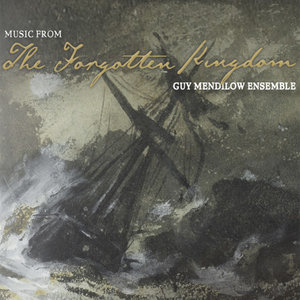
The Guy Mendilow Ensemble devotes itself to Ladino music, that is the songs and traditions of the Sephardic Jews. Mendilow has four shows devoted to Sephardic music, including the recent Music from the Forgotten Kingdom. The music is forgotten because Jews were expelled from Spain and Portugal in 1492, the very year Columbus sailed to the New World. I scarcely have words to tell you what a beautiful album this is—at turns sad and celebratory, formal and joyful, and always mystical, magical, and soaked in the brine of history. The ensemble blurs the lines between classical and folk music in ways that old Nonesuch albums used to place medieval court and village music cheek by jowl. Start with the "Una Noche Al Borde De La Mar" video, which opens with a two-minute real-time animated drawing before cutting to the stunning vocals of Sofia Tosello and truly haunting violin backing. Then try "Hermanas Riena Y Cautiva (Sisters, Queen and Captive)" with its distinct medieval feel. Then sample "La Galana Y La Mar," which is simpler but pure and beautiful, the woodwinds transporting us to an otherworldly place. This is, simply, a transcendent album. ★★★★★ 
 s
Milwaukee Magazine dubbed the Zack Pietrini Band as the city's top ensemble in its 2017 wrap-up. Can't say that I've heard all the bands out there, but Pietrini would turn heads anywhere. Holding onto Ghosts is the quintet's fifth release. File it under Americana and, as readers know, I find that a mighty broad category. Pietrini's blend is part country, part rock, and a splash of folk. Pietrini has a smooth voice, but there's some back of the throat spit in it that adds an edge. The songs also reflect that edge, most of which are musings about misplaced hope, lost love, and trying to make it as an artist. The bring-on-the-weeping pedal steel of "Learning the Hard Way" could be at home in Nashville and the title says it all. Its flipside is "Dance," a slice of rockabilly that sketches one of those moments in which a joyous dancer lets itall go and lives a lifetime in a single evening. For the folksier side, try"Get Out," which is mostly acoustic guitar, melodic keys and a message that's both hopeful and cautionary.★★★★

If you've never before heard Seth Kibel you might think he's a Ragin' Cajun, not a Maryland-based klezmer, swing, and jazz artist. Actually, he's something of a musical polymath with a sense of humor on full display in Seth Kibel Presents: Songs of Snark and Despair. The album's ten songs were written in response to the 2016 election and the title track is a lighthearted musing on (among other things) what people such as John Lennon or Woody Guthrie would have made of our current conundrum, whereas all he "can do is write songs of snark and despair." Kibel plays clarinet, flute, and sax on the album, but he often surrounds himself with wet-lipped robust tubas and trombones that throw off the vibe of a New Orleans street band that's decided to party through the apocalypse. Donald Trump, Paul Ryan, and the GOP in general are the bad guys in most of the songs but in a, well, snarky way. Kibel invites folks from across the spectrum to add their voices and instruments to his offbeat mix. Black Betty (Jenny Langer) gives a soulful no-holds-barred survey of the history of racism on "240 Years," an amazing change-the-frame song with just enough dark humor to blunt its nasty edges. It's gift-wrapped in a sort of "Ride Your Pony"-like funky envelope. Trump takes it on the chin (again) in the klezmer/Dixieland blended "Stalin's Revenge," and Damon Foreman leads the reggae-laced "Misplaced Priorities." White liberals don't get off the hook either. There is, for example, "White Guilt," with its sneaky double satire—lyrical content and an appropriated bossa nova arrangement. For pure snark there's "Unfriend," simple advice for the Facebook generation and its stuck-in-angst luxury problems. Funny stuff and so good-natured you often laugh at the stiletto in your neck. ★★★★

What can I tell you about They Might Be Giants that hasn't already been written? They've been around since 1982, so you know the Lincoln, Massachusetts duo do unconventional things, like mix John Flansburgh's guitar with John Linnell's accordion and saxophone. You probably know they have gold records, a platinum or two, and some Grammys. Depending on your tastes, they are either experimental or just plain zany. To me, zany is a good thing and TMBG is also a hit in children's music of the warp-'em-while-they're-young (and teach 'em cool stuff) school. But maybe you didn't know that since they're dropping a new album this month, they put out a free NoiseTrade sampler in November. It's called Up to Date and contains back catalogue material spotlighting TMBG's signature quirkiness, self-deprecating humor, and sometimes-poignant observations. It's loud, brash, and irreverent in a post-New Wave, post-punk, post folk manner. What else can one say about a sampler whose tracks include "All the LazyBoyfriends," "Let Me Tell You about My Operation," "I LoveYou for Psychological Reasons," and "Say Nice Things about Detroit?" But check out the 2013 song "Black Ops" and you'll see a more serious pink side of Flansburgh and Linnell. ★★★★

The Wild Unrest is a dark and lean folk project from Beth Whitney, who cooked up some of her material in the deep woods of Washington State, where she and her husband lived for a time and where, at her admission, she struggled with postpartum depression. You can hear anguish in "Shadows of a Man," but in songs like "Raven" and its reflections of the Native American past, it's clear she also tapped into some ancient wisdom. "Tides Are forSirens" captures Whitney in a somewhat lighter mood; the song is reflective, but also sweet and pretty. I won't lie, though. This is an album that grows on you rather than grabbing you by collar and making you pay attention. Like many healing albums, it can be so personal that it feels distant. Take your time. Let it breathe. ★★★tides are for sirens


If you're looking for some rock n' roll, here are a few worth investigating. Want it loud and crunchy? Try Jason Heath and the Greedy Souls whose But There's Nowhere to Go takes a highly critical look at all that's gone busted and wrong in the USA: corruption, greed, loss of national identity, the 2016 election…. No punches are pulled in songs like "South of Babylon," in which Heath sings in a voice that's a cross between being soaked in whiskey and gargling with razor blades: John Wayne’s dead, but his guns are drawn/bodies are scattered on the White House lawn. In "In Love with My Gun" he sings: I’m Miss America’s favorite son/I got bloody red hands I was born with a gun/It’s a dirty job honey but it’s gotta be done’/Got stars and stripes in my eyes/And I’m in love with my gun. Yeah, he's a pissed off dude, as you'll also hear on tracks such as "Postcards from the Hanging," "Ballad of the Brown Bomber," and Here Comes My Savior" (and he doesn't mean Jesus). This is where straight up rock meets grunge, punk, and alternative. ★★★★

The Speed Bumps fall into the "indie" rock cubbyhole, which, in their case, is folk-rock with occasional dollops of country. "How Do We Work it Out" is shimmery, despite its theme of a relationship about to supernova. This Ohio Rust Belt quintet makes no bones about its debt to Nick Drake and Paul Simon and the aforementioned song would easily fit into Simon's urbane repertoire. "In the Moment" is gentler and folksier still. Smooth, good harmonies, and changes of pace make their Love is War EP a winner. ★★★★

1/22/18

Ursula Le Guin Blogs and Reflects

-->

NO TIME TO SPARE: THINKING ABOUT WHAT MATTERS (2017)
Ursula K. Le Guin
Houghton Mifflin Harcourt, 240 pages
★★★

Bloggers don't usually get to publish their posts in book form. Then again, not many bloggers are Ursula Le Guin, whose fantasy, science fiction, and children's books have expanded our imaginations and dared us to think of alternative worlds and ways we can make this one better. One suspects she must have had to build on to her Berkeley, California domicile to house all the awards she has garnered in her fifty plus years of publishing. In 2010, Le Guin drew inspiration from Portuguese novelist José Saramago and decided to try her hand at blogging.

Here's where things get a bit tougher to evaluate. On the blog, Le Guin is the main subject, not her characters. In a word, she becomes mortal. At age 88, Le Guin intends that to take her title literally—no time to spare. Blog writing, however, is a decidedly less edited, less censorious, less organized form of writing. One can basically write whatever one wishes. Given a choice between specialized and generalized approaches, Le Guin opts for the latter. No Time to Spare is organized into four themes—ageing, reflections on literature, critiquing society and her place in it, and wistfully musing over the things that have given her pleasure. These themes are, nonetheless, as loose as a kaftan. Le Guin has earned the right to indulge and does so. In practical terms this means her readers are confronted with a literary roundup of thoroughbreds contained in the same corral as plow horses and swaybacks.

At her best, Le Guin charms and beguiles. "The Horsies Upstairs" is a delightful and imaginative piece that invites us to view the world through the eyes of a two-year-old, not the logic of the adults all around her. Le Guin writes, "How does a child arrange a vast world that is always turning out new stuff? She does it the best she can, and doesn't bother with what she can't until she has to." In her observations of a child's question of where the horses sleep, Le Guin challenges us to think about what we mean by the word "real." Equally charming are the various intercalary blogs about her cat Pard. As one of her posts puts it, any feline caretaker needs to be mindful of the difference between "choosing a cat" and being "chosen by a cat." Pard is a rascal and even the most ardent dog person will smile when reading of his various adventures, misadventures, and cat cantankerousness.

How readers will respond to Le Guin's own cantankerousness probably depends upon whether or not you agree or disagree with the opinions she expresses. Do you share her view that Hemingway was a lazy writer? Does first-person writing that blurs the line between fiction and memoir annoy you? (Do you even care about the issue?) Is it a cheap shot to suggest that fantasy writing is as intellectually valid as religious fundamentalism, even if you think she's right (as do I)? Le Guin has long been a critic of unexamined belief, but I can imagine some readers will take deep exception to her takedown of New Age magical thinking, especially the notion of recovering one's Inner Child. She can barely contain her snark when contemplating a Catholic conference on exorcism. Does she go too far when she claims that definitions of demonic possession are so broad that her deep love of Beethoven's 9th Symphony could be so interpreted? To be fair, Le Guin has long championed rationalism. In my view, her post on "Belief in Belief" is utterly brilliant in the simplicity with which she highlights the problems that occur when we use "I think" and "I believe" as synonyms. As she puts it, "I don't believe in" Darwinian evolutionary theory, "I accept it. It isn't a matter of faith, but of evidence."  

In my mind, there are some very wise things in her meditations. She doesn't have a high view of life in contemporary America. Economists and capitalists come under scrutiny of their worship of "uncontrolled, unlimited, unceasing growth as the only recipe for economic health," and she decries the foolishness of ignoring limits and balance. She is equally concerned about the non-reflection of her fellow citizens: "I have watched my country accept, mostly complacently, along with a lower living standard for more and more people, a lower moral standard. A moral standard based on advertising." She's not optimistic the nation can endure "living on spin and illusion, hot air and hogwash."

It must be said that some of the pieces are fluff and others one-trick ponies. Even if you agree that today's bombardment of F-bombs is annoying, you might still find her "Will You Please Fucking Stop?" churlish. She similarly overextends herself in a rather silly piece on "vegempathy." In the end, of course, this is how one must evaluate blog collections. I too am a blogger and as much as I'd like to think everything I write is sensible, correct, and important, such an attitude is what I "believe," not what I "think." Do not read this collection looking for insight into Le Guin's books; Le Guin's blog is about her. She is undoubtedly more gifted than most bloggers, but not even she is immune from the blogger's curse: not every piece is a winner. Call this one a classic mixed bag.

Rob Weir